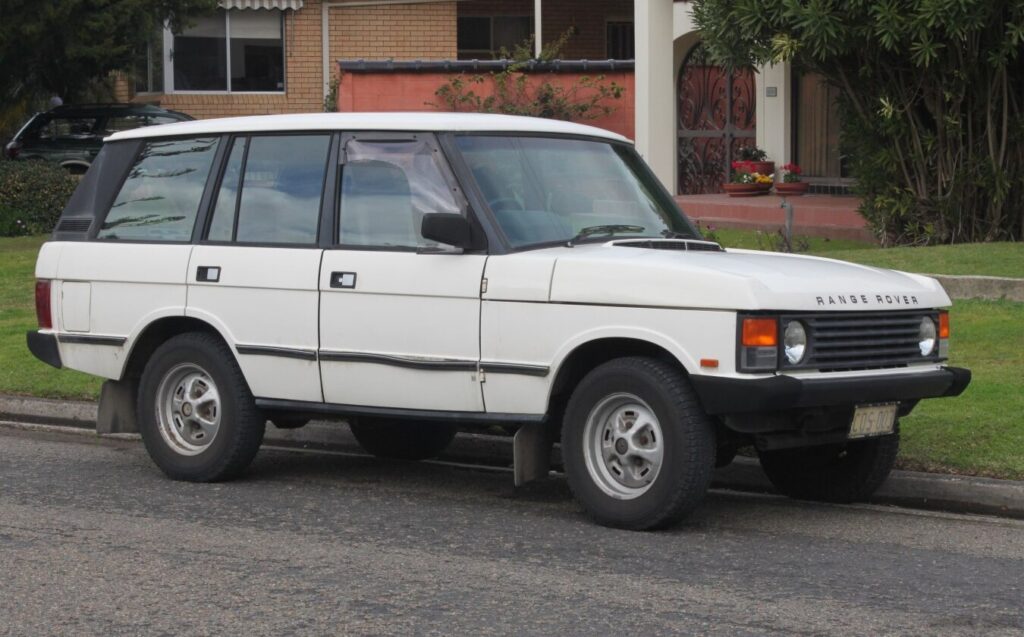
The Land Rover Range Rover I 3.5, produced between 1987 and 1990, represents a significant iteration of the original luxury SUV that established the Range Rover nameplate. Falling within the first generation (1970-1994) of the Range Rover, designated internally as the Classic, the 3.5 model offered a balance between refinement and off-road capability. It served as a mid-range offering in the lineup, positioned above the naturally aspirated 2.86-liter V8 and below the more powerful 3.9-liter V8, appealing to buyers seeking a comfortable and capable vehicle without the highest price tag. This variant played a crucial role in solidifying the Range Rover’s reputation in both European and North American markets, where demand for luxury SUVs was steadily increasing.
Technical Specifications
| Brand | Land Rover |
| Model | Range Rover |
| Generation | Range Rover I (Classic) |
| Type (Engine) | 3.5 V8 (146 Hp) |
| Start of Production | 1987 |
| End of Production | 1990 |
| Powertrain Architecture | Internal Combustion Engine |
| Body Type | SUV |
| Fuel Type | Petrol (Gasoline) |
| Power | 146 Hp |
| Engine Aspiration | Naturally Aspirated |
Powertrain & Engine Architecture
The heart of the Range Rover I 3.5 is the Rover V8 engine, specifically the 3.5-liter (3,528 cc) version. This engine, derived from the Buick-Oldsmobile-Pontiac V8 family originally designed in the 1960s, had undergone significant development by Rover over the years. The 146 horsepower output was achieved through a 9.0:1 compression ratio, a single Zenith-Stromberg CD175 carburetor, and a relatively mild camshaft profile. The engine featured a cast iron block and aluminum cylinder heads, contributing to its durability. The valvetrain employed a single overhead camshaft (SOHC) design with two valves per cylinder. Unlike later Range Rovers, this 3.5-liter engine did *not* feature fuel injection; the carburetor was a defining characteristic of this specific variant. The engine was mated to a Chrysler TorqueFlite A727 three-speed automatic transmission, known for its robustness and simplicity. This transmission was a key component in delivering smooth, if not particularly rapid, acceleration and comfortable cruising.
Driving Characteristics
The Range Rover I 3.5 with the automatic transmission offered a distinctly relaxed driving experience. The 146 hp output, while adequate, wasn’t overwhelming, resulting in a 0-60 mph time of around 12-13 seconds. The TorqueFlite transmission’s gear ratios were geared towards comfort and towing capacity rather than outright performance. First gear was relatively low for off-road crawling, while third gear provided comfortable highway cruising. The lack of overdrive meant that engine speeds were higher at highway speeds compared to later models. Compared to the 2.86-liter Range Rover, the 3.5 offered noticeably more power and torque, making it more suitable for towing and tackling challenging terrain. However, it lacked the responsiveness and outright acceleration of the 3.9-liter V8. The automatic transmission, while convenient, did diminish the driver engagement found in the manual transmission options available on other Range Rover models.
Equipment & Trim Levels
The Range Rover I 3.5 typically came equipped with a respectable level of standard features for its time. Interior appointments included cloth upholstery, although leather was available as an optional extra. Wood veneer trim adorned the dashboard and door panels, contributing to the vehicle’s luxurious ambiance. Standard equipment included power steering, central locking, and electric windows. Air conditioning was a popular option, as was a sunroof. The 3.5 model often featured a more basic trim level compared to the 3.9-liter, with fewer standard luxury features. Optional extras could significantly enhance the vehicle’s comfort and convenience, including upgraded sound systems, heated seats, and a rear wash/wipe system. The exterior typically featured body-colored bumpers and wheel arch extensions.
Chassis & Braking
The Range Rover I utilized a robust ladder-frame chassis, providing exceptional strength and durability, crucial for both on-road comfort and off-road capability. Suspension consisted of a double-wishbone setup with coil springs and anti-roll bars at the front, and a live axle with coil springs and a Watts linkage at the rear. This suspension design provided a comfortable ride and excellent articulation for off-road use. Braking was initially equipped with disc brakes on the front wheels and drum brakes on the rear. Later models saw the introduction of rear disc brakes, improving stopping performance. The braking system was hydraulically assisted, providing adequate stopping power for the vehicle’s weight and performance. Steering was a recirculating ball system, offering a relatively heavy but precise feel.
Market Reception & Comparison
The Range Rover I 3.5 was generally well-received by automotive critics. It was praised for its luxurious interior, comfortable ride, and impressive off-road capability. However, the carburetor-equipped engine was sometimes criticized for its relatively low fuel economy and lack of responsiveness compared to fuel-injected engines. Compared to the 2.86-liter model, the 3.5 offered a significant performance upgrade, making it a more appealing option for buyers who frequently towed or drove in challenging conditions. Against the 3.9-liter, the 3.5 represented a more affordable entry point into the Range Rover lineup, albeit with a noticeable reduction in performance. Fuel economy averaged around 14-16 mpg in mixed driving, which was typical for a large SUV of that era. Reliability was generally good, although the carburetor required periodic maintenance and adjustment.
Legacy
The Range Rover I 3.5 holds a significant place in automotive history as a pioneering luxury SUV. While the carburetor and three-speed automatic transmission may seem dated by modern standards, the powertrain proved to be remarkably durable. Today, well-maintained examples are sought after by collectors and enthusiasts. The 3.5-liter engine, while not the most powerful, is relatively straightforward to maintain and repair. However, finding parts can sometimes be challenging. The vehicle’s robust chassis and suspension contribute to its longevity, making it a capable and reliable classic SUV. The Range Rover I 3.5 remains a testament to Land Rover’s commitment to building luxurious, capable, and enduring vehicles, and it continues to be a highly desirable classic in the used car market, often commanding premium prices for well-preserved examples.