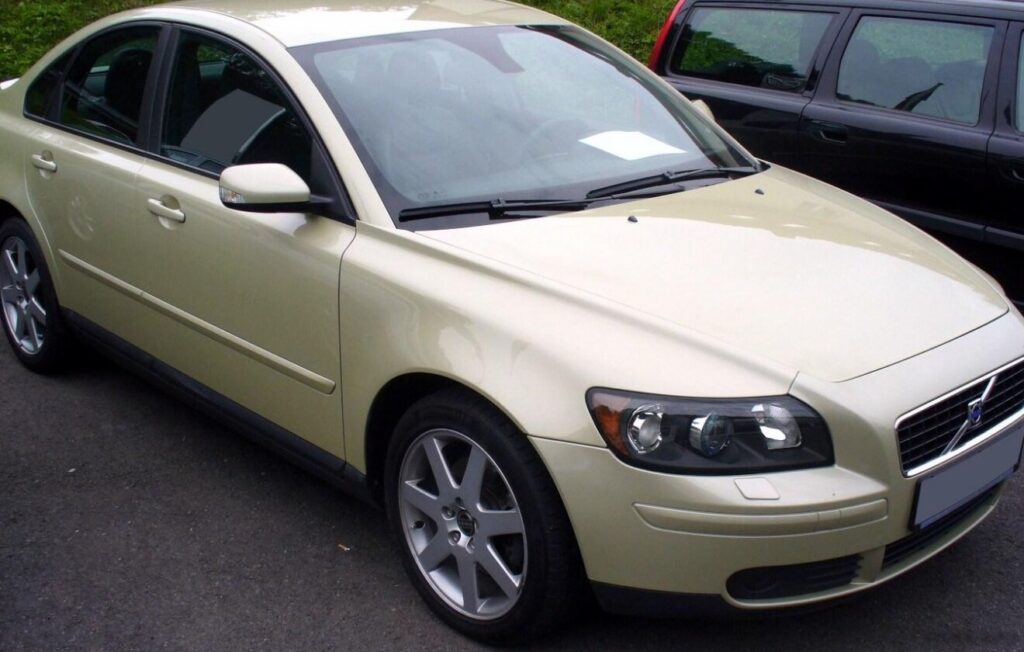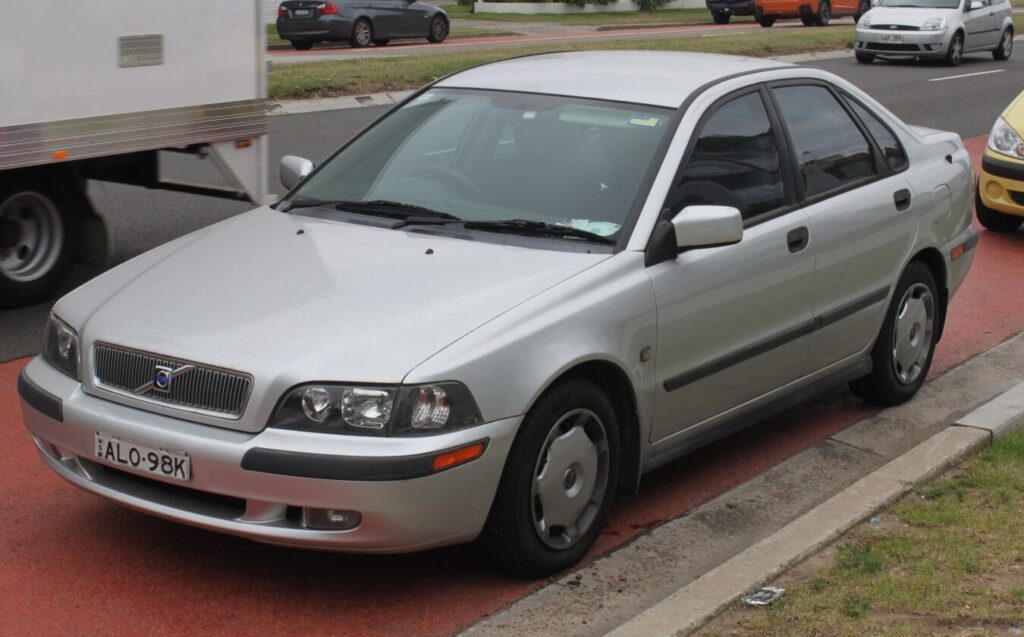
The Volvo S40 1.9 TD, produced between 1995 and 1999, represented Volvo’s entry into the compact executive car segment with a diesel offering. Part of the VS generation (1995-2003), this variant aimed to provide fuel efficiency and reasonable performance for European buyers, particularly those seeking a more economical alternative to the gasoline-powered S40 models. Positioned as the base diesel trim, it sat below the more powerful 2.0 TD variants in the lineup. The S40 VS series was built on Volvo’s 600 series platform, sharing components with the V40 estate.
Technical Specifications
| Brand | Volvo |
| Model | S40 |
| Generation | S40 (VS) |
| Type (Engine) | 1.9 TD (90 Hp) |
| Start of production | 1995 |
| End of production | 1999 |
| Powertrain Architecture | Internal Combustion engine |
| Body type | Sedan |
| Seats | 5 |
| Doors | 4 |
| Fuel consumption (urban) | 8.3 l/100 km (28.3 US mpg, 34 UK mpg, 12 km/l) |
| Fuel consumption (extra urban) | 5.2 l/100 km (45.2 US mpg, 54.3 UK mpg, 19.2 km/l) |
| Fuel consumption (combined) | 6.3 l/100 km (37.3 US mpg, 44.8 UK mpg, 15.9 km/l) |
| Fuel Type | Diesel |
| Acceleration 0 – 100 km/h | 13 sec |
| Acceleration 0 – 62 mph | 13 sec |
| Acceleration 0 – 60 mph | 12.4 sec |
| Maximum speed | 180 km/h (111.85 mph) |
| Weight-to-power ratio | 13.6 kg/Hp, 73.5 Hp/tonne |
| Weight-to-torque ratio | 7 kg/Nm, 143.7 Nm/tonne |
| Power | 90 Hp @ 4250 rpm |
| Power per litre | 48.1 Hp/l |
| Torque | 176 Nm @ 2250 rpm (129.81 lb.-ft. @ 2250 rpm) |
| Engine layout | Front, Transverse |
| Engine Model/Code | D4192T |
| Engine displacement | 1870 cm3 (114.11 cu. in.) |
| Number of cylinders | 4 |
| Engine configuration | Inline |
| Cylinder Bore | 80 mm (3.15 in.) |
| Piston Stroke | 93 mm (3.66 in.) |
| Compression ratio | 20.5:1 |
| Number of valves per cylinder | 2 |
| Fuel injection system | Diesel Commonrail |
| Engine aspiration | Turbocharger |
| Valvetrain | OHC |
| Engine oil capacity | 5 l (5.28 US qt | 4.4 UK qt) |
| Coolant | 6.3 l (6.66 US qt | 5.54 UK qt) |
| Kerb Weight | 1225 kg (2700.66 lbs.) |
| Max. weight | 1770 kg (3902.18 lbs.) |
| Max load | 545 kg (1201.52 lbs.) |
| Trunk (boot) space – minimum | 415 l (14.66 cu. ft.) |
| Trunk (boot) space – maximum | 853 l (30.12 cu. ft.) |
| Fuel tank capacity | 60 l (15.85 US gal | 13.2 UK gal) |
| Length | 4480 mm (176.38 in.) |
| Width | 1720 mm (67.72 in.) |
| Height | 1410 mm (55.51 in.) |
| Wheelbase | 2550 mm (100.39 in.) |
| Front track | 1450 mm (57.09 in.) |
| Rear (Back) track | 1470 mm (57.87 in.) |
| Drivetrain Architecture | The Internal combustion engine (ICE) drives the front wheels of the vehicle. |
| Drive wheel | Front wheel drive |
| Number of gears and type of gearbox | 5 gears, manual transmission |
| Front suspension | Wishbone |
| Rear suspension | Coil spring |
| Front brakes | Ventilated discs |
| Rear brakes | Disc |
| Assisting systems | ABS (Anti-lock braking system) |
| Steering type | Steering rack and pinion |
| Power steering | Hydraulic Steering |
| Tires size | 195/55 R15 |
| Wheel rims size | 15 |
Powertrain & Engine Architecture
The heart of the S40 1.9 TD is the D4192T engine, a 1.9-liter inline-four cylinder diesel. This engine utilized a turbocharger to boost power output to 90 horsepower and 176 Nm (129.81 lb-ft) of torque. The D4192T featured a single overhead camshaft (OHC) valvetrain with two valves per cylinder. A key feature was the implementation of a diesel common rail fuel injection system, which allowed for more precise fuel delivery and improved combustion efficiency compared to older mechanical injection systems. This technology contributed to reduced emissions and improved driveability. The engine was transversely mounted in the front of the vehicle, driving the front wheels. The five-speed manual transmission was the standard offering, providing a balance between fuel economy and usability.
Driving Characteristics
The 1.9 TD S40 offered a practical and economical driving experience. Acceleration was modest, taking around 13 seconds to reach 60 mph, but the engine provided adequate torque for everyday driving situations. The turbocharger helped to mitigate some of the inherent lag associated with diesel engines, providing a usable powerband from around 2250 rpm. The five-speed manual transmission allowed drivers to keep the engine in its optimal power range. Compared to the higher-output 2.0 TD models, the 1.9 TD prioritized fuel economy over outright performance. The gear ratios were tuned for efficiency, resulting in a comfortable cruising experience on the highway. The steering was light and precise, making the S40 easy to maneuver in urban environments.
Equipment & Trim Levels
The S40 1.9 TD typically came with a fairly basic level of equipment, reflecting its position as the entry-level diesel model. Standard features generally included power steering, central locking, and an AM/FM radio. Interior upholstery was typically cloth, and the dashboard featured a functional, if somewhat understated, design. Optional extras included air conditioning, power windows, and an upgraded audio system. Safety features such as ABS (Anti-lock Braking System) were standard, reflecting Volvo’s commitment to safety. Trim levels varied slightly depending on the market, but generally focused on adding convenience and comfort features.
Chassis & Braking
The S40 1.9 TD utilized a front-wheel-drive layout with independent wishbone suspension at the front and a coil spring rear suspension. This setup provided a comfortable ride and predictable handling. The front brakes were ventilated discs, offering good stopping power, while the rear brakes were solid discs. The ABS system helped to prevent wheel lockup during hard braking, enhancing safety. The chassis was designed to provide a balance between rigidity and weight, contributing to the car’s overall stability. Stabilizer bars were fitted to both the front and rear axles to reduce body roll during cornering.
Market Reception & Comparison
The Volvo S40 1.9 TD was generally well-received in Europe as a practical and economical compact executive car. Critics praised its fuel efficiency and comfortable ride, but noted its modest performance. Compared to the 2.0 TD models, the 1.9 TD offered lower running costs but lacked the same level of performance. Against competitors such as the Ford Mondeo, Opel Vectra, and Volkswagen Passat, the S40 1.9 TD offered a unique blend of Scandinavian design, safety features, and fuel efficiency. Reliability was generally good, although the diesel common rail system required regular maintenance to ensure optimal performance.
Legacy
The Volvo S40 1.9 TD, while not the most powerful or exciting variant in the lineup, remains a popular choice among used car buyers seeking a reliable and economical compact executive car. The D4192T engine, when properly maintained, is known for its durability. Today, these vehicles are often found with relatively high mileage, but many continue to provide dependable transportation. The S40 VS generation, including the 1.9 TD, helped to establish Volvo’s reputation for building safe, comfortable, and long-lasting vehicles. Parts availability is generally good, making maintenance and repairs relatively straightforward.