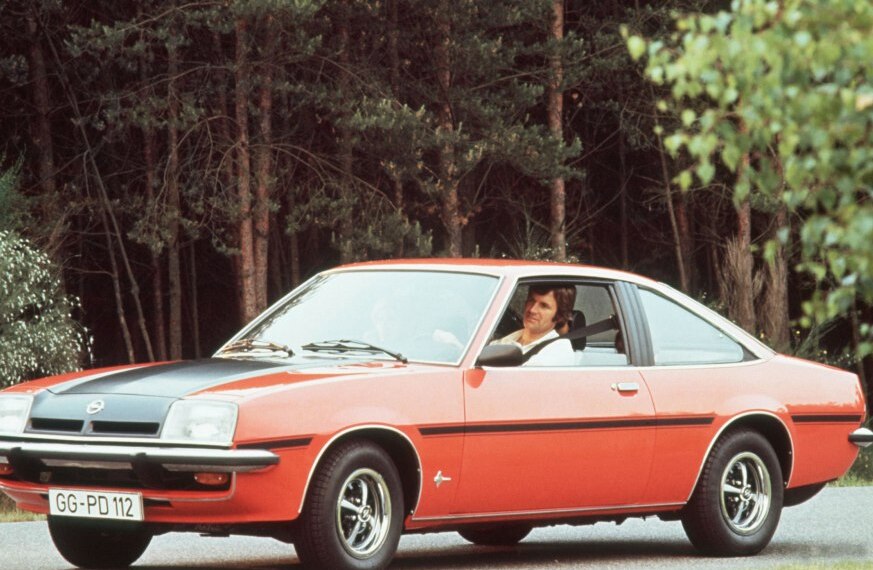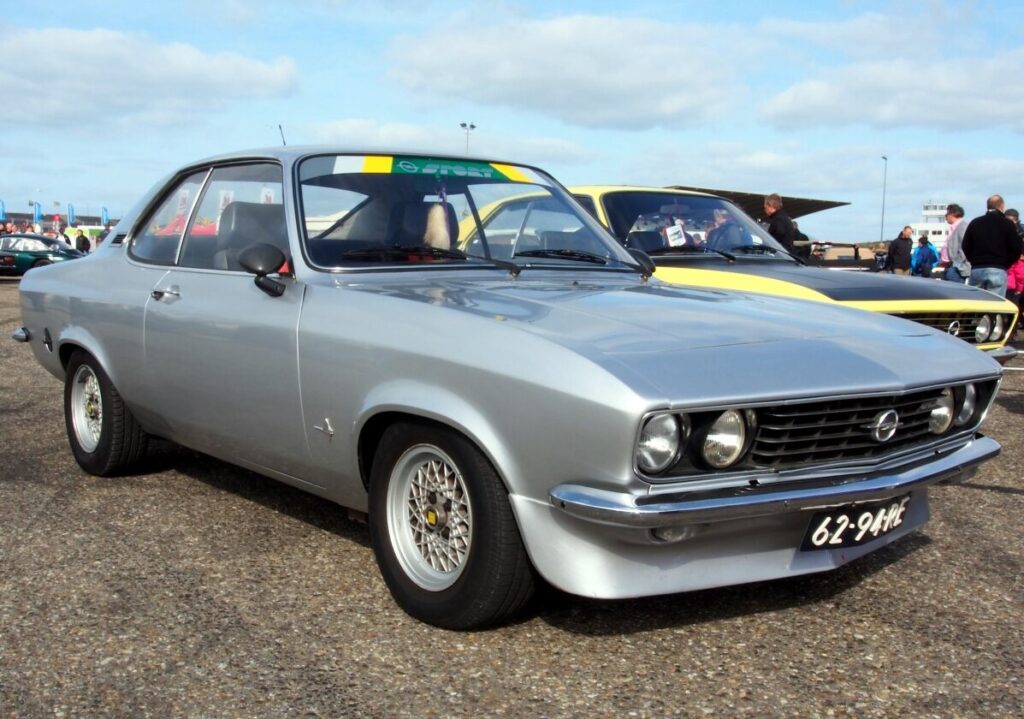
The Opel Manta A 1.9 S (90 hp) was a variant of the first-generation Manta, produced between 1970 and 1975. Positioned as a step up from the base models, the 1.9 S offered a noticeable performance increase while remaining relatively affordable, making it a popular choice for those seeking a sporty coupe. It played a significant role in establishing the Manta as a stylish and accessible performance car in Europe, particularly in Germany where it was a strong seller. This model was part of the larger Opel Manta A series (internally designated as 1HX0), which aimed to provide a European alternative to American pony cars like the Ford Mustang, albeit in a more compact and fuel-efficient package.
Technical Specifications
| Brand | Opel |
| Model | Manta |
| Generation | Manta A |
| Type (Engine) | 1.9 S (90 Hp) |
| Start of production | 1970 |
| End of production | 1975 |
| Powertrain Architecture | Internal Combustion engine |
| Body type | Coupe |
| Seats | 4 |
| Doors | 2 |
| Fuel Type | Petrol (Gasoline) |
| Acceleration 0 – 100 km/h | 13 sec |
| Acceleration 0 – 62 mph | 13 sec |
| Acceleration 0 – 60 mph | 12.4 sec |
| Maximum speed | 170 km/h (105.63 mph) |
| Weight-to-power ratio | 10.5 kg/Hp, 95.2 Hp/tonne |
| Weight-to-torque ratio | 6.5 kg/Nm, 154.5 Nm/tonne |
| Power | 90 Hp @ 5100 rpm |
| Power per litre | 47.4 Hp/l |
| Torque | 146 Nm @ 2500-3100 rpm (107.68 lb.-ft. @ 2500-3100 rpm) |
| Engine layout | Front, Longitudinal |
| Engine Model/Code | 19S |
| Engine displacement | 1897 cm3 (115.76 cu. in.) |
| Number of cylinders | 4 |
| Engine configuration | Inline |
| Cylinder Bore | 93 mm (3.66 in.) |
| Piston Stroke | 69.8 mm (2.75 in.) |
| Compression ratio | 9:1 |
| Number of valves per cylinder | 2 |
| Fuel injection system | Multi-port manifold injection |
| Engine aspiration | Naturally aspirated engine |
| Valvetrain | SOHC |
| Engine oil capacity | 3.8 l (4.02 US qt | 3.34 UK qt) |
| Coolant | 6.1 l (6.45 US qt | 5.37 UK qt) |
| Kerb Weight | 945 kg (2083.37 lbs.) |
| Max. weight | 1310 kg (2888.06 lbs.) |
| Max load | 365 kg (804.69 lbs.) |
| Trunk (boot) space – minimum | 326 l (11.51 cu. ft.) |
| Fuel tank capacity | 46 l (12.15 US gal | 10.12 UK gal) |
| Permitted trailer load with brakes (12%) | 1000 kg (2204.62 lbs.) |
| Permitted trailer load without brakes | 500 kg (1102.31 lbs.) |
| Length | 4292 mm (168.98 in.) |
| Width | 1626 mm (64.02 in.) |
| Height | 1360 mm (53.54 in.) |
| Wheelbase | 2430 mm (95.67 in.) |
| Front track | 1331 mm (52.4 in.) |
| Rear (Back) track | 1320 mm (51.97 in.) |
| Minimum turning circle (turning diameter) | 10.5 m (34.45 ft.) |
| Drivetrain Architecture | The Internal combustion engine (ICE) drives the rear wheels of the vehicle. |
| Drive wheel | Rear wheel drive |
| Number of gears and type of gearbox | 4 gears, manual transmission |
| Front brakes | Disc |
| Rear brakes | Drum |
Introduction
The Opel Manta A 1.9 S, produced from 1970 to 1975, represented a significant upgrade within the Manta A lineup. While the base models typically featured smaller engines, the 1.9 S offered a more potent driving experience. It was positioned as a mid-range offering, bridging the gap between the entry-level models and the higher-performance, and more expensive, Manta GT/E. The “S” designation denoted a sportier trim level, and the 1.9-liter engine provided a noticeable boost in power and torque compared to the smaller displacement options. The Manta A, as a whole, was Opel’s answer to the growing demand for affordable, stylish coupes in Europe.
Powertrain & Engine Architecture
The heart of the Manta A 1.9 S was the 19S engine, a 1.9-liter (1897 cc) inline-four cylinder unit. This engine featured a single overhead camshaft (SOHC) valvetrain with two valves per cylinder. It utilized multi-port fuel injection, a relatively advanced feature for the time, contributing to improved fuel efficiency and performance compared to carbureted engines. The engine produced 90 horsepower at 5100 rpm and 146 Nm (107.68 lb-ft) of torque between 2500 and 3100 rpm. The engine was mounted longitudinally in the front of the vehicle, driving the rear wheels. The 1.9 S was typically paired with a four-speed manual transmission, although a three-speed automatic transmission was also available, albeit less common and impacting performance. The automatic transmission was a General Motors-sourced unit, known for its durability but also for its relatively slow shift times.
Driving Characteristics
The Manta A 1.9 S offered a reasonably engaging driving experience for its era. The 90 hp engine provided adequate power for spirited driving, with a 0-60 mph time of around 12.4 seconds and a top speed of 170 km/h (105.63 mph). Compared to the lower-powered versions, the 1.9 S felt noticeably more responsive, particularly during acceleration. The four-speed manual transmission allowed drivers to keep the engine in its optimal power band. The automatic transmission, while offering convenience, resulted in a significant performance decrease due to its taller gearing and slower shifts. Handling was generally considered good for a car of its class, with a rear-wheel-drive layout providing a degree of oversteer potential. However, the relatively soft suspension setup prioritized ride comfort over outright handling precision.
Equipment & Trim Levels
The 1.9 S trim level included several features that distinguished it from the base Manta models. Standard equipment typically included upgraded interior trim, often featuring patterned cloth upholstery, and a more comprehensive instrument cluster. Exterior features included chrome trim around the windows and a sporty steering wheel. Optional extras included a vinyl roof, upgraded audio systems, and tinted glass. The interior layout was functional and driver-focused, with a straightforward dashboard design. The 1.9 S didn’t offer the same level of luxury as some of its competitors, but it provided a comfortable and well-equipped cabin for its price point.
Chassis & Braking
The Manta A utilized a body-on-frame construction, which was common for the time. The suspension consisted of independent front suspension with coil springs and a rigid rear axle with leaf springs. The 1.9 S typically featured disc brakes on the front wheels and drum brakes on the rear. The braking system was adequate for normal driving conditions, but it lacked the stopping power of more modern systems. Stabilizer bars were often included as standard equipment, helping to reduce body roll during cornering. The chassis was designed to provide a balance between ride comfort and handling, leaning more towards the former.
Market Reception & Comparison
The Manta A 1.9 S was generally well-received by automotive critics and buyers alike. It was praised for its stylish design, affordable price, and improved performance compared to the base models. Compared to the smaller-engined Mantas, the 1.9 S offered a more satisfying driving experience. However, it wasn’t as sporty or refined as the Manta GT/E, which featured a more powerful engine and upgraded suspension. Fuel economy was reasonable for the time, but it wasn’t a standout feature. Reliability was generally good, although the automatic transmission could be prone to issues if not properly maintained. The Manta A 1.9 S competed with other European coupes such as the Ford Capri and the Vauxhall Firenza.
Legacy
The Opel Manta A 1.9 S remains a popular classic car today, particularly among enthusiasts who appreciate its retro styling and relatively simple mechanicals. The 1.9-liter engine is known for its durability and ease of maintenance, making it a relatively affordable classic to own and operate. Parts availability is generally good, although some specific trim pieces can be difficult to find. The Manta A 1.9 S represents a significant chapter in Opel’s history, and it continues to be celebrated as a stylish and accessible performance car from the 1970s. Well-maintained examples command a growing following in the classic car market, and the model is often seen at classic car shows and rallies.