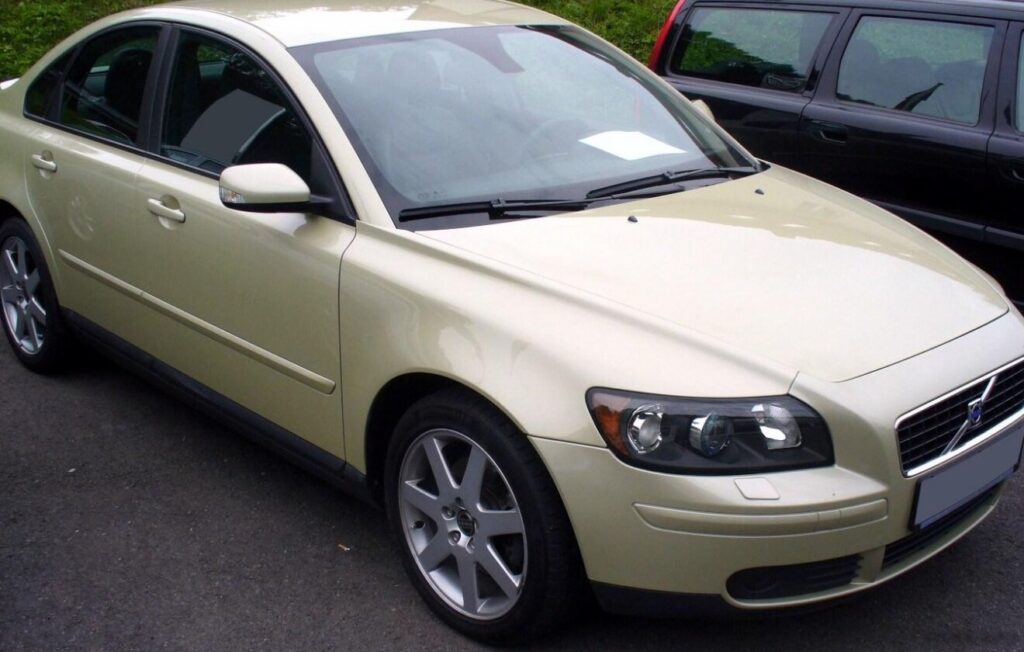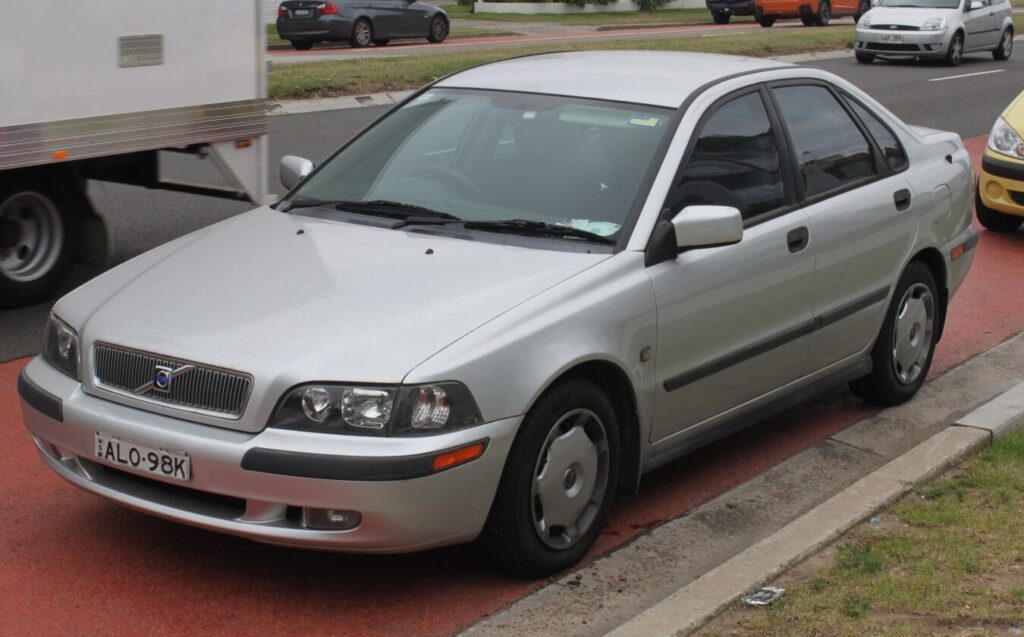
The Volvo S40 (VS) 2.0 16V, produced between 1995 and 2003, represented Volvo’s entry into the compact executive sedan market. This generation, internally designated VS, was a significant departure for Volvo, moving away from the boxy designs of the past towards a more contemporary and aerodynamic profile. The 2.0 16V variant, powered by the B4204S engine producing 136 horsepower, served as a core model within the S40 lineup, offering a balance of performance and affordability. It was positioned as a step up from the base 1.8L engine, appealing to buyers seeking a more spirited driving experience without the higher price tag of the later turbocharged models.
Technical Specifications
| Brand | Volvo |
| Model | S40 |
| Generation | S40 (VS) |
| Type (Engine) | 2.0 16V (136 Hp) |
| Start of production | 1995 |
| End of production | 2003 |
| Powertrain Architecture | Internal Combustion engine |
| Body type | Sedan |
| Seats | 5 |
| Doors | 4 |
| Fuel consumption (urban) | 11.8 l/100 km (19.9 US mpg) |
| Fuel consumption (extra urban) | 6.3 l/100 km (37.3 US mpg) |
| Fuel Type | Petrol (Gasoline) |
| Acceleration 0 – 100 km/h | 9.7 sec |
| Acceleration 0 – 62 mph | 9.7 sec |
| Acceleration 0 – 60 mph | 9.2 sec |
| Maximum speed | 205 km/h (127.38 mph) |
| Weight-to-power ratio | 9.5 kg/Hp |
| Weight-to-torque ratio | 6.8 kg/Nm |
| Power | 136 Hp @ 5800 rpm |
| Torque | 190 Nm @ 4000 rpm (140.14 lb.-ft. @ 4000 rpm) |
| Engine layout | Front, Transverse |
| Engine Model/Code | B4204S |
| Engine displacement | 1948 cm3 (118.87 cu. in.) |
| Number of cylinders | 4 |
| Engine configuration | Inline |
| Cylinder Bore | 83 mm (3.27 in.) |
| Piston Stroke | 90 mm (3.54 in.) |
| Compression ratio | 10.5:1 |
| Number of valves per cylinder | 4 |
| Fuel injection system | Multi-port manifold injection |
| Engine aspiration | Naturally aspirated engine |
| Valvetrain | DOHC |
| Engine oil capacity | 5.4 l (5.71 US qt | 4.75 UK qt) |
| Coolant capacity | 6.3 l (6.66 US qt | 5.54 UK qt) |
| Kerb Weight | 1290 kg (2843.96 lbs.) |
| Max. weight | 1770 kg (3902.18 lbs.) |
| Max load | 480 kg (1058.22 lbs.) |
| Trunk (boot) space – minimum | 415 l (14.66 cu. ft.) |
| Trunk (boot) space – maximum | 853 l (30.12 cu. ft.) |
| Fuel tank capacity | 60 l (15.85 US gal | 13.2 UK gal) |
| Length | 4516 mm (177.8 in.) |
| Width | 1716 mm (67.56 in.) |
| Height | 1422 mm (55.98 in.) |
| Wheelbase | 2562 mm (100.87 in.) |
| Front track | 1472 mm (57.95 in.) |
| Rear track | 1474 mm (58.03 in.) |
| Drivetrain Architecture | Front wheel drive |
| Number of gears | 5 |
| Gearbox type | Manual transmission |
| Front suspension | Wishbone |
| Rear suspension | Coil spring |
| Front brakes | Ventilated discs |
| Rear brakes | Disc |
| Assisting systems | ABS (Anti-lock braking system) |
| Steering type | Steering rack and pinion |
| Power steering | Hydraulic |
| Tires size | 195/55 R15 |
| Wheel rims size | 15 |
Powertrain & Engine Architecture
The heart of the S40 2.0 16V is the B4204S engine, a naturally aspirated, 1.948-liter inline-four cylinder powerplant. This engine is a member of Volvo’s “Redblock” family, known for its robustness and relatively simple design. The “16V” designation refers to the four valves per cylinder (dual overhead camshafts – DOHC), enhancing breathing and contributing to the engine’s power output. Fuel delivery is managed by a multi-port fuel injection system, providing precise fuel metering for improved efficiency and emissions control. The B4204S produces 136 horsepower at 5800 rpm and 190 Nm (140 lb-ft) of torque at 4000 rpm. This engine was typically paired with a five-speed manual transmission, although a four-speed automatic transmission was also available, impacting performance slightly. The automatic transmission, while offering convenience, resulted in a noticeable decrease in acceleration and fuel economy compared to the manual version.
Driving Characteristics
The S40 2.0 16V with the manual transmission offered a reasonably engaging driving experience for its class. Acceleration from 0 to 60 mph took approximately 9.2 seconds, and it could reach a top speed of 127 mph. The engine felt responsive in the mid-range, making it suitable for everyday driving and occasional highway trips. The automatic transmission, however, dulled the driving experience. Gear changes were not particularly quick, and the transmission tended to hunt for gears under hard acceleration. The gear ratios were optimized for fuel economy rather than outright performance. Compared to the later turbocharged S40 models, the 2.0 16V felt significantly less powerful, but it offered a smoother, more linear power delivery. Compared to the base 1.8L engine, the 2.0 16V provided a noticeable improvement in acceleration and overall responsiveness.
Equipment & Trim Levels
The S40 2.0 16V typically came equipped with a reasonable level of standard features. These included power windows, power door locks, central locking, and an AM/FM radio. Higher trim levels, often denoted by “SE” or “LE” designations, added features such as alloy wheels, a sunroof, upgraded upholstery (often leather), and a more sophisticated audio system. Optional extras included air conditioning, heated front seats, and a rear window wiper. Interior upholstery was typically cloth, with leather available as an upgrade. The dashboard layout was functional and ergonomically designed, typical of Volvo’s focus on driver comfort and safety.
Chassis & Braking
The S40 (VS) utilized a front-wheel-drive layout with independent wishbone suspension at the front and a coil spring rear suspension. This setup provided a comfortable ride and decent handling characteristics. The front brakes were ventilated discs, offering good stopping power, while the rear brakes were solid discs. Anti-lock Braking System (ABS) was standard, enhancing safety by preventing wheel lockup during hard braking. Stabilizer bars were fitted to both the front and rear axles to reduce body roll during cornering. The chassis was designed to provide a balance between comfort and handling, prioritizing ride quality over sporty performance.
Market Reception & Comparison
The Volvo S40 2.0 16V was generally well-received by automotive critics. It was praised for its safety features, comfortable ride, and relatively spacious interior. However, some critics noted that the engine lacked the refinement and power of its competitors, particularly those from German manufacturers. Fuel economy was considered average for its class. Compared to the 1.8L S40, the 2.0 16V offered a worthwhile performance upgrade, justifying the higher price. Compared to the later turbocharged models, it represented a more affordable and less complex option, appealing to buyers who prioritized reliability and fuel efficiency over outright performance.
Legacy
The B4204S engine, found in the S40 2.0 16V, is known for its durability and relatively simple maintenance requirements. While not without its quirks (such as potential oil leaks as the engine ages), it is generally considered a reliable powerplant. Today, the S40 2.0 16V can be found in the used car market at relatively affordable prices. It represents a good value for buyers seeking a safe, comfortable, and reliable compact sedan. Parts availability is generally good, and the engine’s simplicity makes it relatively easy to repair. However, potential buyers should be aware of the potential for age-related issues, such as corrosion and wear on suspension components.