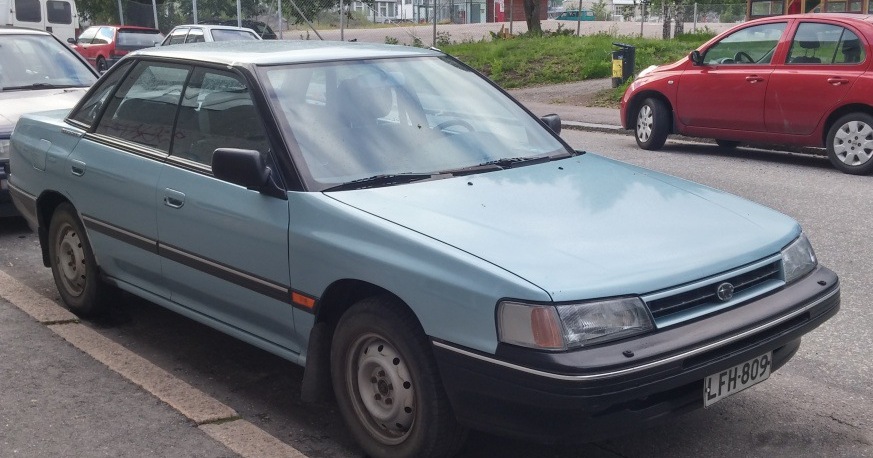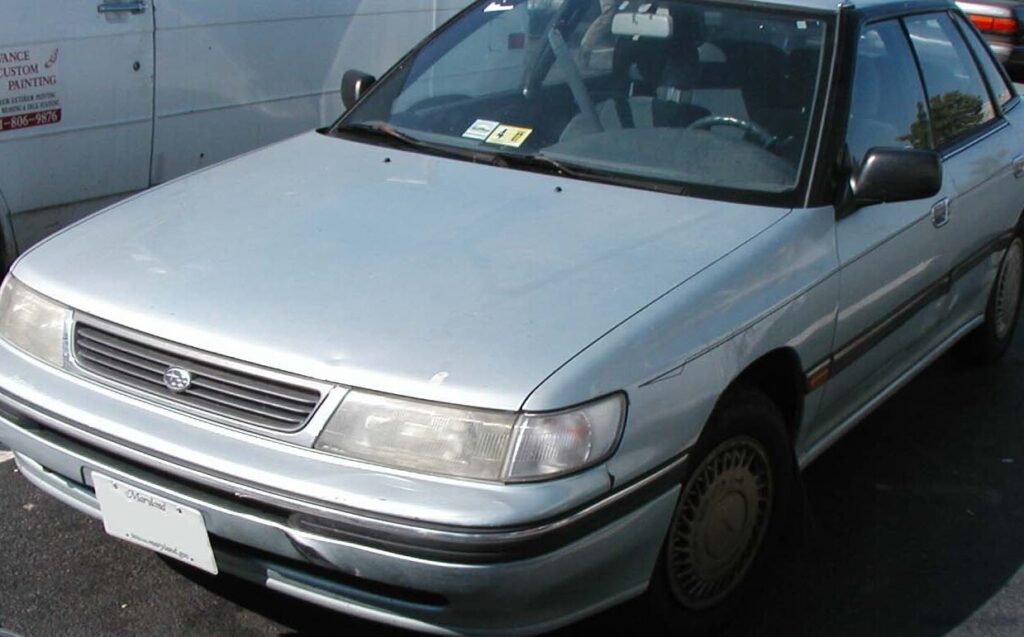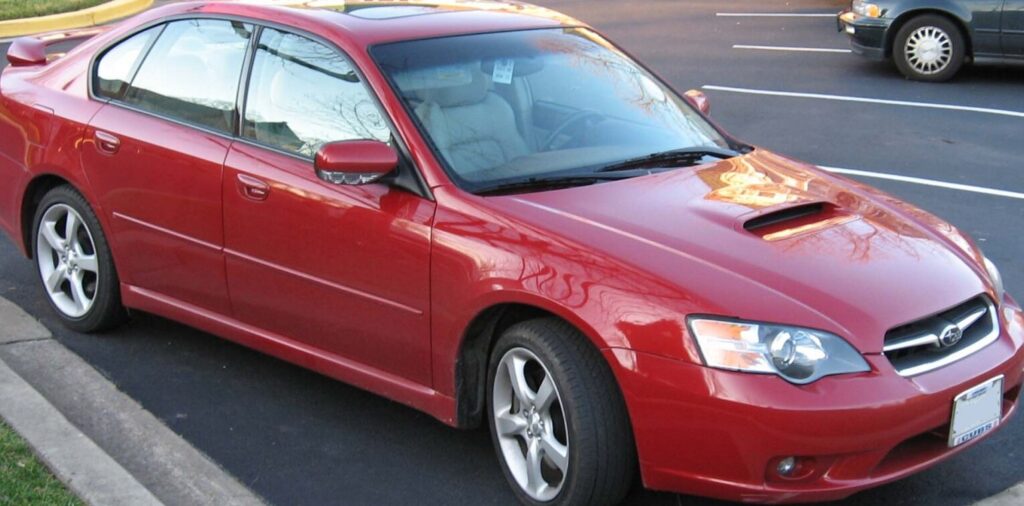
The Subaru Legacy IV 2.5i, produced from 2003 to 2005, represented a significant evolution in Subaru’s mid-size sedan offering. This generation, internally designated as the BE/BH series, continued Subaru’s commitment to all-wheel drive and boxer engines, but with refinements in styling, safety, and technology. The 2.5i variant, equipped with a 2.5-liter naturally aspirated engine producing 165 horsepower and paired with a four-speed automatic transmission, occupied a central position in the Legacy IV lineup, offering a balance of performance, comfort, and practicality for the North American market. It was positioned above the base 2.5 model and below the turbocharged 2.5 GT specification.
Technical Specifications
| Brand | Subaru |
| Model | Legacy |
| Generation | Legacy IV |
| Type (Engine) | 2.5i (165 Hp) AWD Automatic |
| Start of production | 2003 |
| End of production | 2005 |
| Powertrain Architecture | Internal Combustion engine |
| Body type | Sedan |
| Seats | 5 |
| Doors | 4 |
| Fuel consumption (urban) | 11.4 l/100 km (20.6 US mpg) |
| Fuel consumption (extra urban) | 6.1 l/100 km (38.6 US mpg) |
| Fuel consumption (combined) | 8.1 l/100 km (29 US mpg) |
| CO2 emissions | 193 g/km |
| Fuel Type | Petrol (Gasoline) |
| Acceleration 0 – 100 km/h | 10.8 sec |
| Acceleration 0 – 62 mph | 10.8 sec |
| Acceleration 0 – 60 mph | 10.3 sec |
| Maximum speed | 210 km/h (130.49 mph) |
| Emission standard | Euro 3 |
| Weight-to-power ratio | 8.4 kg/Hp |
| Weight-to-torque ratio | 6.1 kg/Nm |
| Power | 165 Hp @ 5600 rpm |
| Torque | 226 Nm @ 4400 rpm (166.69 lb.-ft. @ 4400 rpm) |
| Engine layout | Front, Longitudinal |
| Engine Model/Code | EJ251, EJ259 |
| Engine displacement | 2457 cm3 (149.94 cu. in.) |
| Number of cylinders | 4 |
| Engine configuration | Boxer |
| Cylinder Bore | 99.5 mm (3.92 in.) |
| Piston Stroke | 79 mm (3.11 in.) |
| Compression ratio | 10:1 |
| Number of valves per cylinder | 4 |
| Fuel injection system | Multi-port manifold injection |
| Engine aspiration | Naturally aspirated engine |
| Valvetrain | SOHC |
| Engine oil capacity | 4.2 l (4.44 US qt | 3.7 UK qt) |
| Coolant capacity | 6.7 l (7.08 US qt | 5.9 UK qt) |
| Kerb Weight | 1380 kg (3042.38 lbs.) |
| Max. weight | 1930 kg (4254.92 lbs.) |
| Max load | 550 kg (1212.54 lbs.) |
| Trunk (boot) space – minimum | 433 l (15.29 cu. ft.) |
| Fuel tank capacity | 64 l (16.91 US gal | 14.08 UK gal) |
| Max. roof load | 80 kg (176.37 lbs.) |
| Permitted trailer load with brakes (12%) | 1800 kg (3968.32 lbs.) |
| Permitted trailer load without brakes | 715 kg (1576.31 lbs.) |
| Length | 4665 mm (183.66 in.) |
| Width | 1730 mm (68.11 in.) |
| Height | 1425 mm (56.1 in.) |
| Wheelbase | 2670 mm (105.12 in.) |
| Front track | 1495 mm (58.86 in.) |
| Rear (Back) track | 1490 mm (58.66 in.) |
| Ride height (ground clearance) | 150 mm (5.91 in.) |
| Drive wheel | All wheel drive (4×4) |
| Number of gears and type of gearbox | 4 gears, automatic transmission |
| Front suspension | Spring Strut |
| Rear suspension | Coil spring |
| Front brakes | Ventilated discs |
| Rear brakes | Disc |
| Assisting systems | ABS (Anti-lock braking system) |
| Steering type | Steering rack and pinion |
| Power steering | Hydraulic Steering |
| Tires size | 205/55 R16V |
| Wheel rims size | 6.5J x 16 |
Powertrain & Engine Architecture
The heart of the 2.5i was the EJ251 or EJ259 2.5-liter horizontally opposed (boxer) four-cylinder engine. This engine was a staple of Subaru’s engineering philosophy, known for its inherent balance and smooth operation. The EJ25 series engines utilized a single overhead camshaft (SOHC) design, with four valves per cylinder. Fuel delivery was managed by a multi-port fuel injection system, providing adequate performance for everyday driving. The engine’s 165 horsepower and 166.69 lb-ft of torque were respectable for its time, though not particularly groundbreaking. The four-speed automatic transmission, while providing convenience, was a somewhat dated design by the early 2000s, lacking the efficiency and responsiveness of newer transmissions. It featured typical torque converter lock-up for improved highway fuel economy.
Driving Characteristics
The 2.5i Automatic offered a comfortable and predictable driving experience. Acceleration was adequate for merging onto highways and passing slower traffic, but it wasn’t a particularly sporty vehicle. The automatic transmission, while smooth, could feel somewhat sluggish, especially when downshifting. The all-wheel-drive system provided excellent traction in various weather conditions, a key selling point for Subaru. The gear ratios were tuned for fuel efficiency and comfort rather than outright performance. Compared to the five-speed manual transmission available on other Legacy models, the automatic version felt less engaging and offered slightly reduced fuel economy.
Equipment & Trim Levels
The 2.5i trim typically included standard features such as air conditioning, power windows and locks, a CD player, and cloth upholstery. Alloy wheels were often standard, though the design varied depending on the year. Optional extras included a sunroof, upgraded audio system, and leather upholstery. Safety features like anti-lock brakes (ABS) were standard. The interior design was functional and straightforward, prioritizing usability over luxury. The dashboard layout was clean and easy to navigate, with logically placed controls.
Chassis & Braking
The Legacy IV utilized a MacPherson strut front suspension and a coil spring rear suspension. This setup provided a comfortable ride quality, absorbing bumps and imperfections in the road effectively. The chassis was relatively lightweight, contributing to the car’s nimble handling. The braking system consisted of ventilated discs at the front and solid discs at the rear. ABS was standard, enhancing braking performance and stability. The steering was hydraulic power-assisted, providing a reasonable level of feedback and responsiveness.
Market Reception & Comparison
The Subaru Legacy IV 2.5i Automatic was generally well-received by automotive critics as a practical and reliable family sedan. It was praised for its all-wheel-drive system, comfortable ride, and spacious interior. However, some critics noted that the automatic transmission felt dated and that the engine lacked the punch of the turbocharged models. Fuel economy was considered average for its class. Compared to competitors like the Honda Accord and Toyota Camry, the Legacy offered a unique combination of all-wheel drive and a boxer engine, appealing to buyers in regions with inclement weather. The 2.5 GT model, with its turbocharged engine, offered significantly more performance but came at a higher price point.
Legacy
The EJ25 engine family, including the EJ251 and EJ259 variants found in the 2.5i, has a reputation for being relatively durable, though they are known to be susceptible to head gasket failures, particularly in earlier iterations. Regular maintenance, including timely oil changes and coolant flushes, is crucial for ensuring longevity. Today, the Legacy IV 2.5i Automatic remains a relatively affordable and practical used car option. Its all-wheel-drive system and reputation for reliability continue to make it a popular choice for buyers seeking a dependable and capable sedan. Parts availability is generally good, and the car’s relatively simple mechanical design makes it accessible for DIY repairs.