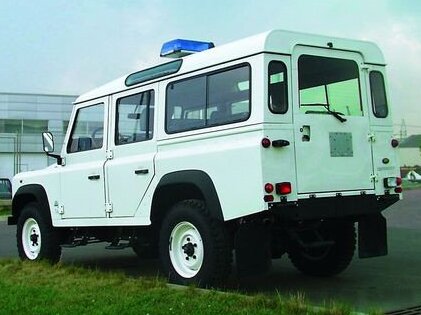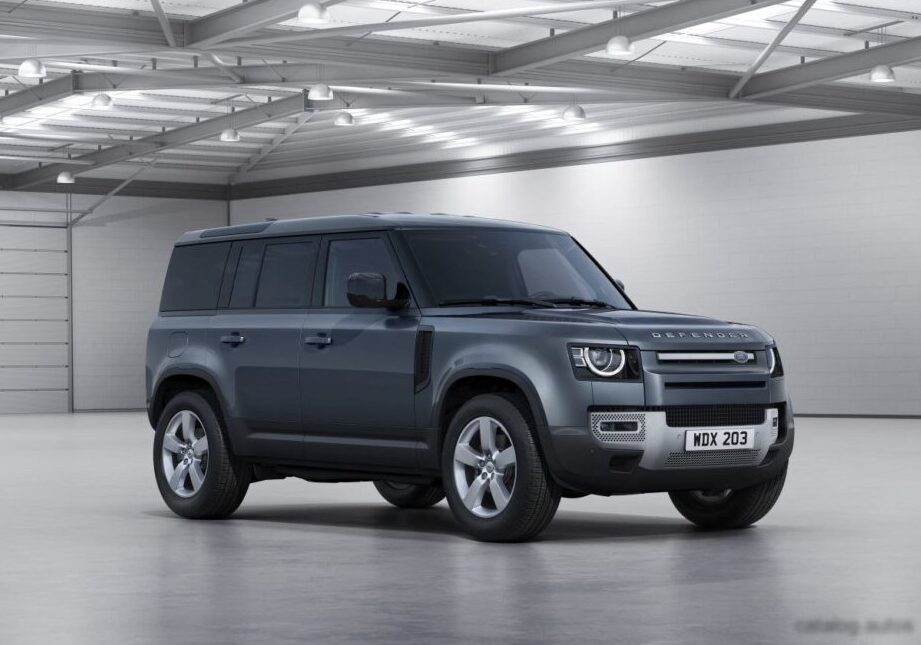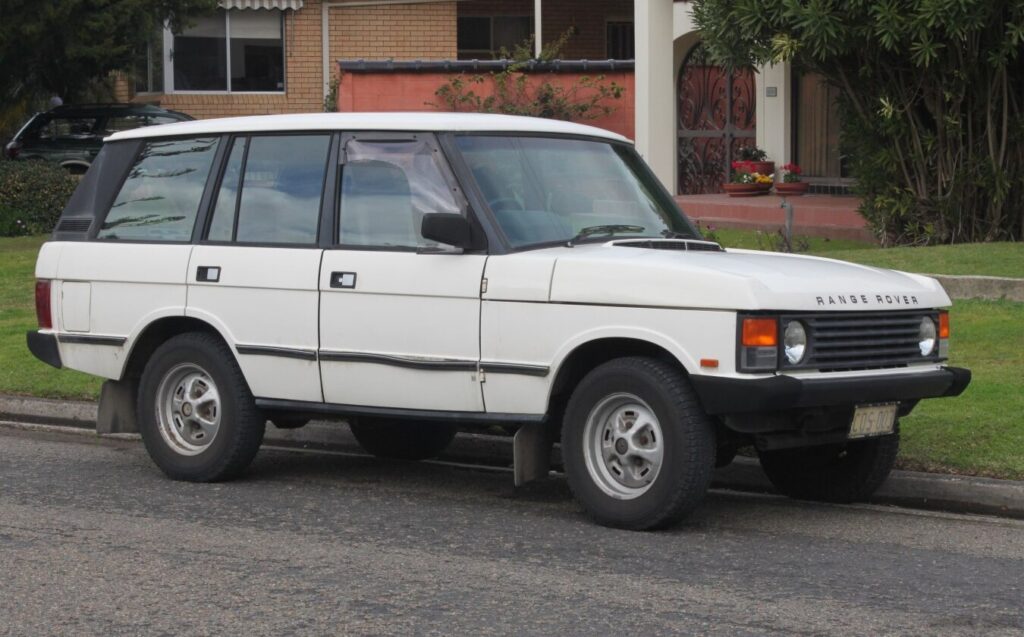
The Land Rover Range Rover I 3.9 CAT, produced from 1988 to 1994, represents a significant evolution of the original Range Rover, blending luxury with off-road capability. This variant, powered by a 3.9-liter catalytic converter-equipped V8 engine producing 173 horsepower, occupied a middle ground in the Range Rover I lineup, offering a balance between performance and fuel efficiency compared to the earlier carbureted models and the later, more powerful 4.2-liter versions. It was a key model during a period where emissions regulations were becoming increasingly stringent, and the introduction of the catalytic converter was crucial for continued sales in key markets like the United States.
Technical Specifications
| Brand | Land Rover |
| Model | Range Rover |
| Generation | Range Rover I |
| Type (Engine) | 3.9 CAT (173 Hp) |
| Start of Production | 1988 |
| End of Production | 1994 |
| Powertrain Architecture | Internal Combustion Engine |
| Body Type | SUV |
| Fuel Type | Petrol (Gasoline) |
| Engine Specs (Power) | 173 Hp |
| Engine Aspiration | Naturally Aspirated |
Introduction
The original Range Rover, launched in 1970, quickly established itself as a benchmark for luxury SUVs. By the late 1980s, the first generation was showing its age, but Land Rover continued to refine it. The introduction of the 3.9 CAT in 1988 was a direct response to tightening emissions standards, particularly in North America, a crucial export market for the Range Rover. The “CAT” designation signifies the inclusion of a catalytic converter, a relatively new technology at the time. This engine replaced the earlier 3.5-liter carbureted V8, offering improved emissions and slightly increased power. The 3.9 CAT remained in production until 1994, bridging the gap between the first-generation Range Rover and the launch of the second-generation model.
Powertrain & Engine Architecture
The 3.9-liter V8 engine (Rover V8 engine family) is the heart of this variant. It’s a naturally aspirated, 90-degree V8 constructed primarily of aluminum alloy, contributing to a relatively lightweight engine for its displacement. The engine utilizes a Bosch fuel injection system, a significant upgrade from the previous carbureted setup, improving fuel efficiency and driveability. The catalytic converter, a three-way system, reduces harmful emissions by converting hydrocarbons, carbon monoxide, and nitrogen oxides into less harmful substances. The engine’s valvetrain features two valves per cylinder, operated by a single overhead camshaft. While the 3.9 CAT produced 173 horsepower at 4,750 rpm and 230 lb-ft of torque at 3,100 rpm, it wasn’t a particularly high-output engine for its time, but it provided adequate power for the Range Rover’s substantial weight. The transmission offered was typically a four-speed automatic, chosen for its smoothness and ease of use, aligning with the Range Rover’s luxury positioning. Manual transmissions were available in some markets, but were far less common.
Driving Characteristics
The Range Rover I 3.9 CAT, with its automatic transmission, offered a comfortable and refined driving experience. Acceleration was adequate, taking around 11-12 seconds to reach 60 mph. However, it wasn’t a particularly sporty vehicle; the focus was on providing a smooth, effortless ride both on and off-road. The automatic transmission, while smooth, could feel somewhat sluggish compared to the manual option, particularly when attempting quick overtaking maneuvers. The gear ratios were optimized for cruising and towing, rather than outright performance. The engine’s torque delivery was relatively linear, making it easy to control in challenging off-road conditions. The Range Rover’s permanent four-wheel drive system, combined with its high ground clearance and sophisticated suspension, made it exceptionally capable in a variety of terrains.
Equipment & Trim Levels
The 3.9 CAT typically came well-equipped, reflecting the Range Rover’s luxury status. Standard features included leather upholstery, power windows and locks, central locking, and a sunroof. Air conditioning was almost universally fitted. Interior trim levels varied, with options for different wood veneers and leather colors. Optional extras included heated seats, a premium sound system, and a rear wash/wipe system. The dashboard layout was relatively simple and functional, with clearly labeled controls. The 3.9 CAT generally sat in the mid-range of the Range Rover I lineup, offering a good balance of features and price. It was positioned above the base models with the older 3.5-liter engine, but below the more expensive 4.2-liter variants.
Chassis & Braking
The Range Rover I utilized a body-on-frame construction, providing a robust and durable chassis. The suspension system was a key feature, employing coil springs and long-travel shock absorbers to deliver a comfortable ride and excellent off-road articulation. The 3.9 CAT typically featured disc brakes on all four wheels, providing adequate stopping power for its weight. However, the braking system lacked the advanced features found on more modern vehicles, such as ABS (Anti-lock Braking System). Rear drum brakes were sometimes fitted on earlier models or lower trim levels. Stabilizer bars were fitted to both the front and rear axles to reduce body roll during cornering. The steering was a recirculating ball system, which provided a relatively heavy but precise feel.
Market Reception & Comparison
The Range Rover I 3.9 CAT was generally well-received by critics and buyers alike. It was praised for its luxurious interior, comfortable ride, and exceptional off-road capability. The catalytic converter was seen as a positive step towards reducing emissions, making the vehicle more appealing to environmentally conscious buyers. Compared to the earlier 3.5-liter models, the 3.9 CAT offered improved performance and driveability. However, it was less powerful than the later 4.2-liter variants. Fuel economy was relatively poor, averaging around 14-16 mpg in real-world driving. Reliability could be an issue, as with many British cars of the era, with potential problems including electrical gremlins and corrosion. However, the 3.9 CAT was generally considered to be more reliable than the earlier carbureted models.
Legacy
The Range Rover I 3.9 CAT holds a significant place in automotive history as a pioneering luxury SUV. The introduction of the catalytic converter marked a turning point in emissions control, and the vehicle helped to establish the Range Rover as a desirable and prestigious brand. Today, well-maintained examples of the 3.9 CAT are sought after by collectors and enthusiasts. The 3.9-liter V8 engine is known for its durability and relatively simple construction, making it easier to maintain than some of the more complex engines of the era. However, parts availability can be a challenge, and corrosion remains a concern. The 3.9 CAT represents a sweet spot in the Range Rover I lineup, offering a good balance of performance, luxury, and reliability, making it a classic that continues to be appreciated by enthusiasts worldwide.