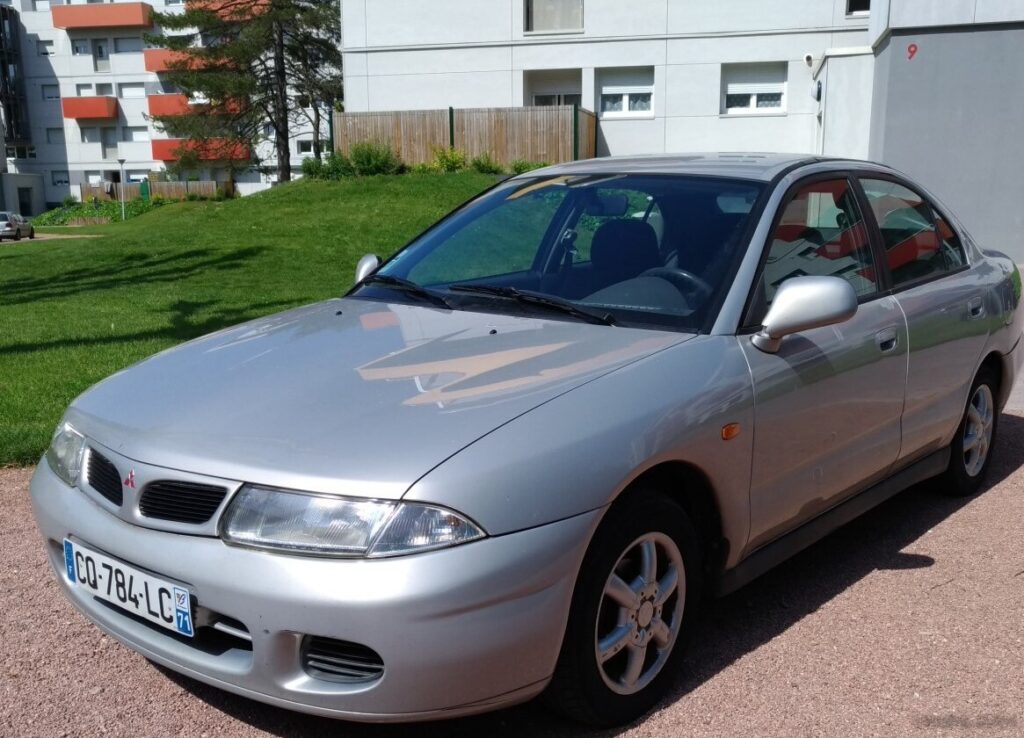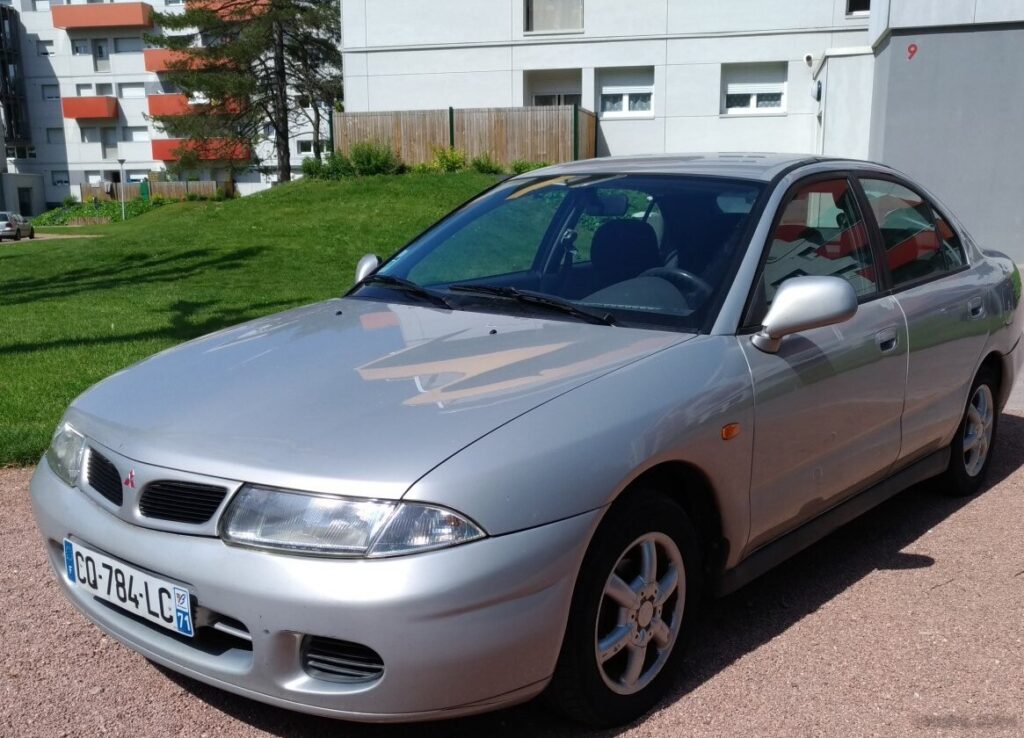
The Mitsubishi Carisma 1.8 16V GDI Automatic, produced between 2001 and 2003, represented a mid-range offering within the Carisma hatchback lineup. Positioned above the base 1.6L models and below the more performance-oriented variants, this version aimed to balance fuel efficiency with acceptable performance for everyday driving. The Carisma, itself a rebadged and significantly revised version of the European Chrysler Neon and Voyager, was Mitsubishi’s attempt to establish a stronger foothold in the competitive European compact car segment. This particular variant, utilizing Mitsubishi’s GDI (Gasoline Direct Injection) technology, was intended to offer improved fuel economy and reduced emissions compared to traditional port-fuel injection systems.
Technical Specifications
| Brand | Mitsubishi |
| Model | Carisma |
| Generation | Carisma Hatchback |
| Type (Engine) | 1.8 16V GDI (122 Hp) Automatic |
| Start of production | 2001 |
| End of production | 2003 |
| Powertrain Architecture | Internal Combustion engine |
| Body type | Hatchback |
| Seats | 5 |
| Doors | 5 |
| Fuel consumption (urban) | 11.4 l/100 km (20.6 US mpg) |
| Fuel consumption (extra urban) | 6.3 l/100 km (37.3 US mpg) |
| Fuel consumption (combined) | 8.1 l/100 km (29 US mpg) |
| Fuel Type | Petrol (Gasoline) |
| Acceleration 0 – 100 km/h | 12.5 sec |
| Acceleration 0 – 62 mph | 12.5 sec |
| Acceleration 0 – 60 mph | 11.9 sec |
| Maximum speed | 200 km/h (124.27 mph) |
| Weight-to-power ratio | 10.3 kg/Hp |
| Weight-to-torque ratio | 7.2 kg/Nm |
| Power | 122 Hp @ 5500 rpm |
| Torque | 174 Nm @ 3750 rpm (128.34 lb.-ft. @ 3750 rpm) |
| Engine layout | Front, Transverse |
| Engine Model/Code | 4G93 |
| Engine displacement | 1834 cm3 (111.92 cu. in.) |
| Number of cylinders | 4 |
| Engine configuration | Inline |
| Cylinder Bore | 81 mm (3.19 in.) |
| Piston Stroke | 89 mm (3.5 in.) |
| Compression ratio | 11.6:1 |
| Number of valves per cylinder | 4 |
| Fuel injection system | Direct injection |
| Engine aspiration | Naturally aspirated |
| Valvetrain | DOHC |
| Engine oil capacity | 3.8 l (4.02 US qt | 3.34 UK qt) |
| Coolant capacity | 6.3 l (6.66 US qt | 5.54 UK qt) |
| Kerb Weight | 1260 kg (2777.82 lbs.) |
| Max. weight | 1750 kg (3858.09 lbs.) |
| Max load | 490 kg (1080.27 lbs.) |
| Trunk (boot) space – minimum | 430 l (15.19 cu. ft.) |
| Trunk (boot) space – maximum | 1050 l (37.08 cu. ft.) |
| Fuel tank capacity | 60 l (15.85 US gal | 13.2 UK gal) |
| Length | 4475 mm (176.18 in.) |
| Width | 1710 mm (67.32 in.) |
| Height | 1405 mm (55.31 in.) |
| Wheelbase | 2550 mm (100.39 in.) |
| Front track | 1475 mm (58.07 in.) |
| Rear track | 1470 mm (57.87 in.) |
| Drivetrain Architecture | Front wheel drive |
| Number of gears | 4 |
| Gearbox type | Automatic transmission |
| Front suspension | Spring Strut |
| Rear suspension | Coil spring |
| Front brakes | Ventilated discs |
| Rear brakes | Disc |
| Assisting systems | ABS (Anti-lock braking system) |
| Steering type | Steering rack and pinion |
| Power steering | Hydraulic |
| Tires size | 195/60 R15 |
| Wheel rims size | 15 |
INTRODUCTION
The Mitsubishi Carisma, launched in 1995, was a significant model for the company, representing a move towards more contemporary design and engineering. The hatchback version, introduced alongside the sedan, offered practicality and versatility for European buyers. The 1.8 16V GDI Automatic, arriving in the later stages of the Carisma’s production run (2001-2003), was designed to appeal to drivers seeking a comfortable and reasonably efficient vehicle. It sat within the Carisma range as a step up from the 1.6-liter models, offering more power and refinement, but without the higher price tag of the more sporting variants.
Powertrain & Engine Architecture
At the heart of the Carisma 1.8 GDI Automatic lies the 4G93 engine, a 1.8-liter, inline-four cylinder powerplant. What set this engine apart was its Gasoline Direct Injection (GDI) system. Unlike traditional multi-point fuel injection, GDI injects fuel directly into the combustion chamber, allowing for more precise fuel control, improved combustion efficiency, and reduced emissions. The 4G93 featured a double overhead camshaft (DOHC) valvetrain with four valves per cylinder, contributing to its relatively high power output for its displacement. The engine produced 122 horsepower at 5500 rpm and 174 Nm (128 lb-ft) of torque at 3750 rpm. Paired with this engine was a four-speed automatic transmission, chosen for its ease of use and suitability for everyday driving. This transmission wasn’t known for its sportiness, prioritizing smooth shifts over rapid acceleration.
Driving Characteristics
The driving experience in the Carisma 1.8 GDI Automatic was characterized by smooth, predictable performance. While not particularly quick – 0-60 mph took around 11.9 seconds – the engine provided adequate power for most driving situations. The automatic transmission, while comfortable, did contribute to a slight feeling of lethargy compared to the manual transmission versions. Gear ratios were tuned for fuel economy and relaxed cruising rather than outright acceleration. The GDI system did provide a noticeable improvement in fuel economy compared to older, port-injected engines, but the benefits weren’t dramatic. The car felt stable and composed on the road, but lacked the sharp handling characteristics of some of its rivals.
Equipment & Trim Levels
The 1.8 GDI Automatic trim typically included features such as air conditioning, power windows, central locking, and an integrated stereo system. Interior upholstery was generally cloth, with a relatively simple and functional dashboard layout. Optional extras could include alloy wheels, a sunroof, and upgraded audio systems. The level of equipment was competitive for its price point, aiming to provide a comfortable and well-equipped vehicle without venturing into premium territory. Safety features included ABS brakes and driver and passenger airbags.
Chassis & Braking
The Carisma utilized a front-wheel-drive layout with a MacPherson strut suspension at the front and a coil spring suspension at the rear. The suspension setup was tuned for comfort, providing a reasonably smooth ride over most road surfaces. Braking duties were handled by ventilated discs at the front and solid discs at the rear. The ABS system helped to maintain control during emergency braking situations. The chassis was relatively lightweight, contributing to the car’s overall efficiency.
Market Reception & Comparison
The Carisma 1.8 GDI Automatic received mixed reviews from automotive critics. It was generally praised for its fuel efficiency and comfortable ride, but criticized for its lack of outright performance and somewhat uninspiring handling. Compared to rivals like the Ford Focus and Vauxhall/Opel Astra, the Carisma offered a more refined engine but lacked the dynamic flair of those competitors. The 1.6-liter Carisma models were more affordable, while the higher-output variants offered more performance but at a higher price. The GDI Automatic struck a balance between these extremes, appealing to buyers who prioritized comfort and economy over sporty driving dynamics.
Legacy
The Mitsubishi Carisma, while not a runaway success in terms of sales, represented an important step forward for the company in the European market. The 4G93 GDI engine proved to be relatively reliable, although the direct injection system did require careful maintenance to prevent carbon buildup. Today, the Carisma 1.8 GDI Automatic can be found on the used car market at very affordable prices. While it may not offer the latest technology or performance, it remains a practical and economical option for those seeking a reliable and comfortable hatchback. Parts availability can be a concern, but the engine’s robust design and relatively simple construction mean that it can be a cost-effective vehicle to maintain.