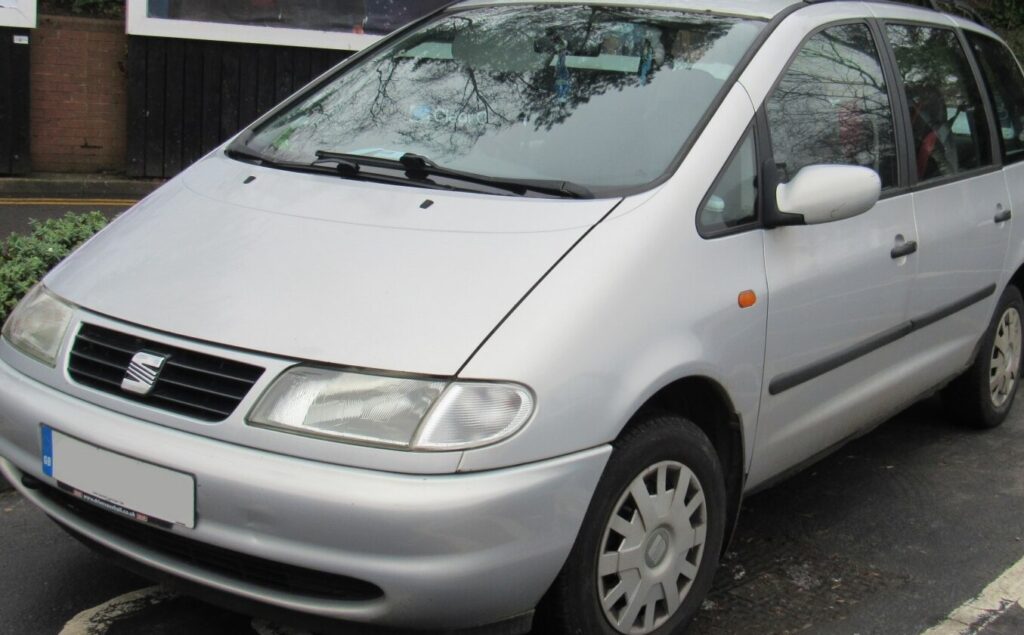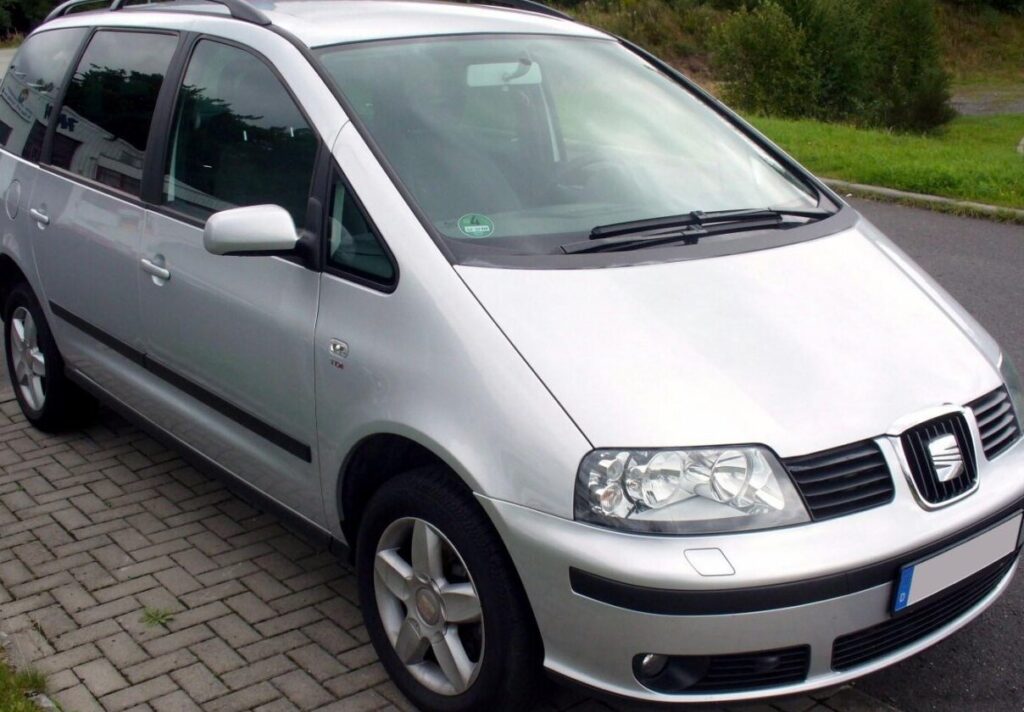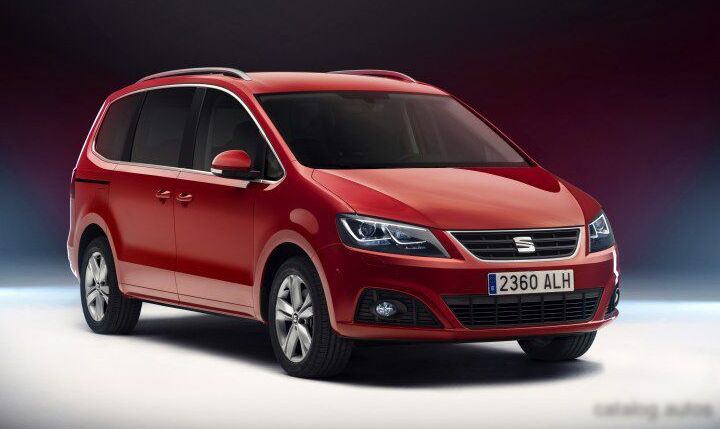
The Seat Alhambra II (7N), particularly the facelifted version introduced in May 2015, represents Seat’s entry into the large MPV (Multi-Purpose Vehicle) segment. Built in collaboration with Volkswagen – sharing a platform and many components with the Volkswagen Sharan – the Alhambra aimed to provide a spacious and practical vehicle for families. Production of this generation continued until 2020. The 2.0 TDI 150 horsepower variant occupied a middle ground in the Alhambra lineup, offering a balance between fuel efficiency, performance, and price. It was positioned above the lower-powered diesel options and below the more expensive, higher-specification trims.
Technical Specifications
| Brand | Seat |
| Model | Alhambra |
| Generation | Alhambra II (7N, facelift 2015) |
| Type (Engine) | 2.0 TDI (150 Hp) |
| Start of production | May, 2015 |
| End of production | 2020 |
| Powertrain Architecture | Internal Combustion engine |
| Body type | Minivan, MPV |
| Seats | 5 |
| Doors | 5 |
| Fuel consumption (combined) | 5 l/100 km (47 US mpg, 56.5 UK mpg, 20 km/l) |
| CO2 emissions | 130 g/km |
| Fuel Type | Diesel |
| Acceleration 0 – 100 km/h | 10.3 sec |
| Acceleration 0 – 62 mph | 10.3 sec |
| Acceleration 0 – 60 mph | 9.8 sec |
| Maximum speed | 200 km/h (124.27 mph) |
| Emission standard | Euro 6 |
| Weight-to-power ratio | 11.3 kg/Hp, 88.2 Hp/tonne |
| Weight-to-torque ratio | 5 kg/Nm, 200 Nm/tonne |
| Power | 150 Hp @ 3500 rpm |
| Power per litre | 76.2 Hp/l |
| Torque | 340 Nm @ 1750-3000 rpm (250.77 lb.-ft. @ 1750-3000 rpm) |
| Engine layout | Front, Transverse |
| Engine Model/Code | CUVC, DFLA |
| Engine displacement | 1968 cm3 (120.09 cu. in.) |
| Number of cylinders | 4 |
| Engine configuration | Inline |
| Cylinder Bore | 81 mm (3.19 in.) |
| Piston Stroke | 95.5 mm (3.76 in.) |
| Compression ratio | 16:1 |
| Number of valves per cylinder | 4 |
| Fuel injection system | Diesel Commonrail |
| Engine aspiration | Turbocharger, Intercooler |
| Engine oil capacity | 4.6 l (4.86 US qt | 4.05 UK qt) |
| Coolant | 8 l (8.45 US qt | 7.04 UK qt) |
| Kerb Weight | 1700 kg (3747.86 lbs.) |
| Max. weight | 2390 kg (5269.05 lbs.) |
| Max load | 690 kg (1521.19 lbs.) |
| Trunk (boot) space – minimum | 955 l (33.73 cu. ft.) |
| Trunk (boot) space – maximum | 2430 l (85.81 cu. ft.) |
| Fuel tank capacity | 70 l (18.49 US gal | 15.4 UK gal) |
| Length | 4854 mm (191.1 in.) |
| Width | 1904 mm (74.96 in.) |
| Height | 1720 mm (67.72 in.) |
| Wheelbase | 2919 mm (114.92 in.) |
| Front track | 1557 mm (61.3 in.) |
| Rear (Back) track | 1605 mm (63.19 in.) |
| Minimum turning circle | 11.9 m (39.04 ft.) |
| Drivetrain Architecture | Front wheel drive |
| Number of gears and type of gearbox | 6 gears, manual transmission |
| Front suspension | Independent type McPherson |
| Rear suspension | Independent coil spring |
| Front brakes | Ventilated discs |
| Rear brakes | Disc |
| Assisting systems | ABS (Anti-lock braking system) |
| Steering type | Steering rack and pinion |
| Power steering | Electric Steering |
| Tires size | 205/60 R16; 215/60 R16; 225/50 R17; 225/50 R18 |
| Wheel rims size | 16; 17; 18 |
INTRODUCTION
The Seat Alhambra II, launched in 2010 and facelifted in 2015, was a key model for Seat in the European market, offering a competitively priced and spacious alternative to more premium MPVs. The 2.0 TDI 150 hp version, equipped with a manual transmission, was a popular choice for buyers seeking a balance of economy and usability. It slotted into the range as a mid-level offering, providing more performance than the lower-powered diesel variants but remaining more affordable than the flagship models. The Alhambra, along with its VW Sharan sibling, was designed to appeal to families needing seven seats and a large cargo area, while also offering a relatively engaging driving experience for an MPV.
Powertrain & Engine Architecture
The heart of the Alhambra 2.0 TDI is the Volkswagen Group’s common rail diesel engine, specifically the CUVC or DFLA engine code depending on the exact production date and market. This 1968cc inline-four cylinder engine utilizes a turbocharger with an intercooler to boost power and efficiency. The engine features four valves per cylinder and a compression ratio of 16:1. Fuel is delivered via a Bosch common rail direct injection system, allowing for precise fuel metering and optimized combustion. The 150 hp output is achieved at 3500 rpm, while peak torque of 340 Nm (250.77 lb-ft) is available from 1750 to 3000 rpm. The six-speed manual transmission was the standard offering for this variant, providing a good spread of gears for both fuel economy and performance. The transmission’s gear ratios were tuned to maximize the engine’s torque delivery, making it suitable for long journeys and carrying a full load.
Driving Characteristics
The 2.0 TDI 150 hp Alhambra offers a competent, if not particularly exciting, driving experience. Acceleration from 0-60 mph takes around 9.8 seconds, which is adequate for everyday driving but doesn’t offer significant performance reserves. The engine’s strong mid-range torque makes it easy to maintain speed on highways and when overtaking. Compared to the higher-output 184 hp TDI version, the 150 hp model feels noticeably less powerful, especially when fully loaded. However, it also offers slightly better fuel economy. The manual transmission provides a more engaging driving experience than the optional DSG (Direct-Shift Gearbox), allowing for greater driver control. The Alhambra’s suspension is tuned for comfort, providing a relatively smooth ride even on uneven surfaces. Steering is light and precise, making it easy to maneuver in urban environments.
Equipment & Trim Levels
The Alhambra 2.0 TDI 150 hp typically came equipped with a reasonable level of standard equipment. This included air conditioning, electric windows, central locking, and a basic audio system. Higher trim levels added features such as alloy wheels, parking sensors, a touchscreen infotainment system, and climate control. Interior upholstery was typically cloth, with leather options available as an upgrade. The Alhambra’s interior is designed with practicality in mind, offering a spacious cabin with plenty of storage compartments. The second and third-row seats can be folded flat to create a large cargo area. Optional extras included a panoramic sunroof, navigation system, and advanced safety features like adaptive cruise control.
Chassis & Braking
The Alhambra II utilizes a McPherson strut front suspension and an independent coil spring rear suspension. This setup provides a good balance of comfort and handling. The front brakes are ventilated discs, while the rear brakes are solid discs. ABS (Anti-lock Braking System) is standard, providing enhanced braking performance in emergency situations. The Alhambra’s chassis is designed to handle the weight of a full load of passengers and luggage. Stabilizer bars are fitted to both the front and rear axles to reduce body roll during cornering. The steering is a rack and pinion system with electric power assistance, providing light and precise steering feel.
Market Reception & Comparison
The Seat Alhambra 2.0 TDI 150 hp was generally well-received by automotive critics. It was praised for its spacious interior, practicality, and fuel efficiency. However, some reviewers noted that the engine could feel underpowered when fully loaded. Compared to the Volkswagen Sharan, which it shares a platform with, the Alhambra offered a more affordable price point. Against competitors like the Ford Galaxy and Renault Espace, the Alhambra provided a compelling combination of value, space, and reliability. Fuel economy was a strong point, with the Alhambra achieving around 47 US mpg on the combined cycle. Reliability was generally good, although some owners reported issues with the diesel particulate filter (DPF).
Legacy
The Seat Alhambra II, including the 2.0 TDI 150 hp variant, has proven to be a relatively reliable and durable vehicle. The Volkswagen Group’s diesel engines are known for their longevity, and the Alhambra’s robust construction has helped it withstand the rigors of family life. On the used car market, the Alhambra remains a popular choice for buyers seeking a spacious and practical MPV at an affordable price. However, potential buyers should be aware of the potential for DPF issues and ensure that the vehicle has been properly maintained. The Alhambra’s legacy lies in providing a comfortable and versatile vehicle for families, offering a compelling alternative to more expensive and less practical options.