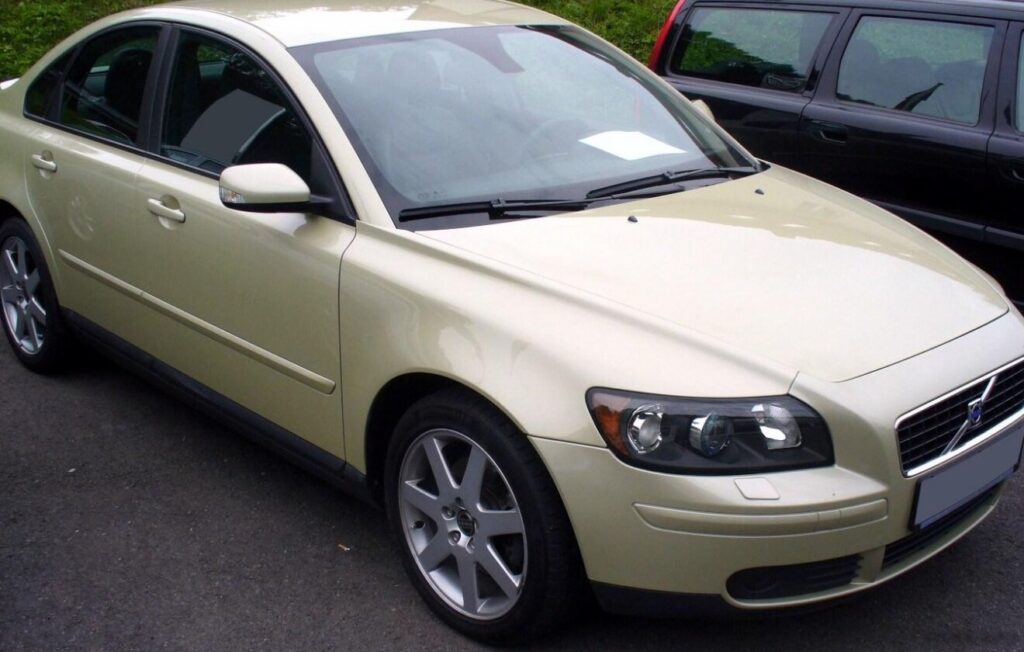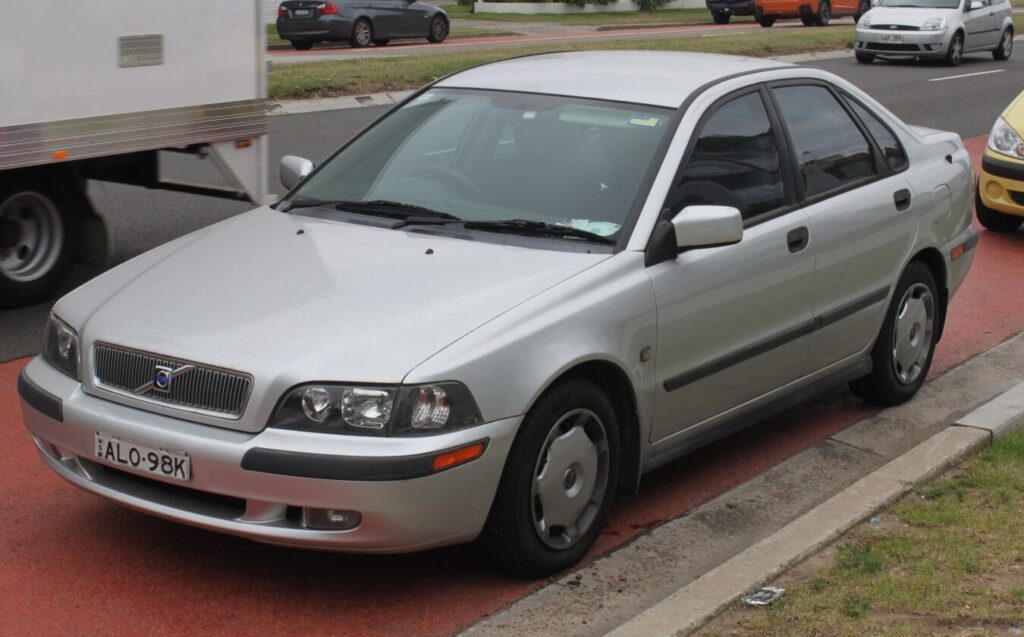
The Volvo S40 2.0 T, produced between 2001 and 2004, represents a significant iteration of Volvo’s compact executive car. Part of the VS generation (internally designated as the 440 series), this model occupied a mid-range position within the S40 lineup, offering a balance between performance and affordability. It was built upon Volvo’s shared platform with Mazda and Ford, known as the P24 platform, and aimed to compete with established rivals like the Audi A3, BMW 3 Series Compact, and Mercedes-Benz C-Class. The 2.0 T variant was particularly important in markets where buyers desired a more spirited driving experience than the base 1.8L models could provide, while remaining more accessible than the flagship T4.
Technical Specifications
| Brand | Volvo |
| Model | S40 |
| Generation | S40 (VS) |
| Type (Engine) | 2.0 T (165 Hp) |
| Start of production | 2001 year |
| End of production | 2004 year |
| Powertrain Architecture | Internal Combustion engine |
| Body type | Sedan |
| Seats | 5 |
| Doors | 4 |
| Fuel consumption (economy) – urban | 12 l/100 km (19.6 US mpg) |
| Fuel consumption (economy) – extra urban | 6.2 l/100 km (37.9 US mpg) |
| Fuel Type | Petrol (Gasoline) |
| Acceleration 0 – 100 km/h | 8.5 sec |
| Acceleration 0 – 62 mph | 8.5 sec |
| Acceleration 0 – 60 mph | 8.1 sec |
| Maximum speed | 220 km/h (136.7 mph) |
| Weight-to-power ratio | 7.9 kg/Hp |
| Weight-to-torque ratio | 5.5 kg/Nm |
| Power | 165 Hp @ 5250 rpm |
| Power per litre | 84.7 Hp/l |
| Torque | 240 Nm @ 1800 rpm (177.01 lb.-ft. @ 1800 rpm) |
| Engine layout | Front, Transverse |
| Engine Model/Code | B4204T3 |
| Engine displacement | 1948 cm3 (118.87 cu. in.) |
| Number of cylinders | 4 |
| Engine configuration | Inline |
| Cylinder Bore | 83 mm (3.27 in.) |
| Piston Stroke | 90 mm (3.54 in.) |
| Compression ratio | 9:1 |
| Number of valves per cylinder | 4 |
| Fuel injection system | Multi-port manifold injection |
| Engine aspiration | Turbocharger, Intercooler |
| Valvetrain | DOHC |
| Engine oil capacity | 5.4 l (5.71 US qt | 4.75 UK qt) |
| Coolant | 5.7 l (6.02 US qt | 5.02 UK qt) |
| Kerb Weight | 1310 kg (2888.06 lbs.) |
| Max. weight | 1790 kg (3946.27 lbs.) |
| Max load | 480 kg (1058.22 lbs.) |
| Trunk (boot) space – minimum | 415 l (14.66 cu. ft.) |
| Trunk (boot) space – maximum | 853 l (30.12 cu. ft.) |
| Fuel tank capacity | 60 l (15.85 US gal | 13.2 UK gal) |
| Length | 4516 mm (177.8 in.) |
| Width | 1716 mm (67.56 in.) |
| Height | 1422 mm (55.98 in.) |
| Wheelbase | 2562 mm (100.87 in.) |
| Front track | 1472 mm (57.95 in.) |
| Rear (Back) track | 1474 mm (58.03 in.) |
| Drivetrain Architecture | The Internal combustion engine (ICE) drives the front wheels of the vehicle. |
| Drive wheel | Front wheel drive |
| Number of gears and type of gearbox | 5 gears, manual transmission |
| Front suspension | Wishbone |
| Rear suspension | Coil spring |
| Front brakes | Ventilated discs |
| Rear brakes | Disc |
| Assisting systems | ABS (Anti-lock braking system) |
| Steering type | Steering rack and pinion |
| Power steering | Hydraulic Steering |
| Tires size | 205/55 R15 |
| Wheel rims size | 15 |
Powertrain & Engine Architecture
The heart of the S40 2.0 T is the B4204T3 engine, a 1.948-liter inline-four cylinder gasoline engine. This engine is a member of Volvo’s modular engine family, benefitting from a cast iron block and aluminum cylinder head. The “T” designation signifies the presence of a turbocharger and intercooler, significantly boosting power output. Fuel delivery is managed by a multi-port fuel injection system, providing precise fuel metering for optimal combustion. The engine utilizes a double overhead camshaft (DOHC) valvetrain with four valves per cylinder, enhancing volumetric efficiency and contributing to the engine’s responsive nature. The 2.0 T was exclusively offered with a 5-speed manual transmission, providing drivers with direct control over the engine’s power. This transmission was chosen to complement the engine’s performance characteristics, offering a more engaging driving experience than an automatic option would have.
Driving Characteristics
The S40 2.0 T delivers a noticeably more engaging driving experience compared to the base 1.8L models. The turbocharger provides a surge of torque at relatively low RPMs, making it feel quicker in everyday driving situations. Acceleration from 0 to 60 mph takes approximately 8.1 seconds, and it can reach a top speed of 136.7 mph. The 5-speed manual transmission allows for precise gear selection, enabling drivers to maximize the engine’s power band. While not a sports car, the 2.0 T offers a good balance of performance and comfort, making it suitable for both commuting and longer journeys. The steering is precise, and the suspension provides a comfortable ride without feeling overly soft. Compared to the later T4 models, the 2.0 T offers a more manageable power delivery, making it a more approachable option for drivers less experienced with turbocharged engines.
Equipment & Trim Levels
The S40 2.0 T typically came equipped with a reasonable level of standard features. These included power windows, power locks, air conditioning, and an AM/FM stereo system. Interior upholstery was typically cloth, although leather options were available. The dashboard layout was functional and ergonomically designed, with easy-to-read gauges and intuitive controls. Optional extras included a sunroof, upgraded audio system, and alloy wheels. Safety features, a hallmark of Volvo, were also standard, including ABS brakes and front airbags. The trim level generally sat between the base 1.8 and the more luxurious T4, offering a good balance of features and price.
Chassis & Braking
The S40 2.0 T utilizes a front-wheel-drive layout with independent wishbone suspension in the front and a coil spring setup in the rear. This suspension configuration provides a comfortable ride while maintaining good handling characteristics. The braking system consists of ventilated discs in the front and solid discs in the rear, providing adequate stopping power. ABS (Anti-lock Braking System) is standard, enhancing safety by preventing wheel lockup during hard braking. The chassis is relatively lightweight, contributing to the car’s nimble handling.
Market Reception & Comparison
The S40 2.0 T was generally well-received by automotive critics. It was praised for its responsive engine, comfortable ride, and standard safety features. However, some critics noted that the interior materials were not as luxurious as those found in some of its German rivals. Compared to the base 1.8L model, the 2.0 T offered a significant performance upgrade, making it a more appealing option for drivers who prioritized driving enjoyment. Fuel economy was reasonable for its class, averaging around 23.5 mpg in the UK and 37.9 mpg in the US for extra-urban driving. Reliability was generally good, although turbocharger issues could occasionally arise with improper maintenance.
Legacy
The Volvo S40 2.0 T has established a reputation as a reliable and enjoyable compact executive car. Today, well-maintained examples are sought after by enthusiasts who appreciate their blend of performance, comfort, and safety. The B4204T3 engine, while not without its potential issues, is generally considered to be durable and relatively easy to maintain. The 2.0 T variant represents a sweet spot in the S40 lineup, offering a good balance of power and affordability. Its legacy continues as a testament to Volvo’s commitment to building safe, reliable, and engaging vehicles.