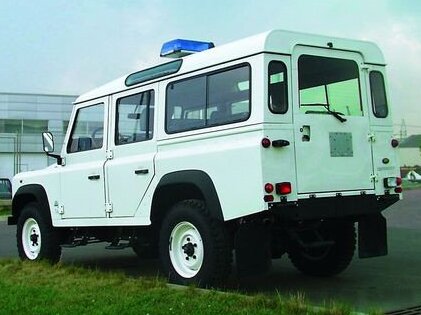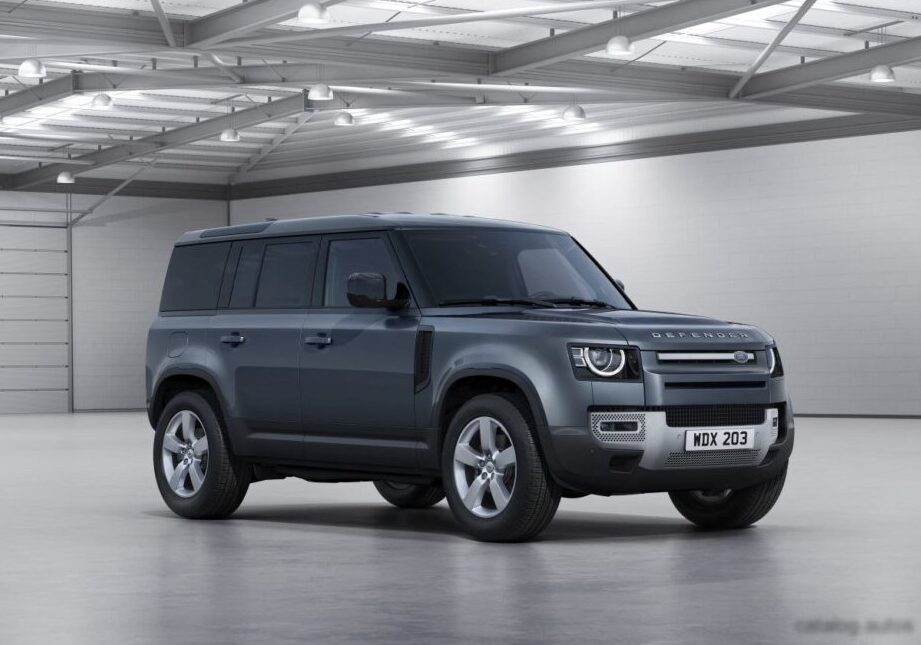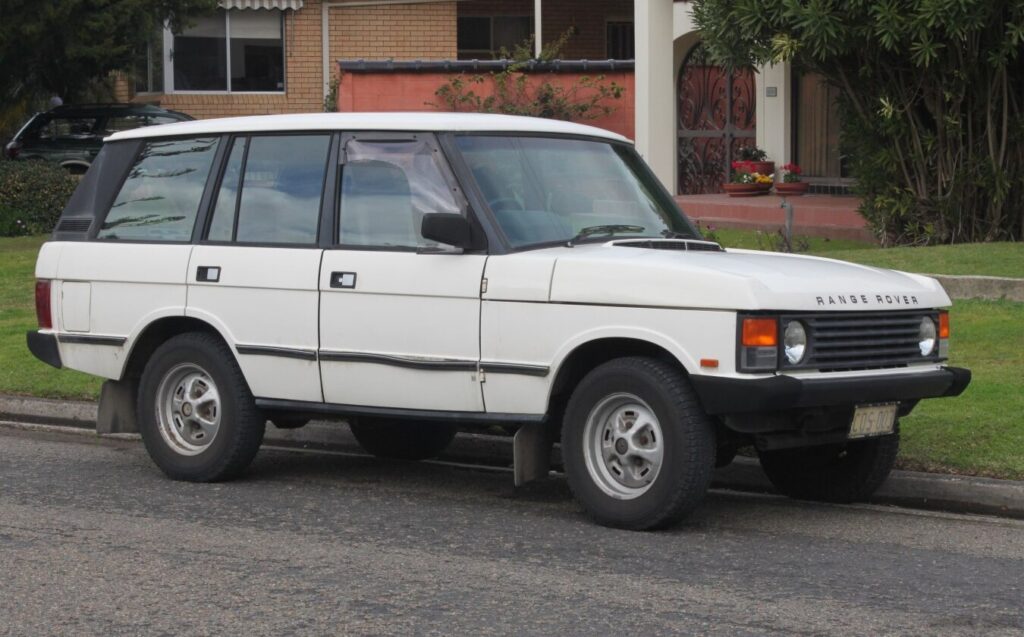
The Land Rover Range Rover I 3.9 Vogue SEI Automatic, produced between 1988 and 1994, represents a significant iteration of the original Range Rover (introduced in 1970). Positioned as a luxurious and capable SUV, the 3.9 Vogue SEI occupied a premium slot within the first-generation Range Rover lineup, offering a blend of refinement and off-road prowess. It was built upon the three-door and five-door chassis (designated 1HX0 and A3 respectively) and aimed at buyers seeking a more powerful and well-equipped version of the iconic vehicle. This variant distinguished itself with a larger displacement V8 engine and a four-speed automatic transmission, catering to those prioritizing ease of driving over outright fuel economy.
Technical Specifications
| Brand | Land Rover |
| Model | Range Rover |
| Generation | Range Rover I |
| Type (Engine) | 3.9 Vogue SEI (182 Hp) Automatic |
| Start of production | 1988 |
| End of production | 1994 |
| Powertrain Architecture | Internal Combustion engine |
| Body type | SUV |
| Seats | 5 |
| Doors | 4 |
| Fuel consumption (combined) | 14.2 l/100 km |
| Fuel consumption (US mpg) | 16.6 US mpg |
| Fuel consumption (UK mpg) | 19.9 UK mpg |
| Fuel consumption (km/l) | 7 km/l |
| Fuel Type | Petrol (Gasoline) |
| Acceleration 0 – 100 km/h | 10 sec |
| Acceleration 0 – 62 mph | 10 sec |
| Acceleration 0 – 60 mph | 9.5 sec |
| Maximum speed | 179 km/h (111.23 mph) |
| Weight-to-power ratio | 10.4 kg/Hp |
| Hp/tonne | 96.2 Hp/tonne |
| Weight-to-torque ratio | 6.1 kg/Nm |
| Nm/tonne | 164.9 Nm/tonne |
| Power | 182 Hp @ 4750 rpm |
| Power per litre | 46.1 Hp/l |
| Torque | 312 Nm @ 3100 rpm (230.12 lb.-ft. @ 3100 rpm) |
| Engine layout | Front, Longitudinal |
| Engine displacement | 3947 cm3 (240.86 cu. in.) |
| Number of cylinders | 8 |
| Engine configuration | V-engine |
| Cylinder Bore | 94 mm (3.7 in.) |
| Piston Stroke | 71.1 mm (2.8 in.) |
| Compression ratio | 9.3:1 |
| Number of valves per cylinder | 2 |
| Fuel injection system | Multi-port manifold injection |
| Engine aspiration | Naturally aspirated engine |
| Kerb Weight | 1892 kg (4171.15 lbs.) |
| Max. weight | 2510 kg (5533.6 lbs.) |
| Max load | 618 kg (1362.46 lbs.) |
| Trunk (boot) space – minimum | 1020 l (36.02 cu. ft.) |
| Trunk (boot) space – maximum | 2000 l (70.63 cu. ft.) |
| Fuel tank capacity | 82 l (21.66 US gal | 18.04 UK gal) |
| Length | 4449 mm (175.16 in.) |
| Width | 1818 mm (71.57 in.) |
| Height | 1790 mm (70.47 in.) |
| Wheelbase | 2540 mm (100 in.) |
| Front track | 1486 mm (58.5 in.) |
| Rear (Back) track | 1486 mm (58.5 in.) |
| Drive wheel | All wheel drive (4×4) |
| Number of gears | 4 |
| Gearbox type | automatic transmission |
| Front suspension | Coil spring |
| Rear suspension | Coil spring |
| Front brakes | Ventilated discs |
| Rear brakes | Disc |
| Assisting systems | ABS (Anti-lock braking system) |
| Steering type | Steering rack and pinion |
| Power steering | Hydraulic Steering |
| Tires size | 205 R16 |
| Wheel rims size | 16 |
Powertrain & Engine Architecture
The heart of the 3.9 Vogue SEI is the Rover V8 engine, specifically the 3.9-liter variant. This engine, designated as the 3.9 EFI, was a significant upgrade from the earlier 3.5-liter versions. It featured a 90-degree V8 configuration with a cast iron block and aluminum cylinder heads. The engine employed a multi-port fuel injection system, enhancing efficiency and responsiveness compared to earlier carbureted models. The 3.9 V8 produced 182 horsepower at 4750 rpm and 312 Nm (230 lb-ft) of torque at 3100 rpm. This power was delivered to all four wheels through a four-speed automatic transmission, a Borg-Warner unit known for its smoothness but not its outright speed. The transmission was geared towards comfortable cruising rather than rapid acceleration.
Driving Characteristics
The 3.9 Vogue SEI Automatic offered a relaxed and refined driving experience. The automatic transmission, while not particularly sporty, provided smooth gear changes and made the Range Rover easy to drive in urban environments. Acceleration from 0-60 mph took around 9.5 seconds, which was respectable for the time but slower than the manual transmission versions or those equipped with the larger 4.2-liter V8. The automatic transmission’s torque converter somewhat muted the engine’s power delivery, resulting in a less direct feel compared to a manual gearbox. However, the ample torque of the 3.9 V8 provided sufficient power for effortless highway cruising and confident off-road capability. The all-wheel-drive system, a key feature of the Range Rover, ensured excellent traction in various conditions.
Equipment & Trim Levels
The “Vogue SEI” designation indicated a high level of equipment. Standard features included leather upholstery, power windows, central locking, and an upgraded sound system. The “SEI” trim also included additional exterior brightwork and often featured wood veneer trim inside the cabin. Optional extras included a sunroof, air conditioning (often fitted), and upgraded audio systems. The interior was designed for comfort and luxury, with supportive seats and a well-appointed dashboard. The 3.9 Vogue SEI was positioned above the base models in terms of luxury and features, but below the top-of-the-line 4.2-liter variants.
Chassis & Braking
The Range Rover I utilized a robust ladder-frame chassis, providing excellent strength and durability. Suspension consisted of coil springs all around, offering a comfortable ride both on and off-road. The 3.9 Vogue SEI typically featured ventilated disc brakes on the front wheels and disc brakes on the rear, providing adequate stopping power for its weight. An anti-lock braking system (ABS) was also standard, enhancing safety. The suspension was tuned to balance on-road comfort with off-road capability, offering a good compromise between the two.
Market Reception & Comparison
The Range Rover I 3.9 Vogue SEI Automatic was generally well-received by critics and buyers alike. It was praised for its luxurious interior, comfortable ride, and impressive off-road capability. However, the automatic transmission was sometimes criticized for its lack of responsiveness compared to the manual gearbox. Fuel economy was also a concern, with the 3.9 V8 consuming a significant amount of fuel (around 16.6 US mpg). Compared to the 3.5-liter versions, the 3.9 offered a noticeable performance improvement. Compared to the 4.2-liter models, it provided a more affordable entry point into the Range Rover lineup while still offering a high level of luxury and capability.
Legacy
The Range Rover I 3.9 Vogue SEI Automatic remains a desirable classic SUV today. The Rover V8 engine, while known for its potential maintenance needs, is generally considered reliable when properly maintained. Parts availability can be a challenge, but a dedicated community of enthusiasts ensures that spares are still accessible. These vehicles are increasingly sought after by collectors and enthusiasts who appreciate their blend of luxury, capability, and classic British styling. The 3.9 Vogue SEI represents a sweet spot in the first-generation Range Rover lineup, offering a good balance of performance, comfort, and affordability in the used car market. Well-maintained examples command premium prices, reflecting their enduring appeal and iconic status.