
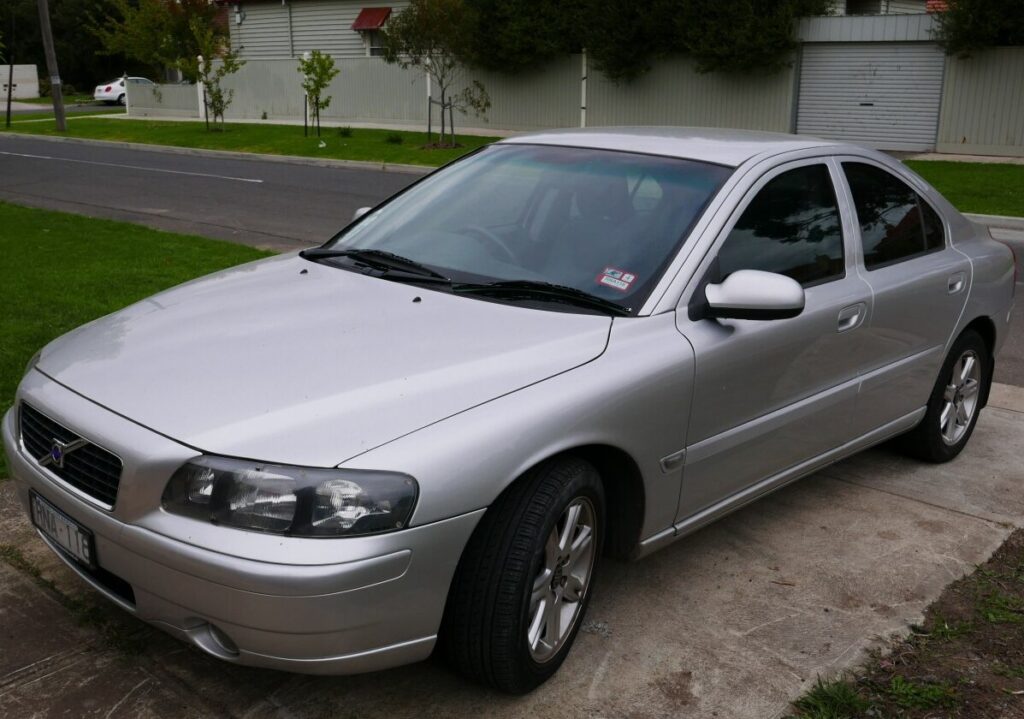
The Volvo S60 2.0 T, produced from 2003 to 2004, represented an entry point into the second-generation S60 (P24) lineup. Positioned as a more accessible option within the range, it offered a blend of Scandinavian practicality, safety, and a turbocharged engine. This variant played a significant role in broadening the S60’s appeal, particularly in European markets where smaller displacement engines were favored due to taxation and fuel economy considerations. It sat below the more powerful 2.4L and T5 models, offering a balance between performance and affordability.
Technical Specifications
| Brand | Volvo |
| Model | S60 |
| Generation | S60 |
| Type (Engine) | 2.0 T (180 Hp) |
| Start of production | 2003 |
| End of production | 2004 |
| Powertrain Architecture | Internal Combustion engine |
| Body type | Sedan |
| Seats | 5 |
| Doors | 4 |
| Fuel consumption (urban) | 12.8 l/100 km (18.4 US mpg, 22.1 UK mpg, 7.8 km/l) |
| Fuel consumption (extra urban) | 7.1 l/100 km (33.1 US mpg, 39.8 UK mpg, 14.1 km/l) |
| Fuel consumption (combined) | 9.2 l/100 km (25.6 US mpg, 30.7 UK mpg, 10.9 km/l) |
| Fuel Type | Petrol (Gasoline) |
| Acceleration 0 – 100 km/h | 8.8 sec |
| Acceleration 0 – 62 mph | 8.8 sec |
| Acceleration 0 – 60 mph | 8.4 sec |
| Maximum speed | 225 km/h (139.81 mph) |
| Weight-to-power ratio | 8.5 kg/Hp, 117.4 Hp/tonne |
| Weight-to-torque ratio | 6.4 kg/Nm, 156.6 Nm/tonne |
| Power | 180 Hp @ 5300 rpm |
| Power per litre | 90.7 Hp/l |
| Torque | 240 Nm @ 2200 rpm (177.01 lb.-ft. @ 2200 rpm) |
| Engine layout | Front, Transverse |
| Engine Model/Code | B5204T5 |
| Engine displacement | 1984 cm3 (121.07 cu. in.) |
| Number of cylinders | 5 |
| Engine configuration | Inline |
| Cylinder Bore | 81 mm (3.19 in.) |
| Piston Stroke | 77 mm (3.03 in.) |
| Compression ratio | 9.5:1 |
| Number of valves per cylinder | 4 |
| Fuel injection system | Multi-port manifold injection |
| Engine aspiration | Turbocharger, Intercooler |
| Valvetrain | DOHC |
| Engine oil capacity | 5.5 l (5.81 US qt | 4.84 UK qt) |
| Coolant | 8.8 l (9.3 US qt | 7.74 UK qt) |
| Kerb Weight | 1533 kg (3379.69 lbs.) |
| Max. weight | 2010 kg (4431.29 lbs.) |
| Max load | 477 kg (1051.6 lbs.) |
| Trunk (boot) space – minimum | 424 l (14.97 cu. ft.) |
| Trunk (boot) space – maximum | 1034 l (36.52 cu. ft.) |
| Fuel tank capacity | 70 l (18.49 US gal | 15.4 UK gal) |
| Length | 4576 mm (180.16 in.) |
| Width | 1804 mm (71.02 in.) |
| Height | 1428 mm (56.22 in.) |
| Wheelbase | 2715 mm (106.89 in.) |
| Front track | 1563 mm (61.54 in.) |
| Rear (Back) track | 1560 mm (61.42 in.) |
| Drivetrain Architecture | The Internal combustion engine (ICE) drives the front wheels of the vehicle. |
| Drive wheel | Front wheel drive |
| Number of gears and type of gearbox | 5 gears, manual transmission |
| Front suspension | Wishbone |
| Rear suspension | Coil spring |
| Front brakes | Ventilated discs |
| Rear brakes | Disc |
| Assisting systems | ABS (Anti-lock braking system) |
| Steering type | Steering rack and pinion |
| Power steering | Hydraulic Steering |
| Tires size | 205/55 R16 |
| Wheel rims size | 16 |
INTRODUCTION
The Volvo S60 2.0 T, launched in 2003 and continuing through 2004, was a key component of Volvo’s second-generation S60 range (internally designated P24). This model aimed to provide a more economical and accessible entry point into the premium sedan segment. It utilized Volvo’s established platform, known for its safety and comfort, but with a smaller displacement engine to appeal to buyers prioritizing fuel efficiency and lower running costs. The 2.0 T was primarily sold in Europe, where smaller engines were more popular due to tax regulations and driving conditions. It offered a compelling alternative to larger, more expensive S60 variants.
Powertrain & Engine Architecture
At the heart of the S60 2.0 T lies the B5204T5 engine, a 1.984-liter inline-five cylinder gasoline engine. This engine is characterized by its relatively compact size and robust construction. The B5204T5 utilizes a light-pressure turbocharger with an intercooler, providing a boost in power and torque without significantly compromising fuel economy. Fuel delivery is managed by a multi-port fuel injection system, ensuring precise fuel metering for optimal combustion. The engine features a double overhead camshaft (DOHC) valvetrain, contributing to efficient cylinder filling and exhaust scavenging. The 2.0 T was typically paired with a 5-speed manual transmission, although an automatic transmission was also available as an option. The automatic transmission, a four-speed unit, was geared for comfort and ease of driving rather than outright performance.
Driving Characteristics
The S60 2.0 T offered a comfortable and refined driving experience, prioritizing smoothness over sporty handling. With 180 horsepower and 240 Nm (177 lb-ft) of torque, acceleration from 0 to 60 mph took around 8.4 seconds, making it adequately quick for everyday driving. The turbocharger provided a noticeable boost in power during acceleration, but the engine lacked the outright punch of the higher-output T5 model. The manual transmission offered precise shifts, while the optional automatic provided smooth gear changes. The suspension, tuned for comfort, absorbed bumps and imperfections in the road effectively. Compared to the more powerful S60 variants, the 2.0 T felt less eager to rev and required more planning when overtaking. However, its lighter weight and lower power output also contributed to improved fuel economy.
Equipment & Trim Levels
The S60 2.0 T typically came equipped with a respectable level of standard features, reflecting Volvo’s commitment to safety and comfort. Standard equipment included power windows, power locks, air conditioning, and an audio system. Safety features, a Volvo hallmark, included ABS brakes, airbags, and side impact protection. Higher trim levels offered options such as leather upholstery, sunroof, automatic climate control, and upgraded audio systems. Interior materials were generally of good quality, with a focus on durability and comfort. The dashboard layout was clean and functional, with intuitive controls. The 2.0 T often served as a base model, allowing buyers to customize their vehicle with a range of optional extras.
Chassis & Braking
The S60 2.0 T utilized a front-wheel-drive chassis with independent wishbone suspension at the front and a coil spring rear suspension. This setup provided a good balance between ride comfort and handling. The front brakes were ventilated discs, offering strong stopping power, while the rear brakes were solid discs. ABS (Anti-lock Braking System) was standard, enhancing safety during emergency braking situations. The steering was a hydraulic rack and pinion system, providing precise and responsive steering feel. The chassis was designed to prioritize stability and predictability, making the S60 2.0 T a safe and easy car to drive.
Market Reception & Comparison
The S60 2.0 T was generally well-received by automotive critics, who praised its comfortable ride, spacious interior, and strong safety credentials. However, some reviewers noted that the engine lacked the performance of its larger counterparts. Compared to the S60 T5, the 2.0 T offered significantly lower running costs but at the expense of acceleration and overall driving excitement. Fuel economy was a key selling point, with the 2.0 T achieving around 25.6 US mpg in combined driving. Reliability was generally good, although turbocharger issues could occasionally arise. The 2.0 T appealed to buyers who prioritized practicality, safety, and fuel efficiency over outright performance.
Legacy
The Volvo S60 2.0 T, while not the most powerful or sought-after variant of the S60 range, remains a capable and reliable used car. The B5204T5 engine, when properly maintained, is known for its durability. Today, these vehicles can be found at affordable prices, making them an attractive option for budget-conscious buyers. The S60 2.0 T represents a significant step in Volvo’s evolution, showcasing the brand’s commitment to safety, comfort, and fuel efficiency. Its blend of practicality and Scandinavian design continues to appeal to a wide range of drivers.
