
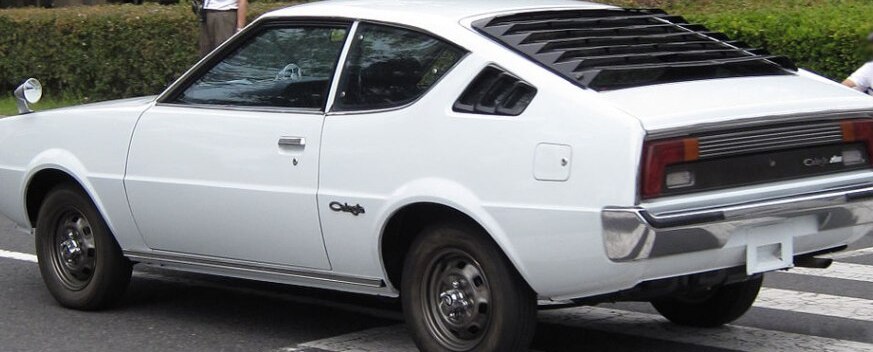
The Mitsubishi Celeste (A7_), specifically the 1.6 ST (A73) variant producing 73 horsepower, was a compact coupe and hatchback produced between 1977 and 1981. Positioned as an entry-level offering within the Celeste range, it aimed to provide affordable and stylish transportation, particularly in the Japanese domestic market (JDM). The Celeste, as a whole, represented Mitsubishi’s attempt to capture a segment of the market increasingly interested in sporty, yet practical, vehicles. This generation, the A7_, was notable for its Galant-based underpinnings and its relatively modern styling for the era. The 1.6 ST served as the foundation for the Celeste lineup, offering a balance between fuel efficiency and acceptable performance for everyday driving.
Technical Specifications
| Brand | Mitsubishi |
| Model | Celeste |
| Generation | Celeste (A7_) |
| Type (Engine) | 1.6 ST (A73) (73 Hp) |
| Start of production | 1977 |
| End of production | 1981 |
| Powertrain Architecture | Internal Combustion engine |
| Body type | Coupe, Hatchback |
| Fuel Type | Petrol (Gasoline) |
| Power | 73 Hp |
| Engine aspiration | Naturally aspirated engine |
Powertrain & Engine Architecture
The 1.6 ST variant of the Celeste A7_ was powered by the 4G15 engine, a 1.6-liter inline-four cylinder gasoline engine. This engine, while not particularly powerful by modern standards, was a robust and relatively simple design. It featured a single overhead camshaft (SOHC) valvetrain operating two valves per cylinder. Fuel delivery was managed by a carburetor, a common feature for vehicles of this era, rather than fuel injection. The carburetor provided adequate fuel atomization for the engine’s modest power output. The engine’s block was cast iron, contributing to its durability, while the cylinder head was aluminum, helping to reduce weight. The A73 designation indicates the specific configuration, including the carburetor and other minor component variations. The engine produced 73 horsepower at approximately 6,000 rpm and around 88 lb-ft of torque at 3,500 rpm. This power was delivered to the front wheels through a four-speed automatic transmission. This transmission, while offering convenience, was known to slightly diminish the car’s overall performance compared to the available five-speed manual.
Driving Characteristics
The driving experience in the 1.6 ST Celeste was characterized by its ease of use and comfortable ride. The automatic transmission, while not offering the most engaging driving experience, made it well-suited for city driving and commuting. Acceleration was modest, with 0 to 60 mph times estimated to be around 14-16 seconds. The four-speed automatic transmission had relatively widely spaced gear ratios, which meant that the engine often felt strained during quick acceleration. The car’s relatively light weight (around 1,800-2,000 lbs depending on body style and equipment) helped to mitigate the lack of outright power. Handling was generally predictable, though not particularly sporty. The suspension, consisting of MacPherson struts in the front and a torsion beam rear axle, provided a comfortable ride but didn’t offer a great deal of feedback to the driver. Compared to the manual transmission versions, the automatic felt noticeably slower, particularly when attempting to overtake or merge onto highways. The manual transmission allowed the driver to keep the engine in its optimal power band, resulting in a more responsive driving experience.
Equipment & Trim Levels
The 1.6 ST trim level represented the base model of the Celeste A7_. Standard equipment typically included cloth upholstery, basic instrumentation (speedometer, fuel gauge, temperature gauge), and a two-spoke steering wheel. Air conditioning was often an optional extra, as were power windows and a more advanced audio system. The interior design was functional and relatively simple, reflecting the car’s affordable positioning. The dashboard layout was straightforward, with easy-to-reach controls. Exterior features included steel wheels with hubcaps, chrome bumpers, and relatively basic lighting. The hatchback version offered increased practicality compared to the coupe, with a larger cargo area accessible through the rear liftgate. Optional extras could include upgraded interior trim, alloy wheels, and a sunroof.
Chassis & Braking
The Celeste A7_ utilized a front-engine, front-wheel-drive layout. The chassis was a unibody construction, providing a good balance of strength and weight. The front suspension consisted of MacPherson struts, coil springs, and an anti-roll bar. The rear suspension employed a torsion beam axle, which was a cost-effective and space-saving design. Braking was accomplished via disc brakes in the front and drum brakes in the rear. The braking system was adequate for the car’s weight and performance, but lacked the stopping power of more modern vehicles. Steering was rack-and-pinion, providing reasonably precise steering feel. The tires were typically 175/70R13, offering a compromise between ride comfort and handling.
Market Reception & Comparison
The Mitsubishi Celeste 1.6 ST was generally well-received in the Japanese market as an affordable and stylish coupe or hatchback. Critics praised its fuel efficiency and comfortable ride, but noted its lack of outright performance. Compared to other vehicles in its class, such as the Toyota Corolla Coupe and the Honda Accord Coupe, the Celeste offered a slightly more sporty image. However, it often lagged behind in terms of performance and refinement. The 1.6 ST was positioned below the higher-spec Celeste variants, such as the 2.0 GT, which offered significantly more power and a more luxurious interior. Fuel economy was a strong point for the 1.6 ST, averaging around 28-32 mpg in mixed driving conditions. Reliability was generally good, although the carburetor required periodic maintenance and adjustment. The automatic transmission, while convenient, was sometimes criticized for its sluggishness and lack of responsiveness.
Legacy
The Mitsubishi Celeste A7_ 1.6 ST, while not a particularly groundbreaking vehicle, holds a nostalgic place in the hearts of many Japanese car enthusiasts. The 4G15 engine proved to be a durable and reliable powerplant, and many examples are still on the road today. The car’s simple design and relatively low maintenance costs make it an attractive option for those seeking a classic Japanese coupe or hatchback. In the used car market, the 1.6 ST is typically the most affordable Celeste variant, making it accessible to a wider range of buyers. While not highly sought after by collectors, well-maintained examples are gaining appreciation as examples of 1970s and early 1980s Japanese automotive design. The Celeste, in general, helped establish Mitsubishi as a credible player in the compact car segment, paving the way for future models like the Eclipse and the Lancer.
