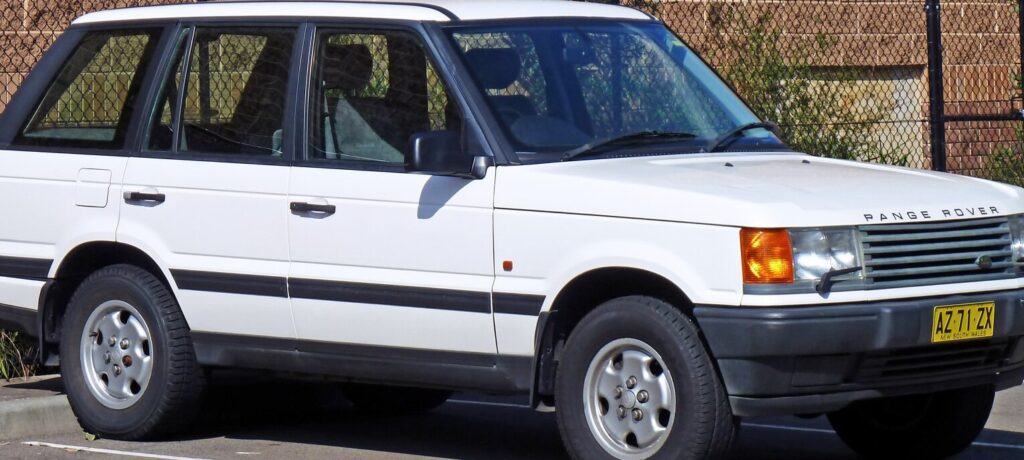
The Land Rover Range Rover II 3.9 V8, produced from 1994 to 2001, represents a significant evolution of the original Range Rover, blending luxury with off-road capability. This variant, powered by the 3.9-liter V8 engine producing 190 horsepower, occupied a key position in the Range Rover II lineup, offering a balance between performance and refinement. It was a mainstay of the second-generation Range Rover (codenamed P38A), which aimed to modernize the iconic vehicle while retaining its core attributes. The 3.9 V8 was particularly popular in North American markets, where larger displacement engines were favored.
Technical Specifications
| Brand | Land Rover |
| Model | Range Rover |
| Generation | Range Rover II |
| Type (Engine) | 3.9 V8 (190 Hp) |
| Start of production | 1994 |
| End of production | 2001 |
| Powertrain Architecture | Internal Combustion engine |
| Body type | SUV |
| Seats | 5 |
| Doors | 5 |
| Fuel Type | Petrol (Gasoline) |
| Power | 190 Hp |
| Power per litre | 48.7 Hp/l |
| Engine layout | Front, Longitudinal |
| Engine Model/Code | 42 D |
| Engine displacement | 3900 cm3 |
| Engine displacement (US/UK) | 237.99 cu. in. |
| Number of cylinders | 8 |
| Engine configuration | V-engine |
| Engine aspiration | Naturally aspirated engine |
| Engine oil capacity | 5.8 l |
| Engine oil capacity (US/UK) | 6.13 US qt | 5.1 UK qt |
Powertrain & Engine Architecture
The heart of the Range Rover II 3.9 V8 is the 4.2-liter (though often marketed as 3.9) V8 engine, designated as the 42D. This engine is a descendant of the Rover V8, originally designed by Buick in the 1960s. Land Rover extensively modified and refined the engine over the years. The 42D features a cast iron block and aluminum cylinder heads, contributing to its durability. Fuel delivery is managed by a Bosch Motronic fuel injection system, providing precise control over the air-fuel mixture. The engine utilizes a single overhead camshaft (SOHC) valvetrain with two valves per cylinder. The 3.9 V8’s relatively simple design, while not the most technologically advanced of its era, contributed to its reliability and ease of maintenance. The engine’s torque curve is broad and relatively flat, providing ample pulling power across a wide range of engine speeds.
Driving Characteristics
The 190 horsepower and 280 lb-ft of torque produced by the 3.9 V8 provided the Range Rover II with respectable, though not blistering, performance. Acceleration from 0 to 60 mph typically took around 9.5 to 10.5 seconds, depending on vehicle weight and condition. The engine’s strength lay in its ability to effortlessly maintain highway speeds and tackle challenging terrain. The automatic transmission, a four-speed unit sourced from ZF, was tuned for smooth and comfortable shifts, prioritizing refinement over outright sportiness. While the transmission was generally reliable, it could sometimes feel sluggish compared to the available five-speed manual transmission, particularly during quick overtaking maneuvers. The gear ratios were optimized for torque delivery, making it well-suited for off-road driving and towing. Compared to the later 4.6-liter V8, the 3.9 offered a more manageable power output, making it a more approachable option for drivers less concerned with outright speed.
Equipment & Trim Levels
The Range Rover II 3.9 V8 was typically equipped with a generous level of standard features, reflecting its luxury positioning. Standard amenities included leather upholstery, power-adjustable front seats, air conditioning, and a premium sound system. Wood trim adorned the interior, enhancing the sense of opulence. Optional extras included heated front and rear seats, a sunroof, upgraded audio systems, and parking sensors. The trim level often dictated the exterior finish and the availability of certain features. Higher trim levels might include more extensive leather trim, upgraded wheels, and additional exterior brightwork. The 3.9 V8 model generally sat in the mid-range of the Range Rover II lineup, offering a good balance of features and price.
Chassis & Braking
The Range Rover II utilized a body-on-frame construction, providing a robust and durable platform. The suspension system featured coil springs and adjustable air suspension, allowing the driver to raise or lower the vehicle’s ride height for improved off-road capability or on-road handling. The 3.9 V8 models typically came equipped with disc brakes on all four wheels, providing ample stopping power. Anti-lock Braking System (ABS) was standard, enhancing safety and control during emergency braking situations. The rear suspension geometry was designed to provide a comfortable ride, even on rough terrain. Stabilizer bars were fitted to both the front and rear axles to reduce body roll during cornering. The chassis was designed to accommodate the vehicle’s substantial weight and provide a stable platform for both on-road and off-road driving.
Market Reception & Comparison
The Range Rover II 3.9 V8 was generally well-received by automotive critics, who praised its luxurious interior, comfortable ride, and impressive off-road capability. However, some critics noted the vehicle’s relatively slow acceleration and its tendency to suffer from electrical gremlins, a common issue with British cars of the era. Compared to the 4.6-liter V8, the 3.9 offered better fuel economy, although both engines were relatively thirsty by modern standards. The 3.9 V8 was also considered more reliable than the later supercharged models. Against competitors like the Mercedes-Benz M-Class and the BMW X5, the Range Rover II offered a unique combination of luxury, off-road prowess, and British heritage.
Legacy
The Range Rover II 3.9 V8 has developed a loyal following among enthusiasts. While not without its quirks, the 3.9 V8 powertrain is generally considered to be relatively reliable, particularly when properly maintained. Parts availability is generally good, although some components can be expensive. Today, well-maintained examples of the Range Rover II 3.9 V8 are sought after by collectors and enthusiasts who appreciate its classic design, luxurious interior, and off-road capability. The vehicle represents a pivotal moment in the Range Rover’s history, bridging the gap between the original model and the more modern third-generation Range Rover. Its enduring appeal is a testament to its timeless design and its ability to deliver a unique and rewarding driving experience.