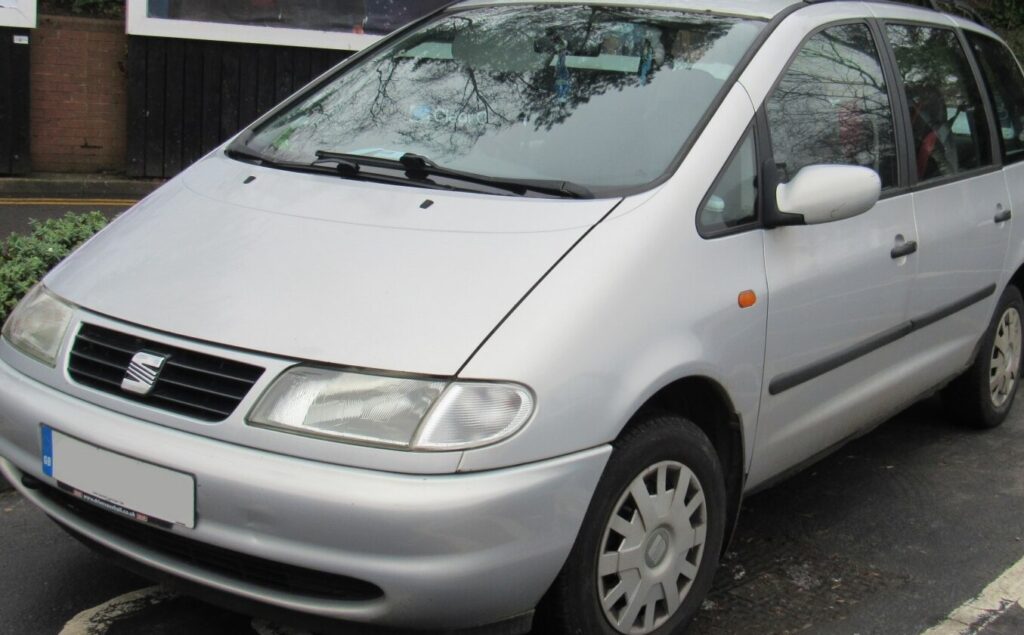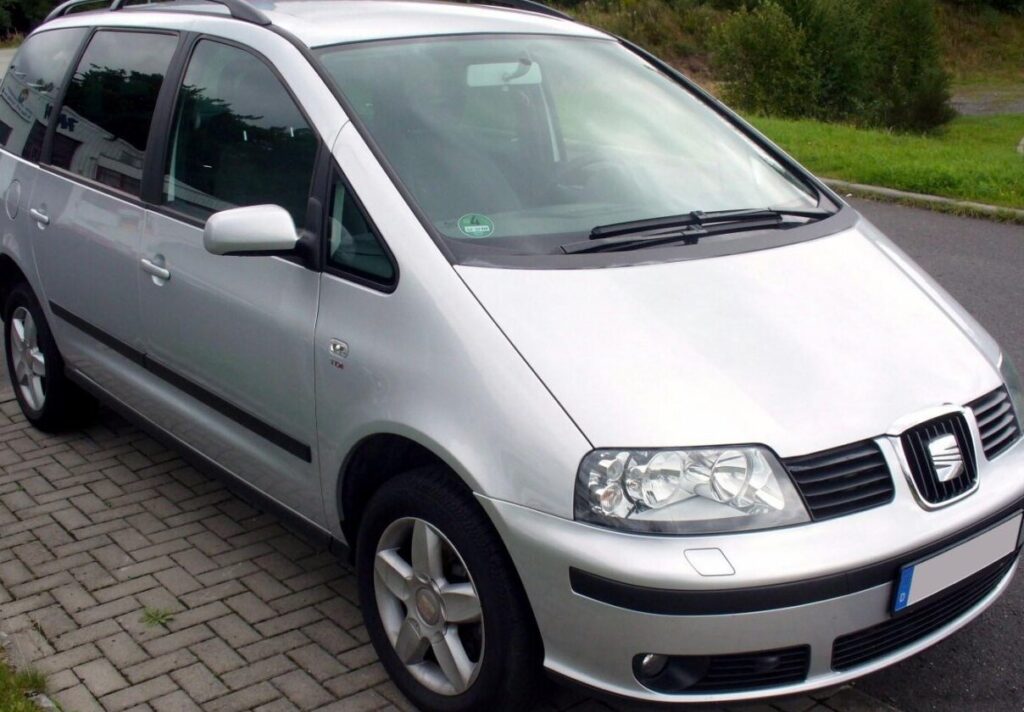
The Seat Alhambra II (7N), particularly the facelifted version introduced in May 2015, represented Seat’s entry into the large MPV (Multi-Purpose Vehicle) segment. Built in collaboration with Volkswagen – sharing a platform and many components with the VW Sharan – the Alhambra aimed to provide a spacious and practical family vehicle. This specific variant, the 2.0 TDI with 184 horsepower, was produced through 2018 and positioned as a mid-to-upper range offering within the Alhambra lineup, balancing performance with fuel efficiency. It was primarily sold in European markets, where large MPVs remained popular for their versatility.
Technical Specifications
| Brand | Seat |
| Model | Alhambra |
| Generation | Alhambra II (7N, facelift 2015) |
| Type (Engine) | 2.0 TDI (184 Hp) 7 Seat |
| Start of production | May, 2015 |
| End of production | 2018 |
| Powertrain Architecture | Internal Combustion engine |
| Body type | Minivan, MPV |
| Seats | 7 |
| Doors | 5 |
| Fuel consumption (combined) | 5.3 l/100 km (44.4 US mpg, 53.3 UK mpg, 18.9 km/l) |
| CO2 emissions | 139 g/km |
| Fuel Type | Diesel |
| Acceleration 0 – 100 km/h | 8.9 sec |
| Acceleration 0 – 62 mph | 8.9 sec |
| Acceleration 0 – 60 mph | 8.5 sec |
| Maximum speed | 215 km/h (133.59 mph) |
| Emission standard | Euro 6 |
| Weight-to-power ratio | 9.6 kg/Hp, 104.2 Hp/tonne |
| Weight-to-torque ratio | 4.6 kg/Nm, 215.2 Nm/tonne |
| Power | 184 Hp @ 3500-4000 rpm |
| Power per litre | 93.5 Hp/l |
| Torque | 380 Nm @ 1750-3000 rpm (280.27 lb.-ft. @ 1750-3000 rpm) |
| Engine layout | Front, Transverse |
| Engine Model/Code | CUWA, DFMA |
| Engine displacement | 1968 cm3 (120.09 cu. in.) |
| Number of cylinders | 4 |
| Engine configuration | Inline |
| Cylinder Bore | 81 mm (3.19 in.) |
| Piston Stroke | 95.5 mm (3.76 in.) |
| Compression ratio | 16.2:1 |
| Number of valves per cylinder | 4 |
| Fuel injection system | Diesel Commonrail |
| Engine aspiration | Turbocharger, Intercooler |
| Engine oil capacity | 4.6 l (4.86 US qt | 4.05 UK qt) |
| Coolant | 8 l (8.45 US qt | 7.04 UK qt) |
| Kerb Weight | 1766 kg (3893.36 lbs.) |
| Max. weight | 2550 kg (5621.79 lbs.) |
| Max load | 784 kg (1728.42 lbs.) |
| Trunk (boot) space – minimum | 300 l (10.59 cu. ft.) |
| Trunk (boot) space – maximum | 2297 l (81.12 cu. ft.) |
| Fuel tank capacity | 70 l (18.49 US gal | 15.4 UK gal) |
| Length | 4854 mm (191.1 in.) |
| Width | 1904 mm (74.96 in.) |
| Height | 1720 mm (67.72 in.) |
| Wheelbase | 2919 mm (114.92 in.) |
| Front track | 1557-1569 mm (61.3 – 61.77 in.) |
| Rear (Back) track | 1605-1617 mm (63.19 – 63.66 in.) |
| Minimum turning circle | 11.9 m (39.04 ft.) |
| Drivetrain Architecture | Front wheel drive |
| Number of gears | 6 gears, manual transmission |
| Front suspension | Independent type McPherson |
| Rear suspension | Independent coil spring |
| Front brakes | Ventilated discs |
| Rear brakes | Disc |
| Tires size | 205/60 R16; 215/60 R16; 225/50 R17; 225/45 R18 |
| Wheel rims size | 16; 17; 18 |
Powertrain & Engine Architecture
The heart of this Alhambra variant is the 2.0-liter TDI engine, specifically utilizing the CUWA or DFMA engine codes depending on the exact production date and market. This engine is a four-cylinder, inline diesel, employing common rail direct injection and a turbocharger with intercooling. The common rail system, operating at very high pressures, allows for precise fuel metering and optimized combustion. The turbocharger boosts power output by forcing more air into the cylinders. The engine produces 184 horsepower at 3500-4000 rpm and a substantial 380 Nm (280 lb-ft) of torque between 1750 and 3000 rpm. This broad torque curve is characteristic of modern turbo-diesel engines and contributes to the Alhambra’s usability. The engine features four valves per cylinder, enhancing breathing and contributing to its power output. The Alhambra 2.0 TDI was paired with a 6-speed manual transmission, delivering power to the front wheels.
Driving Characteristics
The 184 hp 2.0 TDI engine provided a good balance of performance and economy for the Alhambra. While not a sports car, it offered sufficient power for comfortable highway cruising and overtaking, even when fully loaded with passengers and luggage. The 0-60 mph time of around 8.5 seconds is respectable for a large MPV. The manual transmission allowed for driver control, and the gear ratios were well-suited to the engine’s torque curve. Compared to lower-powered versions of the Alhambra (like the 1.6 TDI), this variant felt noticeably more responsive. Compared to the petrol engines available in some markets, the 2.0 TDI offered significantly better fuel economy, though with a slightly more audible engine note.
Equipment & Trim Levels
The 2.0 TDI variant of the Alhambra typically came with a generous level of standard equipment. This included features like air conditioning, electric windows and mirrors, a multi-function steering wheel, and an infotainment system with a touchscreen display. Higher trim levels added features such as leather upholstery, parking sensors, a navigation system, and a panoramic sunroof. Safety features like ABS, ESP (Electronic Stability Program), and multiple airbags were standard across the range. The Alhambra was designed with practicality in mind, offering a flexible seating arrangement with individual seats in the second and third rows, allowing for various configurations to maximize space.
Chassis & Braking
The Alhambra II utilized an independent suspension setup at both the front (McPherson struts) and rear (multi-link). This provided a comfortable ride quality, even on uneven surfaces. The front brakes were ventilated discs, offering good stopping power, while the rear brakes were solid discs. The steering was electrically assisted, providing a light and precise feel. The Alhambra’s chassis was designed to handle the weight of a fully loaded vehicle, providing stability and control. Stabilizer bars were fitted to both axles to reduce body roll during cornering.
Market Reception & Comparison
The Seat Alhambra, and specifically the 2.0 TDI variant, was generally well-received by automotive critics. It was praised for its spacious interior, comfortable ride, and fuel efficiency. The 2.0 TDI engine was considered a good compromise between performance and economy. Compared to its sister vehicle, the Volkswagen Sharan, the Alhambra often offered a slightly more affordable price point. However, some critics noted that the Alhambra’s interior design was not as premium as that of some competitors. Fuel economy figures of around 5.3 l/100km (44.4 mpg) were competitive for its class.
Legacy
The 2.0 TDI engine in the Alhambra II is generally considered to be a reliable unit, provided it is properly maintained. Common issues, like with many modern diesels, can include problems with the diesel particulate filter (DPF) and the dual-mass flywheel. Regular servicing, including oil changes and DPF regeneration, is crucial for long-term reliability. On the used car market, the Alhambra 2.0 TDI remains a popular choice for families seeking a spacious and practical MPV. Its combination of comfort, economy, and reliability makes it a compelling option, and well-maintained examples continue to command reasonable prices.