
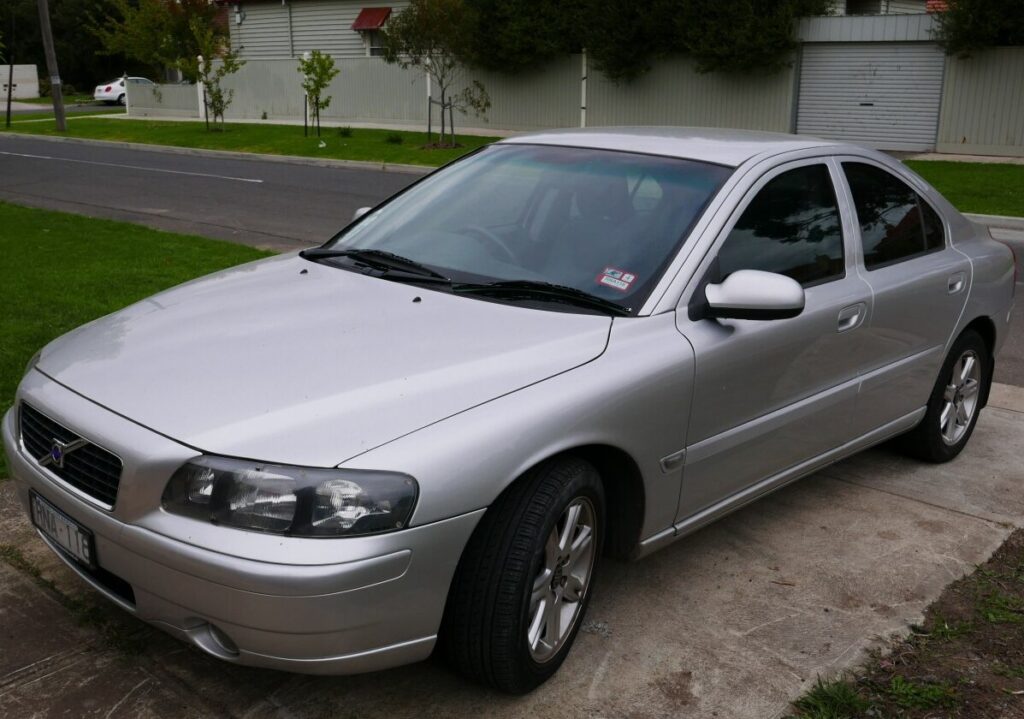
The Volvo S60 2.4 20V, equipped with a 140 horsepower engine and an automatic transmission, was a mainstay of the first-generation S60 lineup produced between 2000 and 2003. Positioned as a mid-range offering, this variant aimed to provide a balance of comfort, fuel efficiency, and reasonable performance for the typical family sedan buyer. It was part of the larger S60 series (internally designated as the P24 platform), which represented Volvo’s entry into the compact executive car segment, replacing the aging 850 series. This particular engine and transmission combination was popular in European and North American markets, offering a more accessible price point compared to the higher-performance turbocharged models.
Technical Specifications
| Brand | Volvo |
| Model | S60 |
| Generation | S60 |
| Type (Engine) | 2.4 20V (140 Hp) Automatic |
| Start of production | 2000 |
| End of production | 2003 |
| Powertrain Architecture | Internal Combustion engine |
| Body type | Sedan |
| Seats | 5 |
| Doors | 4 |
| Fuel consumption (urban) | 13.7 l/100 km (17.2 US mpg, 20.6 UK mpg) |
| Fuel consumption (extra urban) | 7.1 l/100 km (33.1 US mpg, 39.8 UK mpg) |
| Fuel consumption (combined) | 9.5 l/100 km (24.8 US mpg, 29.7 UK mpg) |
| Fuel Type | Petrol (Gasoline) |
| Acceleration 0 – 100 km/h | 11.1 sec |
| Acceleration 0 – 62 mph | 11.1 sec |
| Acceleration 0 – 60 mph | 10.5 sec |
| Maximum speed | 205 km/h (127.38 mph) |
| Weight-to-power ratio | 10.7 kg/Hp |
| Weight-to-torque ratio | 6.8 kg/Nm |
| Power | 140 Hp @ 4500 rpm |
| Torque | 220 Nm @ 3750 rpm (162.26 lb.-ft. @ 3750 rpm) |
| Engine layout | Front, Transverse |
| Engine Model/Code | B5244S2 |
| Engine displacement | 2435 cm3 (148.59 cu. in.) |
| Number of cylinders | 5 |
| Engine configuration | Inline |
| Cylinder Bore | 83 mm (3.27 in.) |
| Piston Stroke | 90 mm (3.54 in.) |
| Compression ratio | 10.3:1 |
| Number of valves per cylinder | 4 |
| Fuel injection system | Multi-port manifold injection |
| Engine aspiration | Naturally aspirated |
| Valvetrain | DOHC |
| Engine oil capacity | 5.8 l (6.13 US qt | 5.1 UK qt) |
| Coolant capacity | 8 l (8.45 US qt | 7.04 UK qt) |
| Kerb Weight | 1501 kg (3309.14 lbs.) |
| Max. weight | 1980 kg (4365.15 lbs.) |
| Max load | 479 kg (1056.01 lbs.) |
| Trunk (boot) space – minimum | 424 l (14.97 cu. ft.) |
| Trunk (boot) space – maximum | 1034 l (36.52 cu. ft.) |
| Fuel tank capacity | 70 l (18.49 US gal | 15.4 UK gal) |
| Length | 4576 mm (180.16 in.) |
| Width | 1804 mm (71.02 in.) |
| Height | 1428 mm (56.22 in.) |
| Wheelbase | 2715 mm (106.89 in.) |
| Front track | 1563 mm (61.54 in.) |
| Rear track | 1560 mm (61.42 in.) |
| Drivetrain Architecture | Front wheel drive |
| Number of gears | 5 |
| Gearbox type | Automatic transmission |
| Front suspension | Wishbone |
| Rear suspension | Coil spring |
| Front brakes | Ventilated discs |
| Rear brakes | Disc |
| Assisting systems | ABS (Anti-lock braking system) |
| Steering type | Steering rack and pinion |
| Power steering | Hydraulic |
| Tires size | 205/55 R16 |
| Wheel rims size | 16 |
Powertrain & Engine Architecture
The heart of the S60 2.4 was the Volvo B5244S2 engine, a naturally aspirated, 2.4-liter inline-five cylinder powerplant. This engine was a descendant of Volvo’s long-running “Redblock” family, known for its robustness and relatively simple design. The “20V” designation refers to the engine’s 20 valves (four valves per cylinder). Fuel delivery was handled by a multi-port fuel injection system, providing adequate, though not exceptional, fuel atomization. The engine utilized a double overhead camshaft (DOHC) valvetrain, contributing to improved breathing and power output compared to older single overhead cam designs. The five-speed automatic transmission, sourced from Aisin-Warner, was a conventional torque converter automatic, prioritizing smooth shifts and ease of use over outright performance. It was a reliable unit, but not known for its particularly quick response times.
Driving Characteristics
The S60 2.4 with the automatic transmission offered a comfortable and predictable driving experience. Acceleration from 0-60 mph took around 10.5 seconds, which was adequate for everyday driving but noticeably slower than the turbocharged S60 T5 models. The automatic transmission’s gear ratios were tuned for fuel economy and smooth cruising, rather than aggressive acceleration. The engine delivered its peak torque at 3750 rpm, providing reasonable pulling power for merging onto highways or overtaking slower vehicles. However, the lack of a manual transmission option and the relatively conservative tuning of the automatic meant that the engine often felt strained when pushed hard. Compared to the manual transmission version of the 2.4, the automatic resulted in a slight performance decrease and a less engaging driving experience.
Equipment & Trim Levels
The S60 2.4 Automatic typically came standard with features such as air conditioning, power windows and locks, a basic audio system, and ABS brakes. Interior upholstery was usually cloth, with optional leather available. Higher trim levels could include features like a sunroof, upgraded audio systems, and wood trim accents. Safety was a key Volvo selling point, and even the base S60 2.4 included features like side airbags and whiplash protection system (WHIPS). Optional extras included heated front seats, automatic climate control, and a navigation system.
Chassis & Braking
The S60 2.4 utilized a front-wheel-drive layout with independent wishbone suspension in the front and a coil spring rear suspension. The suspension was tuned for comfort, providing a relatively soft ride quality. Front brakes were ventilated discs, offering good stopping power, while rear brakes were solid discs. The steering was a hydraulic rack and pinion system, providing reasonable feedback and precision. The standard tire size was 205/55 R16, offering a good balance of grip and ride comfort.
Market Reception & Comparison
The S60 2.4 Automatic was generally well-received by critics as a comfortable and safe family sedan. However, its performance was often criticized as being underwhelming compared to competitors like the BMW 3 Series and Audi A4, particularly those equipped with turbocharged engines. Fuel economy was considered average for its class. Compared to the S60 T5 (turbocharged), the 2.4 offered significantly lower running costs and a more relaxed driving experience, making it appealing to buyers who prioritized comfort and affordability over performance. The 2.4 was also generally more reliable than the T5, as it had fewer complex components.
Legacy
The Volvo S60 2.4 Automatic has proven to be a relatively reliable vehicle, with many examples still on the road today. The B5244S2 engine is known for its durability, and the Aisin-Warner automatic transmission is also generally considered to be robust. Common maintenance issues include oil leaks, worn suspension components, and occasional sensor failures. In the used car market, the S60 2.4 Automatic represents a good value proposition for buyers seeking a comfortable, safe, and affordable sedan. While it may not offer the performance of its turbocharged siblings, its simplicity and reliability make it a practical choice for everyday transportation.
