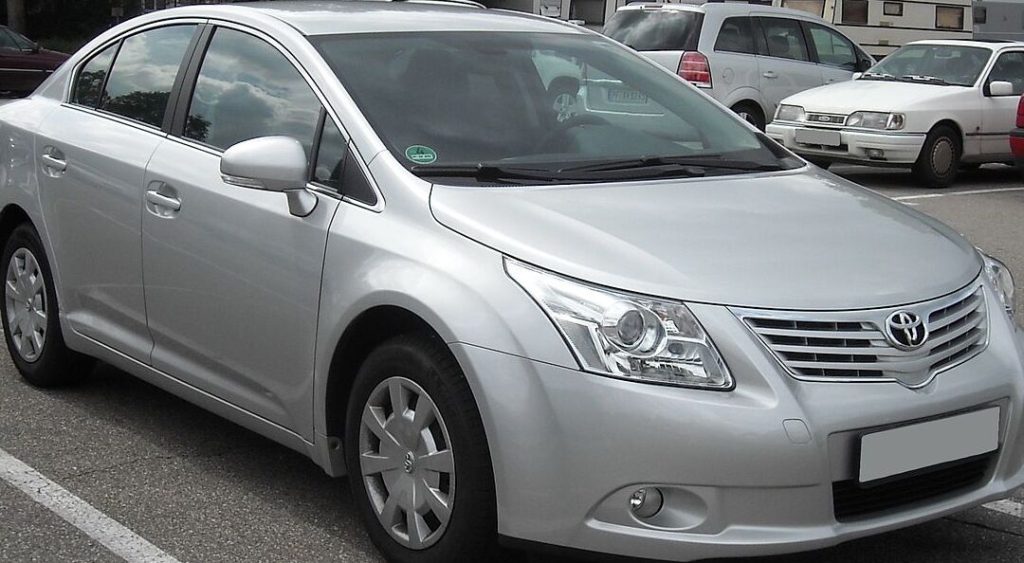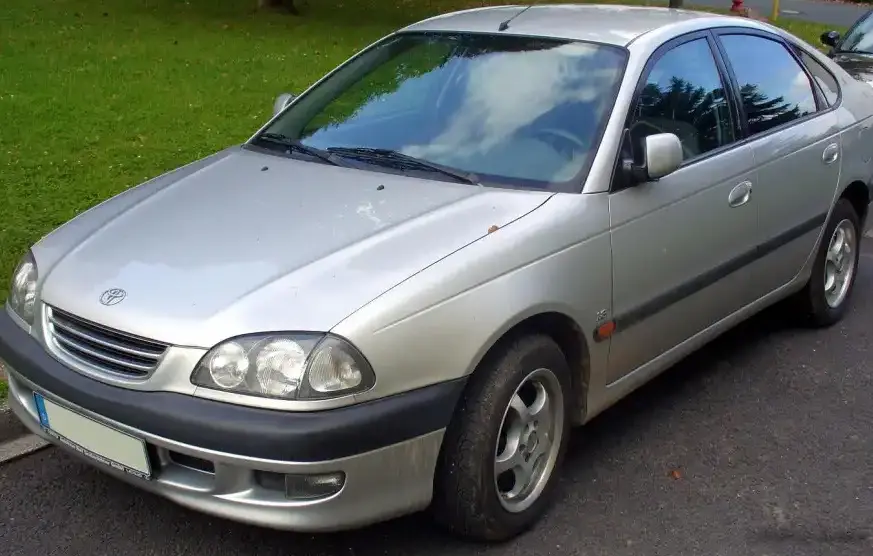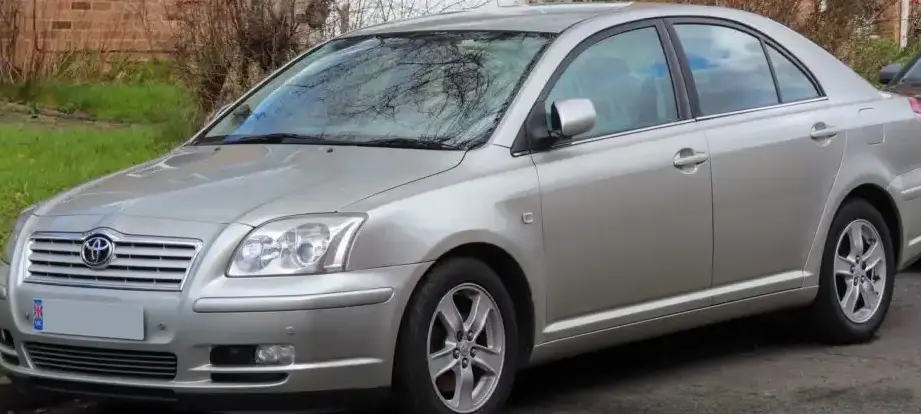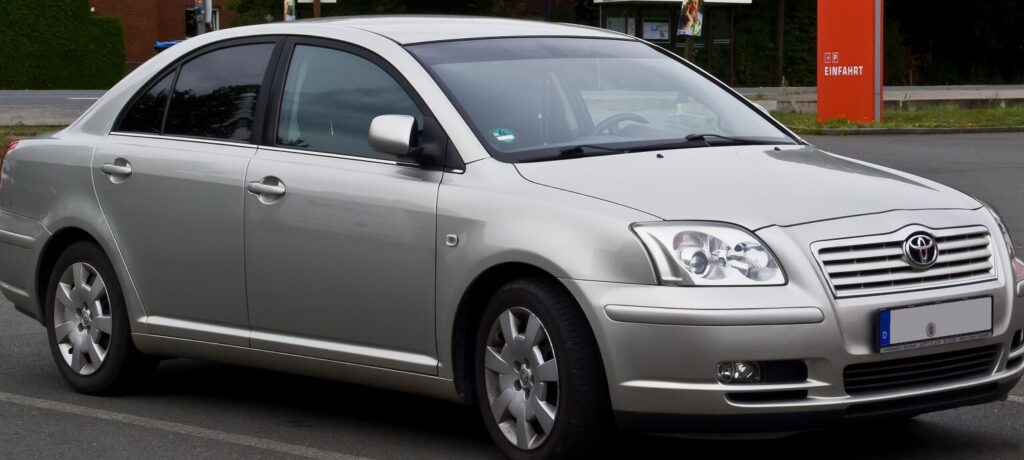
The Toyota Avensis II 1.8 VVT-i (129 hp) was a mainstream, mid-size sedan produced by Toyota between 2003 and 2009. Part of the second generation Avensis (codenamed T27), this variant occupied a crucial position in Toyota’s European and Asian lineups, offering a balance of practicality, reliability, and affordability. It was designed to compete with established rivals like the Ford Mondeo, Vauxhall/Opel Vectra, and Honda Accord. The Avensis II represented a significant step forward in terms of refinement and build quality compared to its predecessor, aiming to elevate Toyota’s presence in the competitive D-segment. This specific 1.8L engine and transmission combination was generally considered an entry-level to mid-range offering within the Avensis II range.
Technical Specifications
| Brand | Toyota |
| Model | Avensis |
| Generation | Avensis II |
| Type (Engine) | 1.8 VVT-i (129 Hp) |
| Start of production | 2003 |
| End of production | 2009 |
| Powertrain Architecture | Internal Combustion engine |
| Body type | Sedan |
| Seats | 5 |
| Doors | 4 |
| Fuel consumption (urban) | 9.4 l/100 km (25 US mpg) |
| Fuel consumption (extra urban) | 5.8 l/100 km (40.6 US mpg) |
| Fuel consumption (combined) | 7.2 l/100 km (32.7 US mpg) |
| Fuel Type | Petrol (Gasoline) |
| Acceleration 0 – 100 km/h | 10.3 sec |
| Acceleration 0 – 62 mph | 10.3 sec |
| Acceleration 0 – 60 mph | 9.8 sec |
| Maximum speed | 200 km/h (124.27 mph) |
| Weight-to-power ratio | 9.8 kg/Hp |
| Weight-to-torque ratio | 7.5 kg/Nm |
| Power | 129 Hp @ 6000 rpm |
| Torque | 170 Nm @ 4200 rpm (125.39 lb.-ft. @ 4200 rpm) |
| Engine layout | Front, Transverse |
| Engine Model/Code | 1ZZ-FE |
| Engine displacement | 1794 cm3 (109.48 cu. in.) |
| Number of cylinders | 4 |
| Engine configuration | Inline |
| Cylinder Bore | 79 mm (3.11 in.) |
| Piston Stroke | 91.5 mm (3.6 in.) |
| Compression ratio | 10:1 |
| Number of valves per cylinder | 4 |
| Fuel injection system | Multi-port manifold injection |
| Engine aspiration | Naturally aspirated engine |
| Valvetrain | DOHC |
| Engine oil capacity | 3.7 l (3.91 US qt | 3.26 UK qt) |
| Coolant capacity | 5.7 l (6.02 US qt | 5.02 UK qt) |
| Kerb Weight | 1270 kg (2799.87 lbs.) |
| Max. weight | 1820 kg (4012.41 lbs.) |
| Max load | 550 kg (1212.54 lbs.) |
| Trunk (boot) space – minimum | 520 l (18.36 cu. ft.) |
| Fuel tank capacity | 60 l (15.85 US gal | 13.2 UK gal) |
| Length | 4630 mm (182.28 in.) |
| Width | 1760 mm (69.29 in.) |
| Height | 1480 mm (58.27 in.) |
| Wheelbase | 2700 mm (106.3 in.) |
| Front track | 1505 mm (59.25 in.) |
| Rear (Back) track | 1510 mm (59.45 in.) |
| Drivetrain Architecture | Front wheel drive |
| Number of gears and type of gearbox | 5 gears, manual transmission |
| Front suspension | Coil spring |
| Rear suspension | Coil spring |
| Front brakes | Ventilated discs |
| Rear brakes | Disc |
| Assisting systems | ABS (Anti-lock braking system) |
| Steering type | Steering rack and pinion |
| Tires size | 205/55 R16 |
INTRODUCTION
The Avensis II 1.8 VVT-i, launched in 2003, was a key component of Toyota’s strategy to gain market share in the European and Asian mid-size sedan segment. Building upon the foundation laid by the first-generation Avensis, the T27 chassis brought improvements in interior space, ride comfort, and overall refinement. The 1.8L VVT-i engine, paired with a five-speed manual transmission (though an automatic was also available), was positioned as the entry point to the Avensis II range, appealing to buyers prioritizing fuel efficiency and affordability over outright performance. It was a common sight in both private and fleet markets, valued for its dependability and low running costs.
Powertrain & Engine Architecture
The heart of the Avensis II 1.8 VVT-i is the 1ZZ-FE engine, a 1.8-liter (1794 cc) inline-four cylinder gasoline engine. This engine utilizes Toyota’s Variable Valve Timing-intelligent (VVT-i) technology, which optimizes valve timing based on engine speed and load, improving both fuel efficiency and power output. The 1ZZ-FE employs multi-port fuel injection, delivering fuel directly to each cylinder. The engine’s valvetrain features a double overhead camshaft (DOHC) design with four valves per cylinder, contributing to its relatively high specific output. The five-speed manual transmission offered smooth and precise gear changes, while the optional four-speed automatic provided convenience, albeit with a slight compromise in fuel economy. The automatic transmission was a conventional torque converter type, known for its reliability but not particularly advanced in terms of gear ratios or shift speed.
Driving Characteristics
The 1.8L VVT-i engine in the Avensis II delivers a respectable, if not exhilarating, driving experience. With 129 horsepower and 170 Nm (125 lb-ft) of torque, acceleration from 0-60 mph takes around 9.8 seconds. The engine feels responsive enough for everyday driving, with adequate power for overtaking maneuvers on the highway. The five-speed manual transmission allows drivers to make the most of the available power, while the automatic version prioritizes smooth shifts over sporty performance. Compared to the higher-output 2.0L and 2.4L variants, the 1.8L feels noticeably less powerful, particularly when fully loaded or tackling steep inclines. However, its lighter weight and more efficient engine contribute to better fuel economy and a more forgiving ride.
Equipment & Trim Levels
The Avensis II 1.8 VVT-i typically came equipped with a reasonable level of standard features. Base models included power steering, central locking, electric front windows, and an air conditioning system. Higher trim levels, such as the ‘T2’ and ‘T3’, added features like alloy wheels, a CD player, cruise control, and upgraded interior trim. Interior upholstery was typically cloth, with options for leather available on higher-spec models. Optional extras included a sunroof, navigation system, and parking sensors. The dashboard layout was functional and user-friendly, with clear instrumentation and logically placed controls.
Chassis & Braking
The Avensis II utilizes a MacPherson strut front suspension and a coil spring rear suspension. This setup provides a comfortable ride quality, absorbing bumps and imperfections in the road surface effectively. The chassis was designed to prioritize stability and handling, offering predictable cornering behavior. Braking duties are handled by ventilated discs on the front wheels and solid discs on the rear. Anti-lock Braking System (ABS) was standard, enhancing safety by preventing wheel lockup during emergency braking. The Avensis II’s suspension and braking systems were tuned to provide a balanced driving experience, suitable for both urban commuting and long-distance highway travel.
Market Reception & Comparison
The Avensis II 1.8 VVT-i was generally well-received by automotive critics, praised for its reliability, practicality, and comfortable ride. However, it was often criticized for its somewhat bland styling and lack of driving excitement compared to some of its rivals. In terms of fuel economy, the 1.8L engine offered competitive figures, achieving around 32.7 US mpg on the combined cycle. Compared to the 2.0L variant, the 1.8L offered lower running costs but sacrificed some performance. The 1.9 TDI diesel version, while more expensive, provided superior fuel economy and torque, appealing to drivers covering high mileages. The Avensis II 1.8 VVT-i represented a sensible and pragmatic choice for buyers seeking a reliable and affordable mid-size sedan.
Legacy
The Toyota Avensis II 1.8 VVT-i has proven to be a remarkably durable and reliable vehicle. The 1ZZ-FE engine is known for its longevity, with many examples exceeding 200,000 miles with proper maintenance. On the used car market, the Avensis II 1.8 VVT-i remains a popular choice, valued for its affordability and dependability. While it may not offer the same level of technological sophistication as more modern vehicles, its simple and robust design ensures that it continues to provide years of trouble-free service. Parts availability is generally good, and maintenance costs are relatively low, making it an attractive option for budget-conscious buyers.