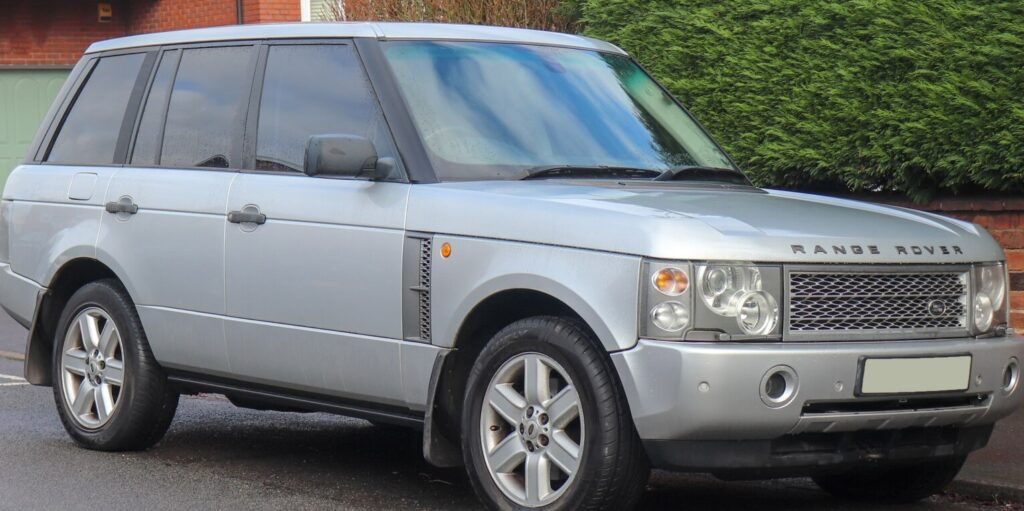
The Land Rover Range Rover III, produced between 2001 and 2005, represented a significant evolution for the iconic luxury SUV. This generation, internally designated as the LM4x4 platform, aimed to blend traditional Range Rover capability with increased refinement and modern technology. Among the engine options available, the 4.4-liter V8 producing 286 horsepower became a popular choice, offering a balance of performance and luxury within the Range Rover lineup. This variant occupied a premium position, sitting above the diesel options and the smaller six-cylinder engines, but below the supercharged V8 models.
Technical Specifications
| Brand | Land Rover |
| Model | Range Rover |
| Generation | Range Rover III |
| Type (Engine) | 4.4 V8 (286 Hp) |
| Start of production | 2001 |
| End of production | 2005 |
| Powertrain Architecture | Internal Combustion engine |
| Body type | SUV |
| Seats | 5 |
| Doors | 5 |
| Fuel consumption (urban) | 22.2 l/100 km (10.6 US mpg, 12.7 UK mpg, 4.5 km/l) |
| Fuel consumption (extra urban) | 12.6 l/100 km (18.7 US mpg, 22.4 UK mpg, 7.9 km/l) |
| Fuel consumption (combined) | 16.2 l/100 km (14.5 US mpg, 17.4 UK mpg, 6.2 km/l) |
| Fuel Type | Petrol (Gasoline) |
| Acceleration 0 – 100 km/h | 9.2 sec |
| Acceleration 0 – 62 mph | 9.2 sec |
| Acceleration 0 – 60 mph | 8.7 sec |
| Maximum speed | 208 km/h (129.25 mph) |
| Weight-to-power ratio | 8.8 kg/Hp, 113.9 Hp/tonne |
| Weight-to-torque ratio | 5.7 kg/Nm, 175.3 Nm/tonne |
| Power | 286 Hp @ 5400 rpm |
| Power per litre | 65 Hp/l |
| Torque | 440 Nm @ 3600 rpm (324.53 lb.-ft. @ 3600 rpm) |
| Engine layout | Front, Longitudinal |
| Engine Model/Code | M62B44 |
| Engine displacement | 4398 cm3 (268.38 cu. in.) |
| Number of cylinders | 8 |
| Engine configuration | V-engine |
| Cylinder Bore | 92 mm (3.62 in.) |
| Piston Stroke | 82.7 mm (3.26 in.) |
| Compression ratio | 10:1 |
| Number of valves per cylinder | 4 |
| Fuel injection system | Multi-port manifold injection |
| Engine aspiration | Naturally aspirated engine |
| Valvetrain | OHC |
| Engine oil capacity | 8.5 l (8.98 US qt | 7.48 UK qt) |
| Coolant | 13 l (13.74 US qt | 11.44 UK qt) |
| Kerb Weight | 2510 kg (5533.6 lbs.) |
| Max. weight | 3050 kg (6724.1 lbs.) |
| Max load | 540 kg (1190.5 lbs.) |
| Trunk (boot) space – minimum | 535 l (18.89 cu. ft.) |
| Trunk (boot) space – maximum | 1755 l (61.98 cu. ft.) |
| Fuel tank capacity | 100 l (26.42 US gal | 22 UK gal) |
| Length | 4950 mm (194.88 in.) |
| Width | 1955 mm (76.97 in.) |
| Height | 1860 mm (73.23 in.) |
| Wheelbase | 2880 mm (113.39 in.) |
| Front track | 1630 mm (64.17 in.) |
| Rear (Back) track | 1625 mm (63.98 in.) |
| Drive wheel | All wheel drive (4×4) |
| Number of gears and type of gearbox | 5 gears, automatic transmission |
| Front suspension | Air suspension |
| Rear suspension | Air suspension |
| Front brakes | Ventilated discs |
| Rear brakes | Disc |
| Assisting systems | ABS (Anti-lock braking system) |
| Steering type | Steering rack and pinion |
| Power steering | Hydraulic Steering |
| Tires size | 255/60 R18 |
Powertrain & Engine Architecture
The heart of this Range Rover variant is the BMW-sourced M62B44 4.4-liter V8 engine. Land Rover’s partnership with BMW during this period resulted in the adoption of several BMW engines and transmissions. The M62B44 is a naturally aspirated, all-aluminum alloy engine featuring double overhead camshafts (DOHC) and four valves per cylinder. It utilizes a multi-port fuel injection system, delivering fuel directly into the intake ports. The engine’s 92mm bore and 82.7mm stroke contribute to its robust torque output. Paired with the engine is a 5-speed automatic transmission, also sourced from BMW. This transmission, while smooth and reliable, lacks the efficiency of more modern gearboxes. The transmission’s programming is geared towards providing a comfortable driving experience rather than aggressive shifting.
Driving Characteristics
The 4.4 V8 automatic Range Rover III delivers a refined and capable driving experience. Acceleration from 0-60 mph takes approximately 8.7 seconds, which was respectable for a large, luxury SUV of its time. The engine provides ample torque, making it well-suited for towing and off-road driving. However, the automatic transmission can feel somewhat sluggish compared to the manual options available in other Range Rover III models. The gear ratios are optimized for cruising comfort, rather than outright performance. The air suspension system provides a remarkably smooth ride, absorbing bumps and imperfections in the road with ease. While capable off-road, the weight of the vehicle and the automatic transmission can limit its performance in extremely challenging terrain compared to lighter, manual transmission equipped models.
Equipment & Trim Levels
The 4.4 V8 model typically came standard with a high level of equipment, reflecting its position in the Range Rover lineup. Standard features included leather upholstery, wood trim, automatic climate control, heated front seats, and a premium audio system. Optional extras included a sunroof, upgraded leather, rear seat entertainment, and parking sensors. Trim levels varied depending on the market, but generally offered increasing levels of luxury and technology. The 4.4 V8 was often available with a ‘Highline’ package, which added even more premium features.
Chassis & Braking
The Range Rover III features a robust chassis designed for both on-road comfort and off-road capability. The suspension utilizes an advanced air suspension system, providing adjustable ride height and damping. Front brakes are ventilated discs, while rear brakes are solid discs. Anti-lock Braking System (ABS) is standard. The vehicle’s weight necessitates a strong braking system, and the Range Rover III delivers adequate stopping power, although it doesn’t match the performance of lighter SUVs. Stabilizer bars are fitted front and rear to reduce body roll during cornering.
Market Reception & Comparison
The 4.4 V8 Range Rover III was generally well-received by critics. It was praised for its luxurious interior, comfortable ride, and capable performance. However, fuel economy was a common criticism, with the 4.4 V8 returning around 14.5 US mpg in combined driving. Compared to the 2.5-liter diesel models, the 4.4 V8 offered significantly more power but at the cost of increased fuel consumption. The supercharged V8 models provided even greater performance, but came with a substantial price premium. Reliability was generally good, although the complex air suspension system and BMW-sourced components could be prone to occasional issues.
Legacy
The Land Rover Range Rover III 4.4 V8 remains a desirable vehicle in the used car market. Its combination of luxury, capability, and relative reliability has ensured its continued popularity. The BMW M62B44 engine is known for its durability, although regular maintenance is essential. The air suspension system can require attention as the vehicle ages, and finding qualified technicians familiar with Land Rover and BMW components is crucial. Despite its age, the Range Rover III 4.4 V8 continues to offer a compelling blend of comfort, performance, and prestige, making it a classic luxury SUV.