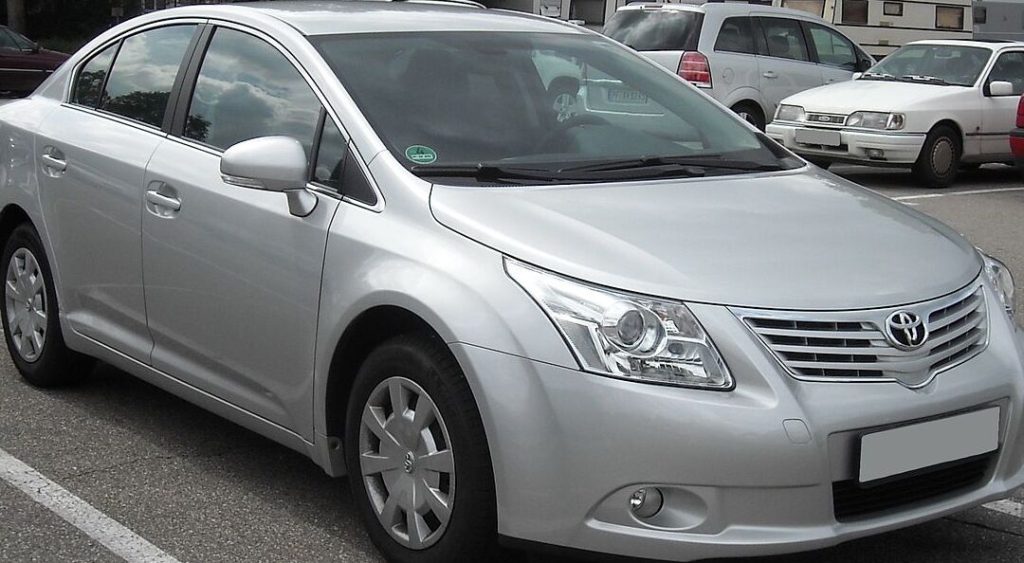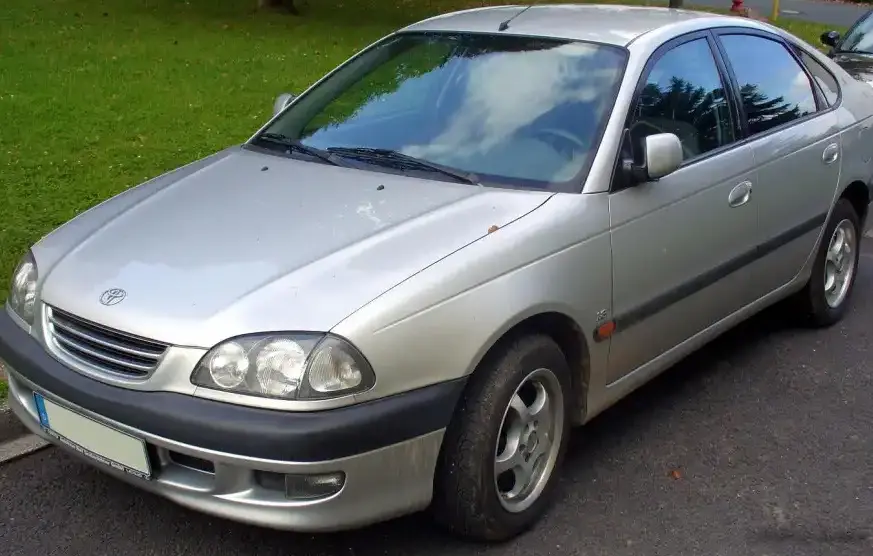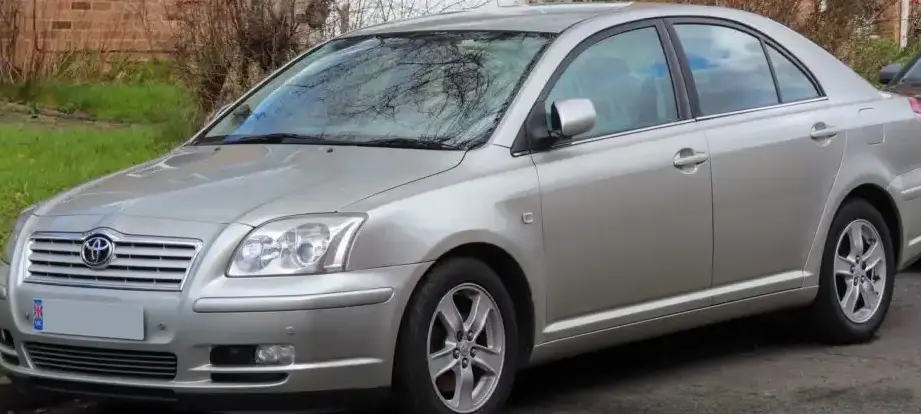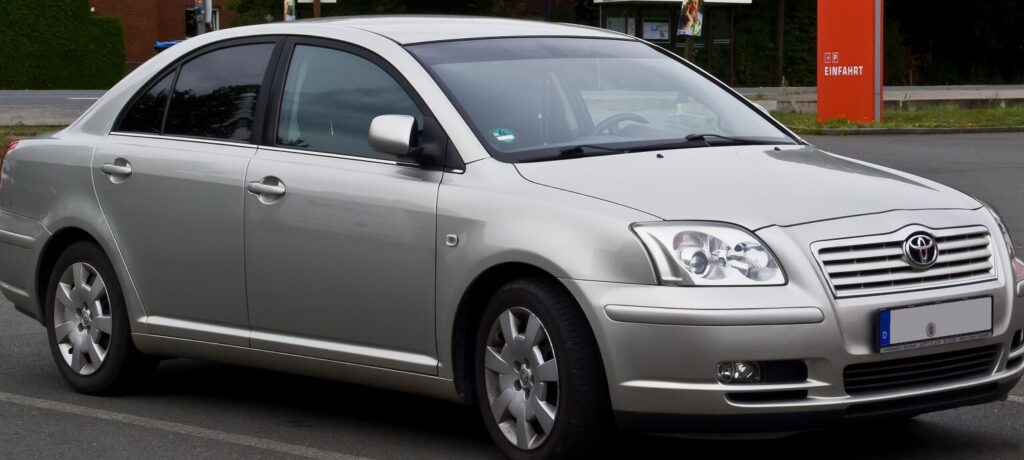
The Toyota Avensis II 1.8 VVT-i Automatic, produced between 2003 and 2009, represented a key offering in Toyota’s mid-size sedan lineup for the European and Asian markets. Positioned as a comfortable and reliable family vehicle, this variant utilized a 1.8-liter inline-four engine paired with a four-speed automatic transmission. It served as a more accessible entry point into the Avensis range, slotting below the more powerful 2.0-liter and 2.4-liter models, and offered a balance between fuel efficiency and everyday usability. The Avensis II, built on the T27 platform, aimed to improve upon its predecessor with enhanced refinement, safety features, and a more modern design.
Technical Specifications
| Brand | Toyota |
| Model | Avensis |
| Generation | Avensis II |
| Type (Engine) | 1.8 VVT-i (129 Hp) Automatic |
| Start of production | 2003 |
| End of production | 2009 |
| Powertrain Architecture | Internal Combustion engine |
| Body type | Sedan |
| Seats | 5 |
| Doors | 4 |
| Fuel consumption (urban) | 9.4 l/100 km (25 US mpg) |
| Fuel consumption (extra urban) | 5.8 l/100 km (40.6 US mpg) |
| Fuel consumption (combined) | 7.7 l/100 km (30.5 US mpg) |
| Fuel Type | Petrol (Gasoline) |
| Acceleration 0 – 100 km/h | 11.6 sec |
| Acceleration 0 – 62 mph | 11.6 sec |
| Acceleration 0 – 60 mph | 11 sec |
| Maximum speed | 185 km/h (114.95 mph) |
| Weight-to-power ratio | 9.8 kg/Hp |
| Weight-to-torque ratio | 7.5 kg/Nm |
| Power | 129 Hp @ 6000 rpm |
| Torque | 170 Nm @ 4200 rpm (125.39 lb.-ft. @ 4200 rpm) |
| Engine layout | Front, Transverse |
| Engine Model/Code | 1ZZ-FE |
| Engine displacement | 1794 cm3 (109.48 cu. in.) |
| Number of cylinders | 4 |
| Engine configuration | Inline |
| Cylinder Bore | 79 mm (3.11 in.) |
| Piston Stroke | 91.5 mm (3.6 in.) |
| Compression ratio | 10:1 |
| Number of valves per cylinder | 4 |
| Fuel injection system | Multi-port manifold injection |
| Engine aspiration | Naturally aspirated engine |
| Valvetrain | DOHC |
| Engine oil capacity | 3.7 l (3.91 US qt | 3.26 UK qt) |
| Coolant capacity | 5.7 l (6.02 US qt | 5.02 UK qt) |
| Kerb Weight | 1270 kg (2799.87 lbs.) |
| Max. weight | 1820 kg (4012.41 lbs.) |
| Max load | 550 kg (1212.54 lbs.) |
| Trunk (boot) space – minimum | 520 l (18.36 cu. ft.) |
| Fuel tank capacity | 60 l (15.85 US gal | 13.2 UK gal) |
| Length | 4630 mm (182.28 in.) |
| Width | 1760 mm (69.29 in.) |
| Height | 1480 mm (58.27 in.) |
| Wheelbase | 2700 mm (106.3 in.) |
| Front track | 1505 mm (59.25 in.) |
| Rear (Back) track | 1510 mm (59.45 in.) |
| Drivetrain Architecture | Front wheel drive |
| Number of gears and type of gearbox | 4 gears, automatic transmission |
| Front suspension | Coil spring |
| Rear suspension | Coil spring |
| Front brakes | Ventilated discs |
| Rear brakes | Disc |
| Assisting systems | ABS (Anti-lock braking system) |
| Steering type | Steering rack and pinion |
| Tires size | 205/55 R16 |
Powertrain & Engine Architecture
The heart of the Avensis II 1.8 VVT-i Automatic is the 1ZZ-FE engine, a 1.794-liter (109.48 cubic inches) inline-four cylinder gasoline engine. This engine features Toyota’s Variable Valve Timing-intelligent (VVT-i) system, which optimizes valve timing based on engine speed and load, improving both performance and fuel efficiency. The 1ZZ-FE utilizes a multi-port fuel injection system and a double overhead camshaft (DOHC) valvetrain. The engine produces 129 horsepower at 6000 rpm and 170 Nm (125.39 lb-ft) of torque at 4200 rpm. Paired with this engine is a four-speed automatic transmission, designed for smooth and comfortable shifting. This transmission, while reliable, is a somewhat dated design compared to the five or six-speed automatics becoming more common in the same era.
Driving Characteristics
The 1.8L Automatic Avensis offers a comfortable, if not particularly sporty, driving experience. Acceleration from 0-60 mph takes around 11 seconds, and top speed is approximately 115 mph. The four-speed automatic transmission, while smooth, can feel somewhat sluggish during quick acceleration or overtaking maneuvers. The gear ratios are tuned for fuel economy rather than outright performance. Compared to the more powerful 2.0-liter and 2.4-liter Avensis models, the 1.8 feels noticeably less responsive. However, it provides adequate power for everyday driving situations and excels in urban environments. The suspension is tuned for comfort, absorbing bumps and imperfections in the road well.
Equipment & Trim Levels
The 1.8 VVT-i Automatic typically came equipped with a reasonable level of standard features. These included air conditioning, power windows, power mirrors, central locking, and an audio system. Higher trim levels, such as the ‘T2’ or ‘T3’ variants, added features like alloy wheels, a multi-function steering wheel, and upgraded interior trim. Optional extras included a sunroof, leather upholstery, and a navigation system. Interior upholstery was typically cloth, with a functional and durable design. The dashboard layout was straightforward and easy to use, prioritizing practicality over stylistic flair.
Chassis & Braking
The Avensis II utilizes a front-engine, front-wheel-drive layout. Suspension consists of coil springs all around, providing a comfortable ride. The front brakes are ventilated discs, offering good stopping power, while the rear brakes are solid discs. Anti-lock Braking System (ABS) was standard, enhancing safety. The chassis is relatively lightweight, contributing to the car’s decent fuel economy. Stabilizer bars are present on both the front and rear axles, helping to reduce body roll during cornering.
Market Reception & Comparison
The Avensis II 1.8 VVT-i Automatic was generally well-received by automotive critics as a practical and reliable family car. It was praised for its comfortable ride, spacious interior, and Toyota’s reputation for dependability. However, some critics noted that the engine lacked outright power and the four-speed automatic transmission felt dated. Compared to rivals like the Ford Mondeo and Volkswagen Passat, the Avensis offered a more refined and comfortable driving experience, but lacked the same level of driver engagement. Fuel economy was competitive, averaging around 30.5 US mpg in combined driving conditions.
Legacy
The 1ZZ-FE engine, while not known for being particularly exciting, is generally considered a reliable unit. With proper maintenance, it can withstand high mileage. The four-speed automatic transmission is also relatively durable, although it may require servicing at higher mileages. In the used car market, the Avensis II 1.8 VVT-i Automatic represents a good value proposition for buyers seeking a dependable and affordable family sedan. Its reputation for reliability and low running costs makes it a popular choice, even today. Parts availability is generally good, and maintenance costs are reasonable. However, potential buyers should be aware of the age of the vehicle and ensure that it has been properly maintained.