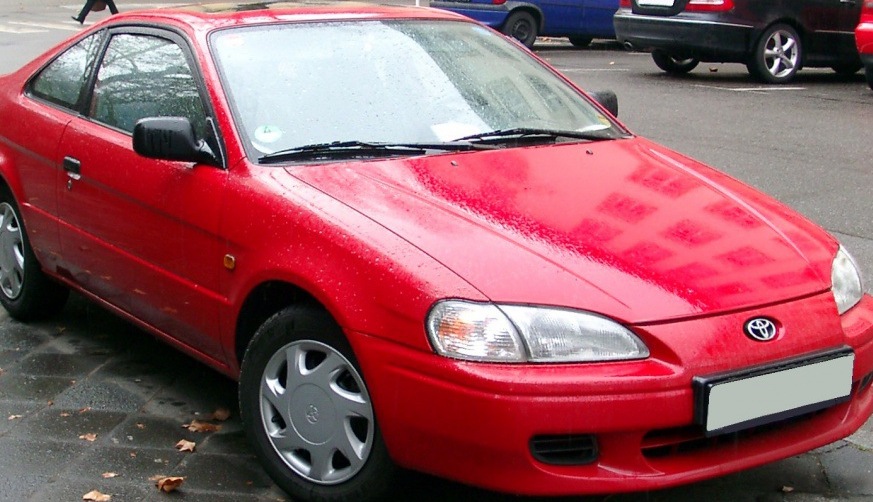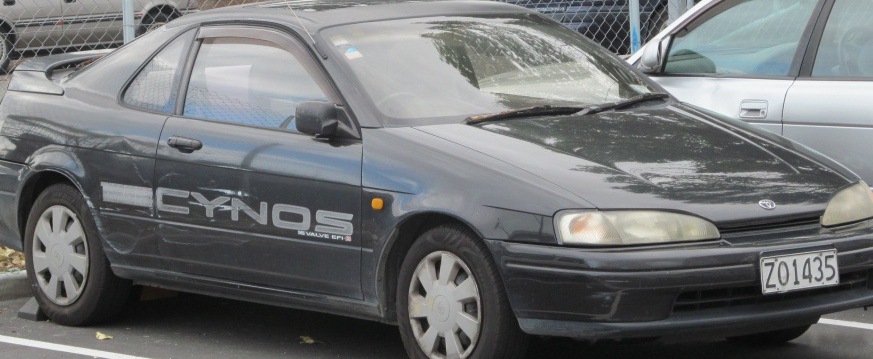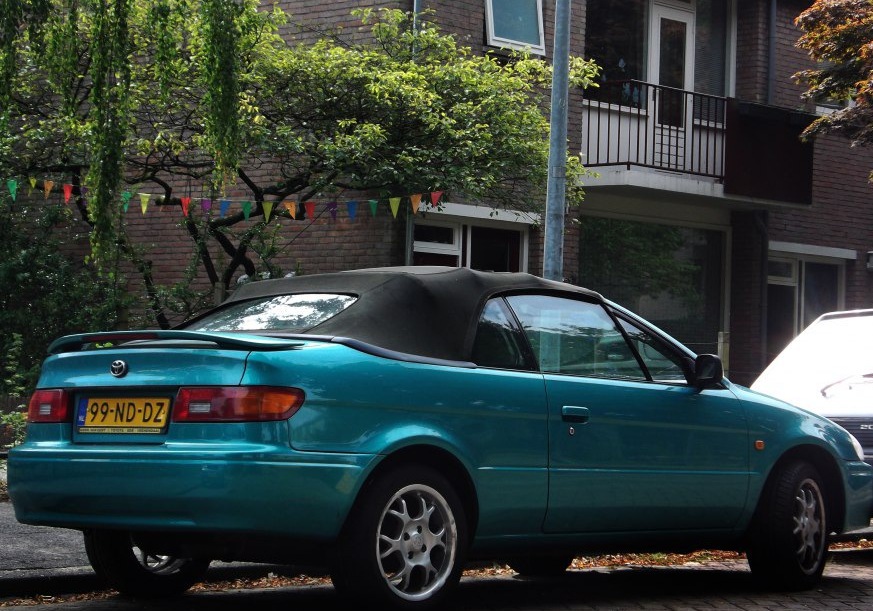
The Toyota Cynos (EL52) 1.5i 16V Beta, equipped with a 110 horsepower engine and automatic transmission, was a compact, front-wheel-drive cabriolet produced between 1995 and 1999. Primarily sold in the Japanese domestic market (JDM) and select export markets, the Cynos represented Toyota’s entry into the affordable, open-top car segment. It was based on the Toyota Starlet platform, sharing many components but offering a unique body style and a more upscale image. This particular 1.5i Beta Automatic variant occupied a mid-range position within the Cynos lineup, offering a balance between performance, fuel efficiency, and convenience.
Technical Specifications
| Brand | Toyota |
| Model | Cynos |
| Generation | Cynos (EL52) |
| Type (Engine) | 1.5i 16V Beta (110 Hp) Automatic |
| Start of production | 1995 |
| End of production | 1999 |
| Powertrain Architecture | Internal Combustion engine |
| Body type | Cabriolet |
| Seats | 4 |
| Doors | 2 |
| Fuel consumption (combined) | 5.1 l/100 km (46.1 US mpg, 55.4 UK mpg, 19.6 km/l) |
| Fuel Type | Petrol (Gasoline) |
| Weight-to-power ratio | 8.4 kg/Hp, 119.6 Hp/tonne |
| Weight-to-torque ratio | 6.8 kg/Nm, 147.8 Nm/tonne |
| Power | 110 Hp @ 6400 rpm |
| Power per litre | 73.5 Hp/l |
| Torque | 136 Nm @ 4000 rpm (100.31 lb.-ft. @ 4000 rpm) |
| Engine layout | Front, Transverse |
| Engine Model/Code | 5E-FE |
| Engine displacement | 1497 cm3 (91.35 cu. in.) |
| Number of cylinders | 4 |
| Engine configuration | Inline |
| Cylinder Bore | 74 mm (2.91 in.) |
| Piston Stroke | 87 mm (3.43 in.) |
| Compression ratio | 9.8:1 |
| Number of valves per cylinder | 4 |
| Fuel injection system | Multi-port manifold injection |
| Engine aspiration | Naturally aspirated engine |
| Valvetrain | DOHC |
| Engine oil capacity | 2.8 l (2.96 US qt | 2.46 UK qt) |
| Coolant | 5 l (5.28 US qt | 4.4 UK qt) |
| Kerb Weight | 920 kg (2028.25 lbs.) |
| Max. weight | 1140 kg (2513.27 lbs.) |
| Max load | 220 kg (485.02 lbs.) |
| Fuel tank capacity | 45 l (11.89 US gal | 9.9 UK gal) |
| Length | 4155 mm (163.58 in.) |
| Width | 1660 mm (65.35 in.) |
| Height | 1295 mm (50.98 in.) |
| Wheelbase | 2380 mm (93.7 in.) |
| Front track | 1405 mm (55.31 in.) |
| Rear track | 1395 mm (54.92 in.) |
| Minimum turning circle | 9.4 m (30.84 ft.) |
| Drivetrain Architecture | Front wheel drive |
| Number of gears and type of gearbox | 3 gears, automatic transmission |
| Front suspension | Wishbone |
| Rear suspension | Suspension with traction connecting levers |
| Front brakes | Disc |
| Rear brakes | Drum |
| Assisting systems | ABS (Anti-lock braking system) |
| Steering type | Steering rack and pinion |
| Power steering | Hydraulic Steering |
| Tires size | 175/65 R14 |
| Wheel rims size | 14 |
Powertrain & Engine Architecture
The Cynos 1.5i Beta Automatic utilized the Toyota 5E-FE engine, a 1.5-liter inline-four cylinder gasoline engine. This engine was a staple in Toyota’s lineup during the 1990s, known for its reliability and relatively simple design. The 5E-FE featured a double overhead camshaft (DOHC) valvetrain with four valves per cylinder, contributing to its respectable power output for its displacement. Fuel delivery was handled by a multi-port fuel injection system, optimizing combustion efficiency. The engine produced 110 horsepower at 6400 rpm and 136 Nm (100.31 lb-ft) of torque at 4000 rpm. Paired with this engine was a 3-speed automatic transmission, designed for smooth and convenient operation. This transmission, while not offering the performance of a manual gearbox, was well-suited for the Cynos’ intended role as a comfortable and practical city car.
Driving Characteristics
The 1.5i Beta Automatic Cynos offered a comfortable, if not particularly sporty, driving experience. The automatic transmission provided smooth gear changes, making it ideal for urban driving conditions. However, the three-speed automatic limited acceleration and responsiveness compared to the available manual transmission options. The 110 horsepower engine provided adequate power for everyday driving, but overtaking maneuvers required careful planning. The relatively light weight of the vehicle (920 kg or 2028.25 lbs) helped to mitigate the limitations of the engine and transmission. The steering was light and precise, making the Cynos easy to maneuver in tight spaces. Overall, the driving experience prioritized comfort and ease of use over outright performance.
Equipment & Trim Levels
The 1.5i Beta Automatic trim level typically included features such as power windows, power steering, and an AM/FM radio. Air conditioning was often standard, though it could be an optional extra depending on the specific market. Interior upholstery was typically cloth, with a simple and functional dashboard layout. Optional extras could include alloy wheels, a more advanced audio system, and upgraded interior trim. The Cynos aimed for a balance between affordability and comfort, offering a reasonable level of equipment for its price point.
Chassis & Braking
The Cynos utilized a front-wheel-drive chassis with a wishbone suspension setup at the front and a suspension with traction connecting levers at the rear. This suspension configuration provided a comfortable ride quality, absorbing bumps and irregularities in the road surface effectively. Braking duties were handled by disc brakes at the front and drum brakes at the rear. An Anti-lock Braking System (ABS) was included as a standard safety feature, enhancing braking performance and stability, particularly on slippery surfaces. The steering system employed a rack and pinion setup with hydraulic power assistance, providing light and precise steering control.
Market Reception & Comparison
The Toyota Cynos 1.5i Beta Automatic was generally well-received in its target markets. Critics praised its affordability, reliability, and comfortable ride. However, some reviewers noted the lack of performance compared to other vehicles in its class, particularly those equipped with manual transmissions or larger engines. Compared to the base Cynos models with smaller engines, the 1.5i Beta offered a noticeable improvement in performance. Compared to higher-spec Cynos variants, the 1.5i Automatic provided a more accessible entry point into the Cynos range, sacrificing some performance and features for a lower price. Fuel economy was a strong point, with the Cynos achieving around 5.1 l/100 km (46.1 US mpg), making it an economical choice for daily commuting.
Legacy
The Toyota Cynos, while not a mainstream success in many markets, has gained a following among enthusiasts, particularly in Japan. The 5E-FE engine is known for its durability and relatively low maintenance costs. The automatic transmission, while not the most advanced, has proven to be reliable over the long term. Today, well-maintained Cynos 1.5i Beta Automatic models are sought after by collectors and enthusiasts looking for a unique and affordable classic car. The Cynos represents a distinctive chapter in Toyota’s history, showcasing the company’s ability to create stylish and practical vehicles for a diverse range of customers. Its simple mechanicals and readily available parts contribute to its continued viability as a classic car for years to come.