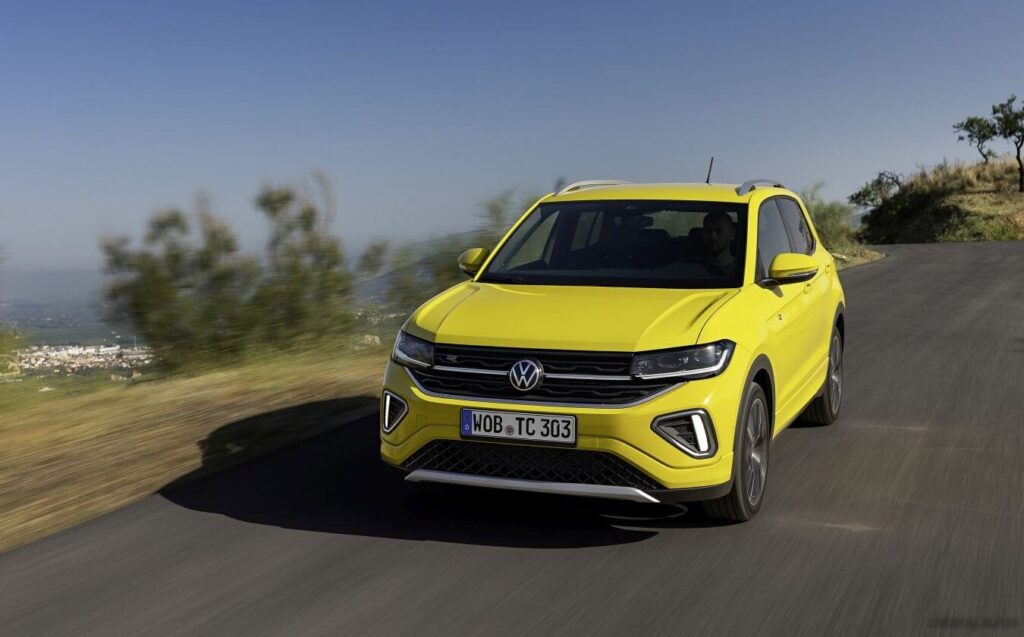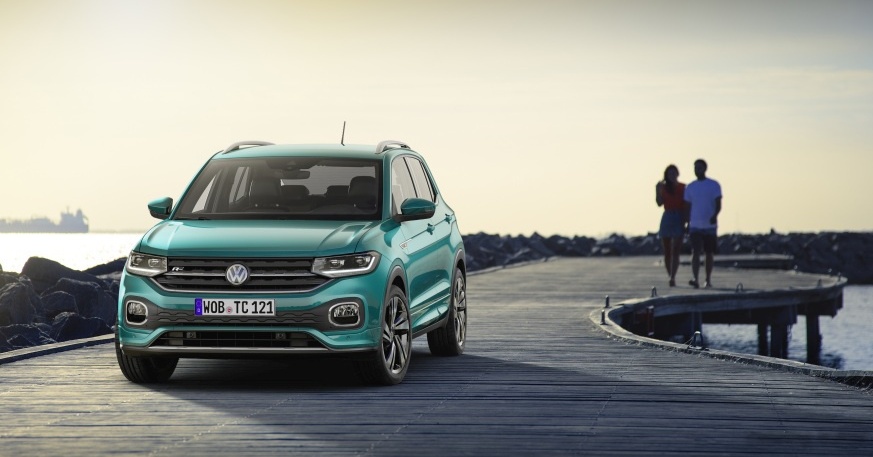
The Volkswagen T-Cross 1.0 TSI (110 hp) DSG represents a key variant within the T-Cross lineup, a subcompact crossover SUV introduced by Volkswagen in 2020. Positioned as a mid-range offering, this version combined a fuel-efficient turbocharged engine with the convenience of a dual-clutch automatic transmission. Production of this specific configuration ran from 2020 through 2023, playing a significant role in establishing the T-Cross as a popular choice in the European market and increasingly in other regions. The T-Cross itself is built on the Volkswagen Group’s MQB A0 platform, shared with models like the Volkswagen Polo and SEAT Ibiza, aiming to provide a practical and affordable entry point into the crossover segment.
Technical Specifications
| Brand | Volkswagen |
| Model | T-Cross |
| Generation | T-Cross |
| Type (Engine) | 1.0 TSI (110 Hp) DSG |
| Start of production | 2020 |
| End of production | 2023 |
| Powertrain Architecture | Internal Combustion engine |
| Body type | SUV |
| Seats | 5 |
| Doors | 5 |
| Fuel consumption at Low speed (WLTP) | 7.8 l/100 km (30.2 US mpg, 36.2 UK mpg, 12.8 km/l) |
| Fuel consumption at Medium speed (WLTP) | 6.3 l/100 km (37.3 US mpg, 44.8 UK mpg, 15.9 km/l) |
| Fuel consumption at high speed (WLTP) | 5.6 l/100 km (42 US mpg, 50.4 UK mpg, 17.9 km/l) |
| Fuel consumption at very high speed (WLTP) | 6.6 l/100 km (35.6 US mpg, 42.8 UK mpg, 15.2 km/l) |
| Combined fuel consumption (WLTP) | 6.4 l/100 km (36.8 US mpg, 44.1 UK mpg, 15.6 km/l) |
| CO2 emissions (WLTP) | 145 g/km |
| Fuel consumption (economy) – urban | 5.7-6.0 l/100 km (41.3 – 39.2 US mpg, 49.6 – 47.1 UK mpg, 17.5 – 16.7 km/l) |
| Fuel consumption (economy) – extra urban | 4.5-4.6 l/100 km (52.3 – 51.1 US mpg, 62.8 – 61.4 UK mpg, 22.2 – 21.7 km/l) |
| Fuel consumption (economy) – combined | 4.9-5.1 l/100 km (48 – 46.1 US mpg, 57.6 – 55.4 UK mpg, 20.4 – 19.6 km/l) |
| CO2 emissions | 112-116 g/km |
| Fuel Type | Petrol (Gasoline) |
| Acceleration 0 – 100 km/h | 10.4 sec |
| Acceleration 0 – 62 mph | 10.4 sec |
| Acceleration 0 – 60 mph | 9.9 sec |
| Maximum speed | 189 km/h (117.44 mph) |
| Emission standard | Euro 6d-ISC-FCM |
| Weight-to-power ratio | 11.1 kg/Hp, 89.9 Hp/tonne |
| Weight-to-torque ratio | 6.1 kg/Nm, 163.5 Nm/tonne |
| Power | 110 Hp @ 5500 rpm |
| Power per litre | 110.1 Hp/l |
| Torque | 200 Nm @ 2000-3000 rpm (147.51 lb.-ft. @ 2000-3000 rpm) |
| Engine layout | Front, Transverse |
| Engine Model/Code | DLAA |
| Engine displacement | 999 cm3 (60.96 cu. in.) |
| Number of cylinders | 3 |
| Engine configuration | Inline |
| Number of valves per cylinder | 4 |
| Fuel injection system | Direct injection |
| Engine aspiration | Turbocharger, Intercooler |
| Engine oil capacity | 4 l (4.23 US qt | 3.52 UK qt) |
| Kerb Weight | 1223 kg (2696.25 lbs.) |
| Max. weight | 1770 kg (3902.18 lbs.) |
| Max load | 547 kg (1205.93 lbs.) |
| Trunk (boot) space – minimum | 455 l (16.07 cu. ft.) |
| Trunk (boot) space – maximum | 1281 l (45.24 cu. ft.) |
| Fuel tank capacity | 40 l (10.57 US gal | 8.8 UK gal) |
| Max. roof load | 75 kg (165.35 lbs.) |
| Permitted trailer load with brakes (8%) | 1200 kg (2645.55 lbs.) |
| Permitted trailer load with brakes (12%) | 1100 kg (2425.08 lbs.) |
| Permitted trailer load without brakes | 640 kg (1410.96 lbs.) |
| Permitted towbar download | 55 kg (121.25 lbs.) |
| Length | 4108-4235 mm (161.73 – 166.73 in.) |
| Width | 1760 mm (69.29 in.) |
| Width with mirrors folded | 1782 mm (70.16 in.) |
| Width including mirrors | 1977 mm (77.83 in.) |
| Height | 1584 mm (62.36 in.) |
| Wheelbase | 2551 mm (100.43 in.) |
| Front track | 1526-1534 mm (60.08 – 60.39 in.) |
| Rear (Back) track | 1504-1512 mm (59.21 – 59.53 in.) |
| Minimum turning circle (turning diameter) | 10.6 m (34.78 ft.) |
| Drivetrain Architecture | The Internal combustion engine (ICE) drives the front wheels of the vehicle. |
| Drive wheel | Front wheel drive |
| Number of gears and type of gearbox | 7 gears, automatic transmission DSG |
| Front suspension | Coil spring, Independent type McPherson |
| Rear suspension | Torsion |
| Front brakes | Ventilated discs |
| Rear brakes | Disc |
| Tires size | 205/60 R16; 205/55 R17 |
| Wheel rims size | 16; 17 |
INTRODUCTION
The Volkswagen T-Cross 1.0 TSI (110 hp) DSG, launched in 2020, quickly became a popular choice for buyers seeking a compact and versatile SUV. It slots into the Volkswagen lineup below the T-Roc, offering a more affordable and accessible entry point into the brand’s crossover range. This variant, powered by a three-cylinder turbocharged engine and paired with a seven-speed dual-clutch transmission (DSG), aimed to balance fuel efficiency with everyday usability. The T-Cross was specifically designed for the European market, where demand for smaller SUVs was rapidly increasing, but it has since expanded to other regions. The 1.0 TSI/DSG combination represented a sweet spot in the range, offering a good compromise between performance and running costs.
Powertrain & Engine Architecture
At the heart of the T-Cross 1.0 TSI (110 hp) DSG lies the Volkswagen EA211 family of engines. Specifically, it utilizes the DLAA engine code, a 999cc three-cylinder petrol engine. This engine features direct fuel injection and a single turbocharger with an intercooler, enabling it to produce 110 horsepower at 5500 rpm and 200 Nm (147.51 lb-ft) of torque between 2000 and 3000 rpm. The engine employs a timing chain for durability and is designed to meet stringent Euro 6d emission standards. The seven-speed DSG transmission is a crucial component, offering quick and smooth gear changes. This dual-clutch transmission operates with two separate clutches, pre-selecting the next gear for seamless shifts. The DSG also contributes to improved fuel economy compared to a traditional automatic transmission.
Driving Characteristics
The T-Cross 1.0 TSI (110 hp) DSG delivers a comfortable and generally refined driving experience. While not particularly sporty, the engine provides adequate power for everyday driving situations. Acceleration from 0 to 100 km/h (0-62 mph) takes around 10.4 seconds, and top speed is rated at 189 km/h (117.44 mph). The DSG transmission is responsive and contributes to a smooth power delivery. Compared to the manual transmission versions of the same engine, the DSG offers greater convenience, especially in urban traffic. However, some drivers may find the DSG slightly less engaging than a traditional manual gearbox. The gear ratios are tuned for fuel efficiency, with a relatively long seventh gear for highway cruising. The engine can feel a little strained when fully loaded or climbing steep hills.
Equipment & Trim Levels
The T-Cross 1.0 TSI (110 hp) DSG typically came equipped with a reasonable level of standard features. These included air conditioning, a touchscreen infotainment system with Apple CarPlay and Android Auto compatibility, Bluetooth connectivity, and a suite of safety features such as automatic emergency braking and lane departure warning. Higher trim levels offered additional features like climate control, a larger touchscreen display, adaptive cruise control, and parking sensors. Interior upholstery was typically cloth, with options for leather or partial leather upgrades. Dashboard materials were generally of good quality for the segment, and the overall interior design was modern and functional.
Chassis & Braking
The T-Cross utilizes a MacPherson strut front suspension and a torsion beam rear suspension. This setup provides a good balance between ride comfort and handling. The front brakes are ventilated discs, while the rear brakes are solid discs. ABS (Anti-lock Braking System) is standard, along with electronic stability control. The steering is electric power-assisted, providing a light and easy driving experience. The T-Cross’s relatively low weight (around 1223 kg or 2696.25 lbs) contributes to its agility and fuel efficiency. Stabilizer bars are fitted to both the front and rear axles to reduce body roll during cornering.
Market Reception & Comparison
The Volkswagen T-Cross 1.0 TSI (110 hp) DSG was generally well-received by automotive critics. It was praised for its fuel efficiency, comfortable ride, and practical interior. However, some reviewers noted that the engine could feel underpowered at times, particularly when fully loaded. Compared to other trims in the T-Cross lineup, such as those with more powerful engines, the 1.0 TSI/DSG version offered a more affordable and economical option. It competed directly with other subcompact SUVs like the SEAT Arona, Renault Captur, and Peugeot 2008. In terms of fuel economy, the 1.0 TSI/DSG variant typically outperformed the higher-powered engine options, making it an attractive choice for budget-conscious buyers.
Legacy
The Volkswagen T-Cross 1.0 TSI (110 hp) DSG has proven to be a reliable and durable powertrain. The EA211 engine family is known for its longevity, and the DSG transmission, while requiring occasional maintenance, is generally robust. In the used car market, these models hold their value reasonably well, thanks to the Volkswagen brand’s reputation for quality and reliability. The T-Cross, in general, has become a popular choice for urban commuters and small families, and the 1.0 TSI/DSG variant remains a compelling option for those seeking a fuel-efficient and practical subcompact SUV.