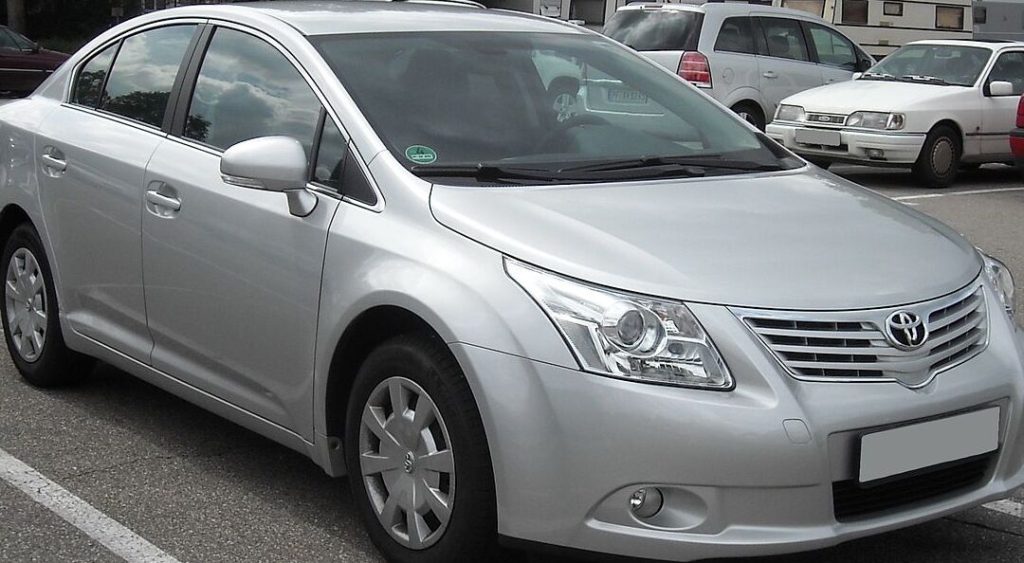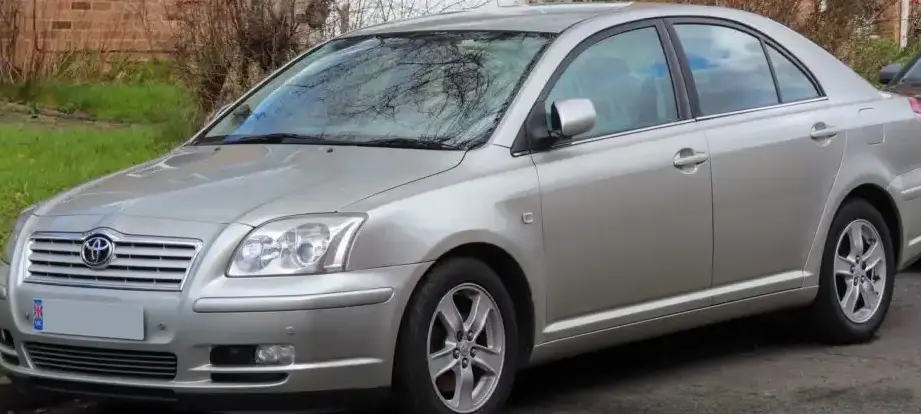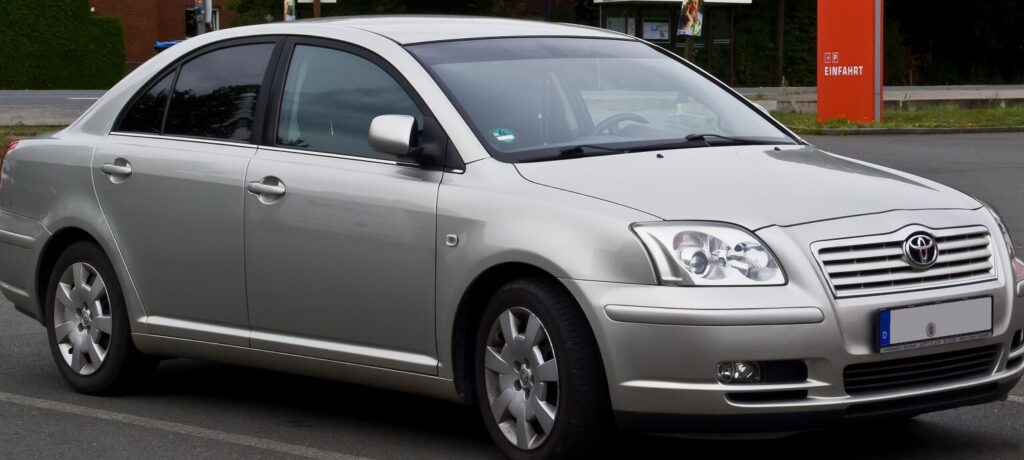
The Toyota Avensis II 2.0 VVT-i (147 hp) was a mid-range trim level of the second-generation Avensis, produced between 2003 and 2009. Positioned within the T270 series (Avensis II), this variant offered a balance between performance, fuel efficiency, and affordability, making it a popular choice in the European and Asian markets. The Avensis II represented Toyota’s continued effort to establish a strong presence in the mid-size family car segment, competing with established rivals like the Ford Mondeo, Volkswagen Passat, and Honda Accord. This specific engine and transmission combination aimed to provide a more engaging driving experience than the lower-powered engine options, while remaining more economical than the flagship V6 models.
Technical Specifications
| Brand | Toyota |
| Model | Avensis |
| Generation | Avensis II |
| Type (Engine) | 2.0 VVT-i (147 Hp) |
| Start of production | 2003 |
| End of production | 2009 |
| Powertrain Architecture | Internal Combustion engine |
| Body type | Sedan |
| Seats | 5 |
| Doors | 4 |
| Fuel consumption (urban) | 10.7 l/100 km (22 US mpg, 26.4 UK mpg, 9.3 km/l) |
| Fuel consumption (extra urban) | 6.6 l/100 km (35.6 US mpg, 42.8 UK mpg, 15.2 km/l) |
| Fuel consumption (combined) | 8.1 l/100 km (29 US mpg, 34.9 UK mpg, 12.3 km/l) |
| Fuel Type | Petrol (Gasoline) |
| Acceleration 0 – 100 km/h | 9.4 sec |
| Acceleration 0 – 62 mph | 9.4 sec |
| Acceleration 0 – 60 mph | 8.9 sec |
| Maximum speed | 205 km/h (127.38 mph) |
| Weight-to-power ratio | 9 kg/Hp, 110.5 Hp/tonne |
| Weight-to-torque ratio | 6.8 kg/Nm, 147.4 Nm/tonne |
| Power | 147 Hp @ 5700 rpm |
| Power per litre | 73.6 Hp/l |
| Torque | 196 Nm @ 4000 rpm (144.56 lb.-ft. @ 4000 rpm) |
| Engine layout | Front, Transverse |
| Engine Model/Code | 1AZ-FSE |
| Engine displacement | 1998 cm3 (121.93 cu. in.) |
| Number of cylinders | 4 |
| Engine configuration | Inline |
| Cylinder Bore | 86 mm (3.39 in.) |
| Piston Stroke | 86 mm (3.39 in.) |
| Compression ratio | 11:1 |
| Number of valves per cylinder | 4 |
| Fuel injection system | Direct injection |
| Engine aspiration | Naturally aspirated engine |
| Valvetrain | DOHC |
| Engine oil capacity | 4.2 l (4.44 US qt | 3.7 UK qt) |
| Coolant | 6.1 l (6.45 US qt | 5.37 UK qt) |
| Kerb Weight | 1330 kg (2932.15 lbs.) |
| Max. weight | 1895 kg (4177.76 lbs.) |
| Max load | 565 kg (1245.61 lbs.) |
| Trunk (boot) space – minimum | 520 l (18.36 cu. ft.) |
| Fuel tank capacity | 60 l (15.85 US gal | 13.2 UK gal) |
| Length | 4630 mm (182.28 in.) |
| Width | 1760 mm (69.29 in.) |
| Height | 1480 mm (58.27 in.) |
| Wheelbase | 2700 mm (106.3 in.) |
| Front track | 1505 mm (59.25 in.) |
| Rear (Back) track | 1510 mm (59.45 in.) |
| Drivetrain Architecture | The Internal combustion engine (ICE) drives the front wheels of the vehicle. |
| Drive wheel | Front wheel drive |
| Number of gears and type of gearbox | 5 gears, manual transmission |
| Front suspension | Coil spring |
| Rear suspension | Coil spring |
| Front brakes | Ventilated discs |
| Rear brakes | Disc |
| Assisting systems | ABS (Anti-lock braking system) |
| Steering type | Steering rack and pinion |
| Tires size | 205/55 R16 |
Powertrain & Engine Architecture
The heart of the Avensis II 2.0 VVT-i was the 1AZ-FSE engine, a 1.998-liter (2.0L) inline-four cylinder gasoline engine. This engine utilized Toyota’s Variable Valve Timing-intelligent (VVT-i) system, which optimized valve timing based on engine speed and load, improving both performance and fuel efficiency. The 1AZ-FSE was notable for its direct fuel injection system, a relatively advanced feature for its time, contributing to cleaner emissions and improved throttle response. The engine produced 147 horsepower at 5700 rpm and 196 Nm (144.56 lb-ft) of torque at 4000 rpm. The standard transmission for this variant was a five-speed manual gearbox, providing a direct connection between the engine and the front wheels. While an automatic transmission was available, the manual was favored by drivers seeking a more involved driving experience.
Driving Characteristics
The 2.0 VVT-i Avensis offered a noticeable step up in performance compared to the 1.6 and 1.8-liter models. Acceleration to 60 mph took approximately 8.9 seconds, and it had a respectable top speed of 127.38 mph. The five-speed manual transmission allowed for precise gear selection, and the engine provided a linear power delivery. While not a sports sedan, the 2.0L engine provided sufficient power for comfortable highway cruising and overtaking maneuvers. Compared to the higher-output V6 models, the 2.0 VVT-i prioritized fuel economy and affordability, making it a more practical choice for everyday driving. The manual transmission, while engaging, had a slightly longer throw than some competitors, but was generally considered smooth and reliable.
Equipment & Trim Levels
The 2.0 VVT-i trim typically included features such as air conditioning, power windows, power mirrors, a CD player, and central locking. Higher trim levels added options like alloy wheels, a sunroof, and upgraded upholstery. Interior materials were generally of good quality, reflecting Toyota’s reputation for build quality. The dashboard layout was functional and straightforward, prioritizing ease of use. Optional extras included a navigation system, leather seats, and a premium sound system. Safety features, such as ABS and airbags, were standard across the Avensis II range.
Chassis & Braking
The Avensis II utilized a MacPherson strut front suspension and a coil spring rear suspension. This setup provided a comfortable ride quality, absorbing bumps and imperfections in the road effectively. The front brakes were ventilated discs, while the rear brakes were solid discs, providing adequate stopping power for the vehicle’s weight and performance. The steering was a rack and pinion system, offering precise and responsive handling. The chassis was designed to provide a balance between comfort and handling, leaning towards the former. Stabilizer bars were fitted to both the front and rear axles to reduce body roll during cornering.
Market Reception & Comparison
The Toyota Avensis II 2.0 VVT-i was generally well-received by automotive critics. It was praised for its reliability, comfortable ride, and fuel efficiency. However, some critics found the styling to be somewhat conservative and the driving experience to be less engaging than some of its rivals. Compared to the 1.8-liter models, the 2.0 VVT-i offered a significant performance boost, while maintaining good fuel economy. Compared to the V6 models, it was more affordable and economical, but lacked the same level of outright performance. The Avensis II consistently scored well in reliability surveys, making it a popular choice for buyers seeking a dependable family car.
Legacy
The 1AZ-FSE engine, found in the Avensis II 2.0 VVT-i, has proven to be a remarkably durable and reliable powertrain. With proper maintenance, these engines can easily exceed 200,000 miles. The Avensis II, in general, has earned a reputation for long-term dependability, and used examples remain relatively common on the market today. While not a particularly sought-after classic, the Avensis II 2.0 VVT-i represents a solid and practical choice for buyers seeking an affordable and reliable used car. Its combination of fuel efficiency, performance, and build quality continues to make it a viable option in the used car market.