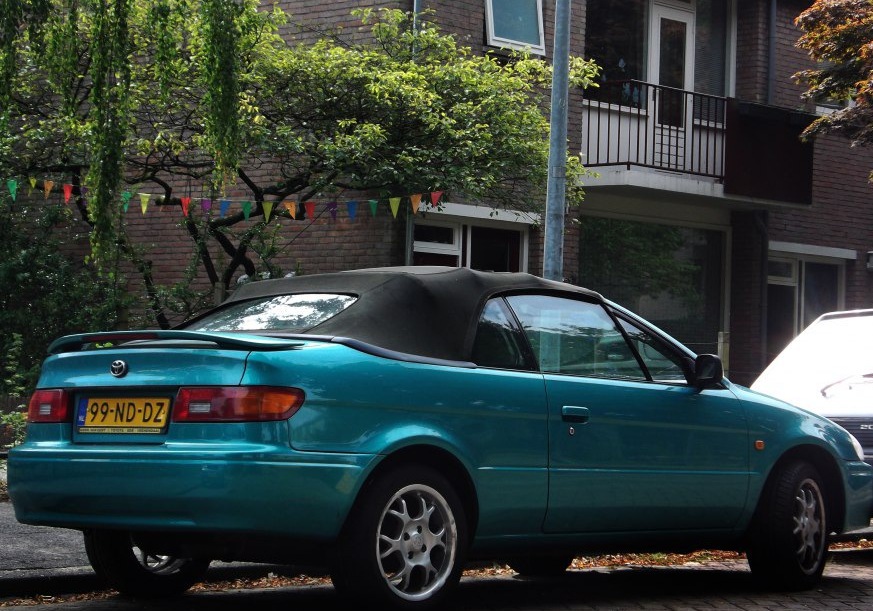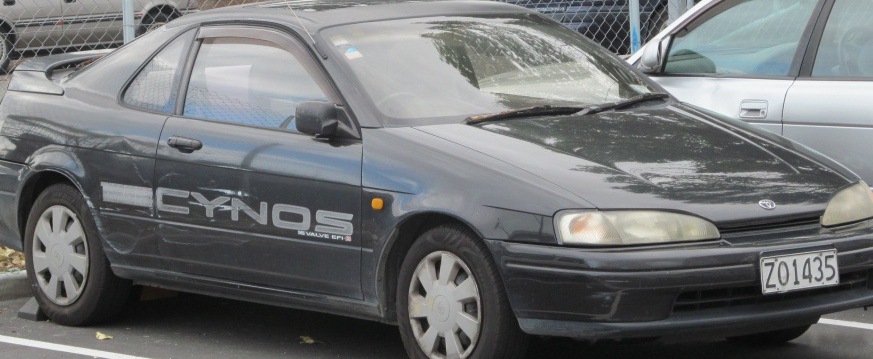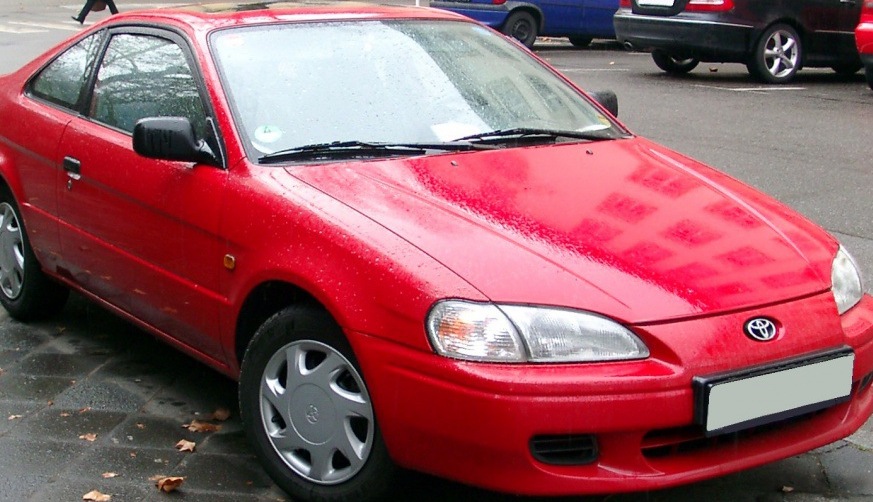
The Toyota Cynos (EL54) 1.5i 16V Beta, produced between 1995 and 1999, was a compact, two-door coupe primarily aimed at the Japanese domestic market (JDM). Positioned as a sporty and affordable option, the Cynos was based on the Toyota Starlet platform (though visually distinct) and offered a more stylish alternative to the standard hatchback. The 1.5i 16V Beta variant, equipped with the 5E-FE engine producing 110 horsepower, represented a mid-range offering within the Cynos lineup, slotting between the base models and potentially more performance-focused, limited-edition trims. It was a popular choice for young drivers seeking a blend of practicality and a somewhat sporty image.
Technical Specifications
| Brand | Toyota |
| Model | Cynos |
| Generation | Cynos (EL54) |
| Type (Engine) | 1.5i 16V Beta (110 Hp) |
| Start of production | 1995 |
| End of production | 1999 |
| Powertrain Architecture | Internal Combustion engine |
| Body type | Coupe |
| Seats | 4 |
| Doors | 2 |
| Fuel consumption (combined) | 5.1 l/100 km (46.1 US mpg, 55.4 UK mpg, 19.6 km/l) |
| Fuel Type | Petrol (Gasoline) |
| Weight-to-power ratio | 8.4 kg/Hp, 119.6 Hp/tonne |
| Weight-to-torque ratio | 6.8 kg/Nm, 147.8 Nm/tonne |
| Power | 110 Hp @ 6400 rpm |
| Power per litre | 73.5 Hp/l |
| Torque | 136 Nm @ 4000 rpm (100.31 lb.-ft. @ 4000 rpm) |
| Engine layout | Front, Transverse |
| Engine Model/Code | 5E-FE |
| Engine displacement | 1497 cm3 (91.35 cu. in.) |
| Number of cylinders | 4 |
| Engine configuration | Inline |
| Cylinder Bore | 74 mm (2.91 in.) |
| Piston Stroke | 87 mm (3.43 in.) |
| Compression ratio | 9.8:1 |
| Number of valves per cylinder | 4 |
| Fuel injection system | Multi-port manifold injection |
| Engine aspiration | Naturally aspirated engine |
| Valvetrain | DOHC |
| Engine oil capacity | 3.2 l (3.38 US qt | 2.82 UK qt) |
| Kerb Weight | 920 kg (2028.25 lbs.) |
| Max. weight | 1140 kg (2513.27 lbs.) |
| Max load | 220 kg (485.02 lbs.) |
| Fuel tank capacity | 45 l (11.89 US gal | 9.9 UK gal) |
| Length | 4155 mm (163.58 in.) |
| Width | 1660 mm (65.35 in.) |
| Height | 1295 mm (50.98 in.) |
| Wheelbase | 2380 mm (93.7 in.) |
| Front track | 1405 mm (55.31 in.) |
| Rear track | 1395 mm (54.92 in.) |
| Minimum turning circle | 9.4 m (30.84 ft.) |
| Drivetrain Architecture | Front wheel drive |
| Number of gears and type of gearbox | 5 gears, manual transmission |
| Front suspension | Wishbone |
| Rear suspension | Suspension with traction connecting levers |
| Front brakes | Disc |
| Rear brakes | Drum |
| Assisting systems | ABS (Anti-lock braking system) |
| Steering type | Steering rack and pinion |
| Power steering | Hydraulic Steering |
| Tires size | 175/65 R14 |
Powertrain & Engine Architecture
The heart of the Cynos 1.5i 16V Beta is the 5E-FE engine, a 1.5-liter inline-four cylinder gasoline engine. This engine is a member of Toyota’s E-series, known for its reliability and relatively simple design. The “16V” designation indicates a dual overhead camshaft (DOHC) valvetrain, featuring four valves per cylinder, which contributes to improved breathing and higher-end power. The 5E-FE utilizes multi-port fuel injection, delivering fuel directly into the intake ports for precise fuel metering. The engine’s 9.8:1 compression ratio was a compromise between performance and fuel efficiency. The Cynos 1.5i 16V Beta was exclusively offered with a five-speed manual transmission, providing drivers with direct control over the engine’s powerband. This transmission was chosen to enhance the sporty feel of the vehicle.
Driving Characteristics
The 110 horsepower and 136 Nm (100.31 lb-ft) of torque produced by the 5E-FE engine in the Cynos 1.5i 16V Beta provided adequate, though not overwhelming, performance. Acceleration was respectable for its class, with a focus on usability rather than outright speed. The five-speed manual transmission allowed drivers to keep the engine in its optimal power range, making it feel more responsive than it actually was. Compared to lower-powered Cynos variants, the 1.5i 16V Beta offered a noticeable improvement in acceleration and highway cruising ability. However, it didn’t possess the same punch as larger-engined competitors or even some of the more performance-oriented JDM coupes of the era. The gear ratios were tuned for a balance between fuel economy and everyday drivability.
Equipment & Trim Levels
The Cynos 1.5i 16V Beta typically came equipped with features considered standard for its price point in the mid-1990s. This included power steering, air conditioning, and a basic audio system. Interior upholstery was typically cloth, with a relatively simple dashboard layout. Optional extras could include alloy wheels, upgraded audio systems, and power windows. The trim level often dictated the availability of these options. The Cynos wasn’t a luxury vehicle, but it offered a comfortable and functional interior for its target demographic.
Chassis & Braking
The Cynos utilized a front-engine, front-wheel-drive layout. The front suspension employed a wishbone design, while the rear suspension featured a torsion beam setup with traction connecting levers. This configuration provided a reasonable balance between ride comfort and handling. Braking duties were handled by disc brakes at the front and drum brakes at the rear. An Anti-lock Braking System (ABS) was often included as standard equipment, enhancing safety. The relatively lightweight construction of the Cynos (920 kg / 2028.25 lbs) helped to offset the modest power output, contributing to acceptable handling characteristics.
Market Reception & Comparison
The Toyota Cynos 1.5i 16V Beta was generally well-received in the Japanese market as an affordable and stylish coupe. Critics praised its fuel efficiency and reliability, hallmarks of Toyota engineering. Compared to other Cynos trims, the 1.5i 16V Beta offered a noticeable performance upgrade without a significant price increase. However, it faced competition from other compact coupes offered by Honda and Nissan. Fuel economy figures of around 5.1 l/100 km (46.1 US mpg) were competitive for the time. Reliability was generally high, typical of Toyota products, though maintenance costs were comparable to other vehicles in its class.
Legacy
The Toyota Cynos, while not a globally recognized model, holds a certain nostalgic appeal among JDM enthusiasts. The 5E-FE engine is known for its durability and relatively simple maintenance requirements. Today, Cynos models in good condition are becoming increasingly collectible, particularly those with low mileage and original features. The 1.5i 16V Beta variant, with its balance of performance and economy, remains a popular choice among owners. Parts availability can be a challenge outside of Japan, but the engine’s robust design means that it can often withstand years of use with proper maintenance. The Cynos represents a unique chapter in Toyota’s history, offering a glimpse into the design trends and automotive preferences of the 1990s.