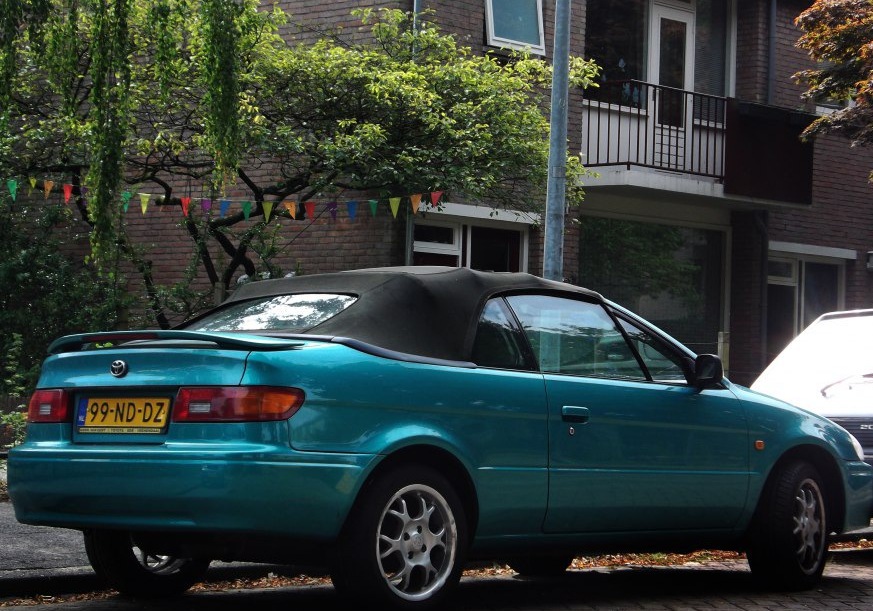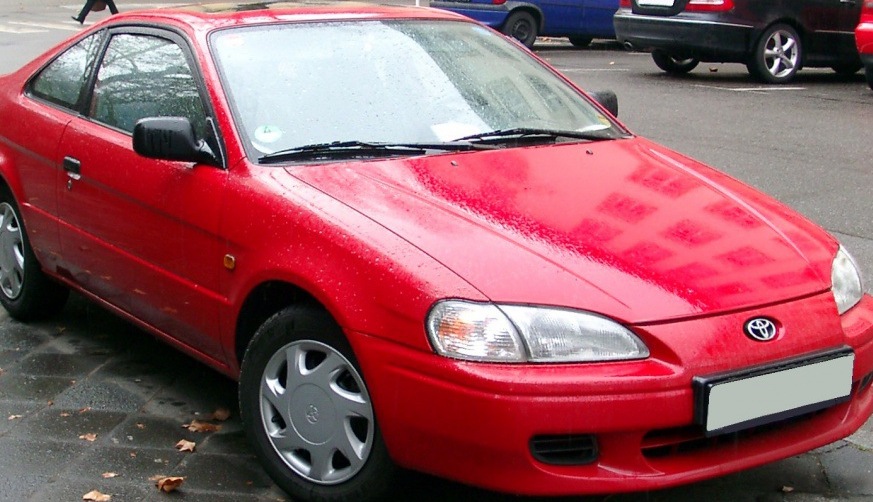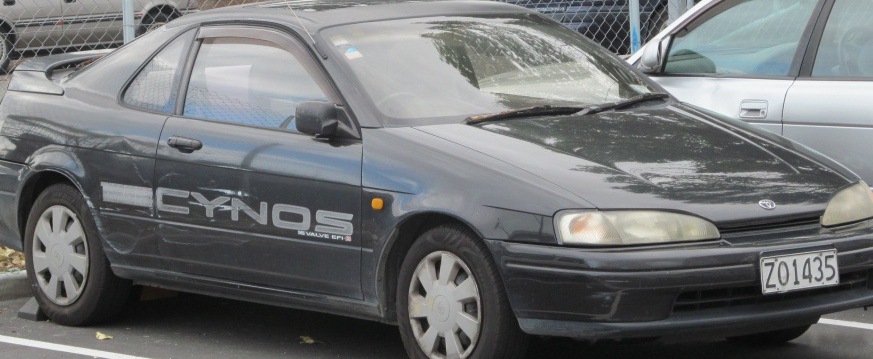
The Toyota Cynos (L44) 1.5i 16V, produced between 1991 and 1995, was a compact, two-door coupe marketed primarily in Japan and Australia. Positioned as an affordable and sporty option, the Cynos was based on the Toyota Corolla platform (E100 series) and shared many components with its more mainstream sibling. The 1.5i 16V variant, equipped with the 5E-FE engine, represented a mid-range offering within the Cynos lineup, bridging the gap between the base 1.5-liter models and potentially higher-performance, market-specific trims. It aimed to provide a balance of fuel efficiency and respectable performance for the era.
Technical Specifications
| Brand | Toyota |
| Model | Cynos |
| Generation | Cynos (L44) |
| Type (Engine) | 1.5i 16V (105 Hp) |
| Start of production | 1991 |
| End of production | 1995 |
| Powertrain Architecture | Internal Combustion engine |
| Body type | Coupe |
| Seats | 4 |
| Doors | 2 |
| Fuel consumption (combined) | 6.3 l/100 km (37.3 US mpg, 44.8 UK mpg, 15.9 km/l) |
| Fuel Type | Petrol (Gasoline) |
| Maximum speed | 200 km/h (124.27 mph) |
| Weight-to-power ratio | 8.3 kg/Hp, 120.7 Hp/tonne |
| Weight-to-torque ratio | 6.9 kg/Nm, 146 Nm/tonne |
| Power | 105 Hp @ 6400 rpm |
| Power per litre | 70.1 Hp/l |
| Torque | 127 Nm @ 3200 rpm (93.67 lb.-ft. @ 3200 rpm) |
| Engine layout | Front, Transverse |
| Engine Model/Code | 5E-FE |
| Engine displacement | 1497 cm3 (91.35 cu. in.) |
| Number of cylinders | 4 |
| Engine configuration | Inline |
| Cylinder Bore | 74 mm (2.91 in.) |
| Piston Stroke | 87 mm (3.43 in.) |
| Compression ratio | 9.4:1 |
| Number of valves per cylinder | 4 |
| Fuel injection system | Multi-port manifold injection |
| Engine aspiration | Naturally aspirated engine |
| Valvetrain | DOHC |
| Engine oil capacity | 3.2 l (3.38 US qt | 2.82 UK qt) |
| Coolant | 5 l (5.28 US qt | 4.4 UK qt) |
| Kerb Weight | 870 kg (1918.02 lbs.) |
| Max. weight | 1090 kg (2403.04 lbs.) |
| Max load | 220 kg (485.02 lbs.) |
| Fuel tank capacity | 45 l (11.89 US gal | 9.9 UK gal) |
| Length | 4145 mm (163.19 in.) |
| Width | 1645 mm (64.76 in.) |
| Height | 1295 mm (50.98 in.) |
| Wheelbase | 2380 mm (93.7 in.) |
| Front track | 1405 mm (55.31 in.) |
| Rear track | 1395 mm (54.92 in.) |
| Minimum turning circle | 9.4 m (30.84 ft.) |
| Drivetrain Architecture | Front wheel drive |
| Number of gears | 5 gears, manual transmission |
| Front suspension | Wishbone |
| Rear suspension | Coil spring |
| Front brakes | Ventilated discs |
| Rear brakes | Drum |
| Assisting systems | ABS (Anti-lock braking system) |
| Steering type | Steering rack and pinion |
| Power steering | Hydraulic Steering |
| Tires size | 175/65 R14 |
Powertrain & Engine Architecture
The heart of the Cynos 1.5i 16V is the 5E-FE engine, a 1.5-liter inline-four cylinder gasoline engine. This engine is a member of Toyota’s E-series, known for its reliability and relatively simple design. The “16V” designation indicates a dual overhead camshaft (DOHC) valvetrain, featuring four valves per cylinder. This configuration enhances breathing and contributes to the engine’s power output. Fuel delivery is managed by a multi-port fuel injection system, providing precise fuel metering for improved efficiency and performance. The 5E-FE engine produces 105 horsepower at 6400 rpm and 127 Nm (93.67 lb-ft) of torque at 3200 rpm. The Cynos typically came equipped with a five-speed manual transmission, although automatic options were available in some markets. The manual transmission offered a direct connection to the engine, while the automatic provided convenience, albeit with a slight performance penalty.
Driving Characteristics
The Cynos 1.5i 16V, with its 105 hp engine and relatively lightweight chassis (approximately 870 kg or 1918 lbs), offered a reasonably spirited driving experience for its class. Acceleration was adequate for everyday driving, but it wasn’t a particularly fast car. The five-speed manual transmission allowed drivers to keep the engine in its optimal power band, providing better responsiveness. The automatic transmission, while convenient, resulted in slightly slower acceleration due to torque converter losses. Handling was generally considered neutral and predictable, making it an easy car to drive. Compared to potential higher-spec Cynos variants (if offered in a given market), the 1.5i 16V lacked the outright performance of larger-displacement engines, but it compensated with better fuel economy and a more affordable price point.
Equipment & Trim Levels
The Cynos 1.5i 16V typically came with a fairly basic level of equipment, reflecting its position as an affordable coupe. Standard features generally included power steering, a basic audio system, and cloth upholstery. Air conditioning was often an optional extra. Interior trim was functional and straightforward, prioritizing practicality over luxury. Depending on the market, additional options could include power windows, central locking, and alloy wheels. The dashboard layout was typical of Toyota vehicles of the era, with clearly labeled controls and a focus on ergonomics.
Chassis & Braking
The Cynos utilized a front-engine, front-wheel-drive layout. Suspension consisted of a wishbone setup at the front and a coil spring arrangement at the rear. This configuration provided a comfortable ride quality while maintaining reasonable handling characteristics. Braking duties were handled by ventilated discs at the front and drum brakes at the rear. An Anti-lock Braking System (ABS) was often included as standard equipment, enhancing safety by preventing wheel lockup during hard braking. The steering system employed a rack and pinion setup with hydraulic power assistance, providing precise and responsive steering feel.
Market Reception & Comparison
The Toyota Cynos 1.5i 16V was generally well-received as an affordable and reliable coupe. Critics praised its fuel efficiency and ease of driving. However, some noted that its performance was not particularly exciting compared to other coupes on the market. Compared to other trims within the Cynos lineup, the 1.5i 16V offered a good balance of price and performance. It was more affordable than higher-spec models, but it still provided a respectable level of power and features. In terms of reliability, the 5E-FE engine proved to be a durable and long-lasting unit, contributing to the Cynos’s reputation for dependability.
Legacy
The Toyota Cynos, while not a hugely popular model globally, has developed a small but dedicated following among enthusiasts. The 5E-FE engine is known for its longevity and relatively low maintenance costs. Today, well-maintained Cynos 1.5i 16V models are becoming increasingly collectible, particularly those in original condition. The car represents a unique and affordable entry point into the world of Japanese coupes from the early 1990s. Its simple design and reliable powertrain make it a relatively easy car to maintain and enjoy, ensuring its continued presence on the roads for years to come.