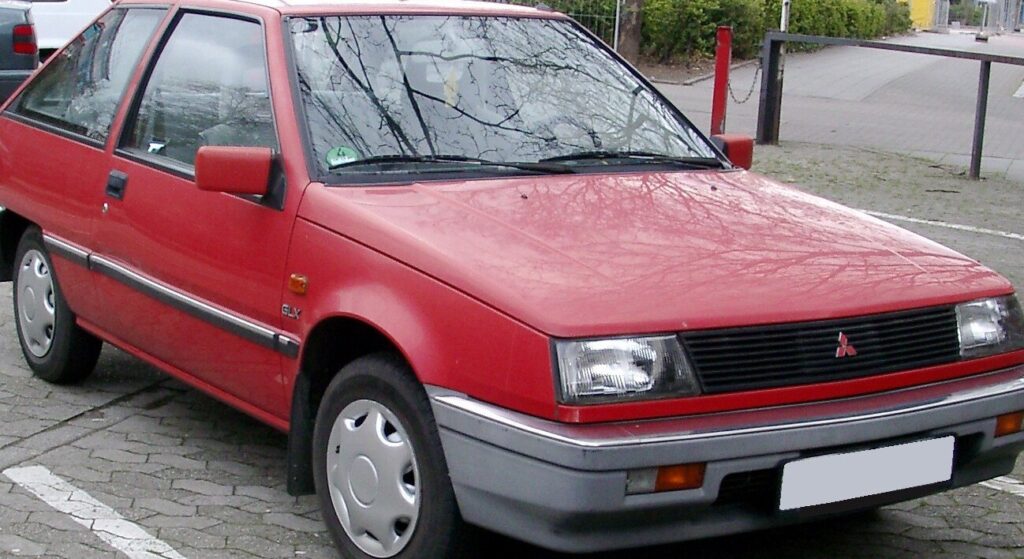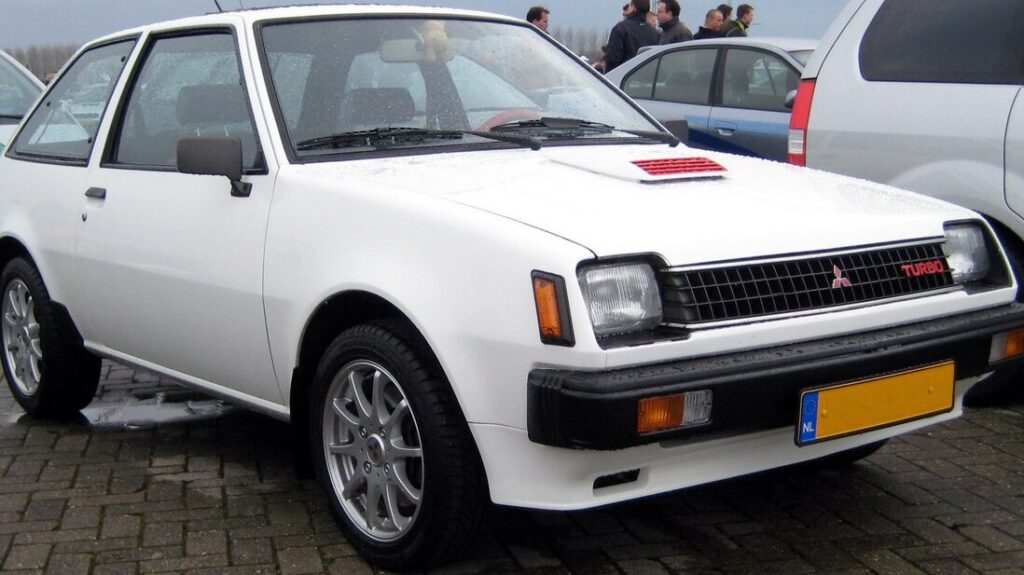
The Mitsubishi Colt I, specifically the 1.4 GLX and GT variants (designated A152A) producing 70 horsepower, represents a significant entry for Mitsubishi into the burgeoning subcompact hatchback market of the late 1970s and early 1980s. Produced from 1979 to 1984, this first-generation Colt (A150 series) aimed to provide affordable and reliable transportation, primarily targeting the European and Asian markets, with limited official US sales. The 1.4 GLX/GT occupied a middle ground within the Colt I lineup, offering a step up in features and performance compared to the base models, but remaining a budget-conscious alternative to more powerful or luxurious competitors.
Technical Specifications
| Brand | Mitsubishi |
| Model | Colt |
| Generation | Colt I (A150) |
| Type | 1.4 GLX, GT (A152A) (70 Hp) |
| Start of Production | 1979 |
| End of Production | 1984 |
| Powertrain Architecture | Internal Combustion Engine |
| Body Type | Hatchback |
| Fuel Type | Petrol (Gasoline) |
| Power | 70 Hp |
| Engine Aspiration | Naturally Aspirated |
Introduction
The Mitsubishi Colt I (A150) was introduced as a direct response to the growing demand for small, fuel-efficient vehicles in the wake of the 1973 and 1979 oil crises. Mitsubishi sought to establish a foothold in the European subcompact segment, competing with established players like the Fiat 127, Renault 5, and Ford Fiesta. The A150 chassis underpinned a range of body styles, including three-door and five-door hatchbacks, and a coupe. The 1.4 GLX and GT models, powered by the 4G15 engine, represented a mid-range offering, balancing affordability with a reasonable level of equipment and performance. These models were particularly popular in the UK and other European countries where small, economical cars were highly valued.
Powertrain & Engine Architecture
The heart of the 1.4 GLX and GT Colt I is the 4G15 engine, a 1.4-liter (1397 cc) inline-four cylinder gasoline engine. This engine is naturally aspirated and features a single overhead camshaft (SOHC) valvetrain with eight valves. Fuel delivery is managed by a Mikuni/Solex carburetor, a common setup for vehicles of this era. The 4G15 engine produces 70 horsepower at 6,000 rpm and approximately 88 lb-ft of torque at 3,000 rpm. The engine block is cast iron, while the cylinder head is aluminum, contributing to a relatively lightweight design. The transmission paired with the 1.4 GLX/GT is typically a four-speed manual, although a three-speed automatic transmission was also available, albeit less common. The automatic transmission, while offering convenience, noticeably impacted acceleration and fuel economy.
Driving Characteristics
The 1.4 GLX/GT Colt I offers a driving experience best described as practical and economical. With 70 horsepower propelling a relatively lightweight chassis (around 1,700-1,800 lbs), acceleration is adequate for city driving and moderate highway speeds. The four-speed manual transmission allows for reasonable control over the engine’s powerband, while the optional automatic transmission provides smoother, but slower, progress. Gear ratios are geared towards fuel efficiency rather than outright performance. The steering is light and responsive, making it easy to maneuver in urban environments. However, the suspension, while adequate, is not particularly sophisticated, resulting in a somewhat firm ride, especially on uneven surfaces. Compared to the base 1.2-liter models, the 1.4 GLX/GT offers a noticeable improvement in acceleration and overall drivability, making it a more suitable choice for drivers who frequently undertake longer journeys or carry passengers.
Equipment & Trim Levels
The GLX and GT trim levels offered a step up in features compared to the base Colt I models. Standard equipment typically included cloth upholstery, a basic instrument cluster with speedometer, fuel gauge, and temperature gauge, and front disc brakes. The GT variant often added features such as a more sporty interior trim, upgraded wheels, and potentially a rear window wiper. Optional extras included a radio, heated rear window, and upgraded sound system. Interior plastics were durable but basic, reflecting the car’s affordable price point. The dashboard layout is functional and straightforward, prioritizing ease of use over aesthetic appeal.
Chassis & Braking
The Colt I utilizes a front-engine, front-wheel-drive layout. The suspension consists of MacPherson struts at the front and a twist-beam axle with trailing arms at the rear. Braking is typically accomplished with front disc brakes and rear drum brakes, although some GT models may have been equipped with rear disc brakes. Steering is rack and pinion, providing precise and responsive handling. The chassis is relatively simple and robust, designed for durability and ease of maintenance. Stabilizer bars were not typically fitted to the base models, but may have been included on the GT variant to reduce body roll during cornering.
Market Reception & Comparison
The Mitsubishi Colt I 1.4 GLX/GT was generally well-received by automotive critics as a practical and economical small car. It was praised for its fuel efficiency, reliability, and relatively spacious interior for its size. However, it was also criticized for its somewhat basic interior and lack of refinement compared to some of its competitors. Compared to the 1.2-liter Colt I models, the 1.4 GLX/GT offered a noticeable performance advantage, making it a more appealing option for drivers who valued drivability. Against rivals like the Fiat 127 and Renault 5, the Colt I offered a competitive package in terms of price, fuel economy, and reliability. The automatic transmission version, while convenient, suffered from reduced fuel economy and slower acceleration compared to the manual transmission models.
Legacy
The Mitsubishi Colt I, including the 1.4 GLX/GT variant, laid the foundation for Mitsubishi’s continued success in the European subcompact market. The 4G15 engine proved to be a reliable and durable powerplant, and many examples are still on the road today. In the used car market, the Colt I is valued for its simplicity, affordability, and ease of maintenance. Parts availability can be a challenge, but many components are still available through specialist suppliers. The 1.4 GLX/GT models, with their slightly increased performance and improved equipment levels, are often sought after by enthusiasts and collectors. While not a groundbreaking vehicle, the Colt I represents a significant chapter in Mitsubishi’s history and a testament to the enduring appeal of small, economical cars.