
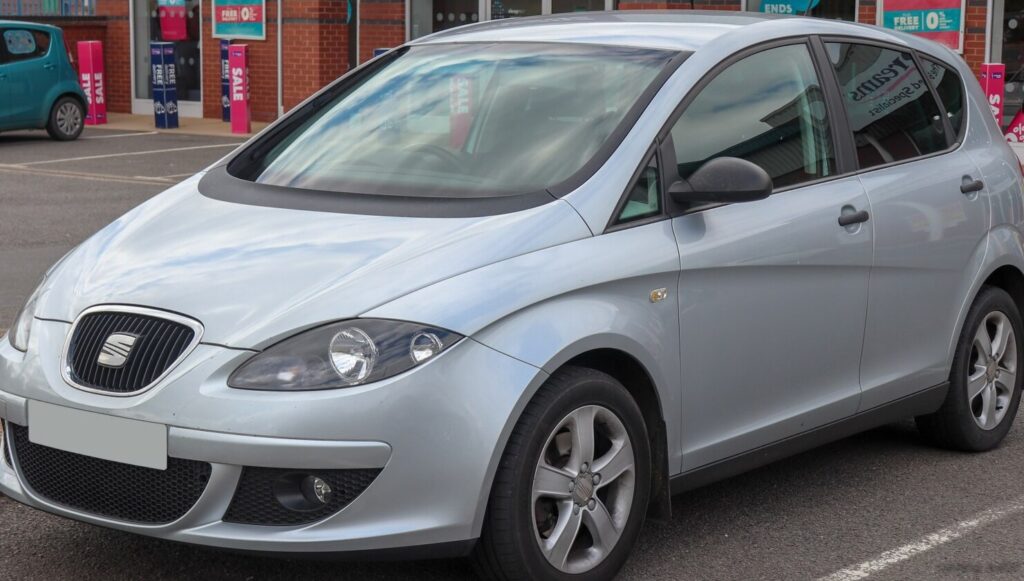
The SEAT Altea 1.9 TDI (105 hp) was a popular variant of the first-generation Altea (5P) compact MPV, produced between 2005 and 2009. Positioned as a practical and fuel-efficient option within the Altea range, it catered to buyers seeking a versatile family vehicle with reasonable running costs. The Altea itself was SEAT’s attempt to carve out a niche in the increasingly competitive compact multi-purpose vehicle segment, offering a distinctive, somewhat sporty aesthetic compared to more conventional offerings like the Renault Scenic or Volkswagen Touran. This particular 1.9 TDI engine and transmission combination represented a core offering, balancing performance with economy and affordability.
Technical Specifications
| Brand | Seat |
| Model | Altea |
| Generation | Altea (5P) |
| Type (Engine) | 1.9 TDI (105 Hp) |
| Start of production | October, 2005 |
| End of production | 2009 |
| Powertrain Architecture | Internal Combustion engine |
| Body type | Minivan |
| Seats | 5 |
| Doors | 5 |
| Fuel consumption (urban) | 6.8 l/100 km (34.6 US mpg, 41.5 UK mpg, 14.7 km/l) |
| Fuel consumption (extra urban) | 4.6 l/100 km (51.1 US mpg, 61.4 UK mpg, 21.7 km/l) |
| Fuel consumption (combined) | 5.4 l/100 km (43.6 US mpg, 52.3 UK mpg, 18.5 km/l) |
| Fuel Type | Diesel |
| Acceleration 0 – 100 km/h | 12.3 sec |
| Acceleration 0 – 62 mph | 12.3 sec |
| Acceleration 0 – 60 mph | 11.7 sec |
| Maximum speed | 183 km/h (113.71 mph) |
| Weight-to-power ratio | 13.4 kg/Hp, 74.7 Hp/tonne |
| Weight-to-torque ratio | 5.6 kg/Nm, 177.9 Nm/tonne |
| Power | 105 Hp @ 4000 rpm |
| Power per litre | 55.4 Hp/l |
| Torque | 250 Nm @ 1900 rpm (184.39 lb.-ft. @ 1900 rpm) |
| Engine layout | Front, Transverse |
| Engine Model/Code | EA188 / BKC, BXE |
| Engine displacement | 1896 cm3 (115.7 cu. in.) |
| Number of cylinders | 4 |
| Cylinder Bore | 79.5 mm (3.13 in.) |
| Piston Stroke | 95.5 mm (3.76 in.) |
| Compression ratio | 19:1 |
| Number of valves per cylinder | 2 |
| Fuel injection system | Pump-nozzle (Unit Injector) |
| Engine aspiration | Turbocharger, Intercooler |
| Engine oil capacity | 4.3 l (4.54 US qt | 3.78 UK qt) |
| Coolant | 5.6 l (5.92 US qt | 4.93 UK qt) |
| Kerb Weight | 1405 kg (3097.49 lbs.) |
| Max. weight | 2000 kg (4409.25 lbs.) |
| Max load | 595 kg (1311.75 lbs.) |
| Trunk (boot) space – minimum | 409 l (14.44 cu. ft.) |
| Trunk (boot) space – maximum | 409 l (14.44 cu. ft.) |
| Fuel tank capacity | 55 l (14.53 US gal | 12.1 UK gal) |
| Length | 4280 mm (168.5 in.) |
| Width | 1768 mm (69.61 in.) |
| Height | 1568 mm (61.73 in.) |
| Wheelbase | 2578 mm (101.5 in.) |
| Front track | 1534 mm (60.39 in.) |
| Rear (Back) track | 1523 mm (59.96 in.) |
| Minimum turning circle | 10.9 m (35.76 ft.) |
| Drivetrain Architecture | Front wheel drive |
| Number of gears | 5 gears, manual transmission |
| Front suspension | Independent, type McPherson with coil spring and anti-roll bar |
| Rear suspension | Several levers and rods |
| Front brakes | Ventilated discs |
| Rear brakes | Disc |
| Assisting systems | ABS (Anti-lock braking system) |
| Steering type | Steering rack and pinion |
| Power steering | Electric Steering |
| Tires size | 205/55 R16 |
| Wheel rims size | 6.5J x 16 |
INTRODUCTION
The SEAT Altea 1.9 TDI 105 hp, launched in 2005, was a key variant in the Altea lineup. Built on the Volkswagen Group’s A5 (1HX0) platform – shared with models like the VW Golf Mk5 and Audi A3 – the Altea aimed to offer a more stylish and dynamic alternative to traditional MPVs. The 1.9 TDI engine, a mainstay of the Volkswagen Group’s diesel offerings, provided a balance of fuel efficiency and adequate performance for everyday driving. This trim level was generally considered the entry-to-mid range option, appealing to families and individuals prioritizing practicality and running costs over outright performance.
Powertrain & Engine Architecture
The heart of the Altea 1.9 TDI was the EA188 series engine, specifically the BKC or BXE code depending on the exact production year and market. This 1.9-liter, four-cylinder diesel engine featured a cast iron block and an aluminum cylinder head. It employed a pump-nozzle (unit injector) fuel injection system, a technology known for its precision and efficiency. The engine was turbocharged and intercooled, boosting power output to 105 horsepower at 4000 rpm and 250 Nm (184 lb-ft) of torque at a relatively low 1900 rpm. The five-speed manual transmission was the standard offering, providing a reasonably well-spaced gear ratio for both urban and highway driving. The engine’s valvetrain consisted of two valves per cylinder (SOHC), a configuration that prioritized robustness and low-end torque over high-revving performance.
Driving Characteristics
The Altea 1.9 TDI 105 hp offered a competent, if not particularly exhilarating, driving experience. Acceleration from 0 to 60 mph took around 11.7 seconds, and top speed was approximately 114 mph. The engine’s strong low-end torque made it well-suited for everyday driving, providing ample pulling power for overtaking and navigating hills. Compared to the more powerful 2.0 TDI variants, the 1.9 TDI felt noticeably less responsive, especially at higher speeds. However, the five-speed manual transmission allowed drivers to keep the engine in its optimal power band. The gear ratios were tuned for fuel efficiency, resulting in a slightly higher engine speed at highway cruising compared to some competitors. The Altea’s suspension provided a comfortable ride, absorbing bumps and imperfections in the road surface effectively.
Equipment & Trim Levels
The Altea 1.9 TDI 105 hp typically came equipped with a reasonable level of standard features. These included air conditioning, power windows, central locking, and an integrated audio system. Safety features such as ABS, front airbags, and seatbelt pretensioners were also standard. Higher trim levels, such as the Stylance and Sport, added features like alloy wheels, climate control, a multi-function steering wheel, and upgraded interior trim. Optional extras included a sunroof, parking sensors, and a navigation system. Interior upholstery was typically cloth, with the option of leather upgrades on higher trims. The dashboard layout was functional and straightforward, with a clear instrument cluster and logically placed controls.
Chassis & Braking
The Altea 1.9 TDI utilized a McPherson strut front suspension and a multi-link rear suspension, providing a good balance of ride comfort and handling. The front brakes were ventilated discs, while the rear brakes were solid discs. ABS (Anti-lock Braking System) was standard, enhancing braking performance and stability. The steering was rack and pinion with electric power assistance, offering a light and precise feel. The Altea’s chassis was relatively lightweight, contributing to its fuel efficiency and agility. Stabilizer bars were fitted to both the front and rear axles to reduce body roll during cornering.
Market Reception & Comparison
The SEAT Altea 1.9 TDI 105 hp was generally well-received by automotive critics as a practical and economical family vehicle. It was praised for its spacious interior, comfortable ride, and fuel efficiency. However, some critics noted that the engine lacked the refinement and performance of some of its competitors. Compared to the more powerful Altea variants, such as the 2.0 TDI, the 1.9 TDI offered lower running costs but compromised on performance. It also provided a more affordable entry point into the Altea range, making it accessible to a wider range of buyers. Fuel economy was a strong point, averaging around 43.6 US mpg on the combined cycle.
Legacy
The 1.9 TDI engine, in general, has a reputation for being robust and reliable, although pump-nozzle injection systems can be prone to issues with the injectors over time. The Altea 1.9 TDI is now a relatively affordable used car, offering a practical and economical transportation solution. While not a performance icon, it remains a popular choice for those seeking a versatile and dependable family vehicle. Parts availability is generally good, thanks to the widespread use of the EA188 engine across the Volkswagen Group. However, potential buyers should be aware of the potential for injector problems and ensure that the vehicle has been properly maintained.
