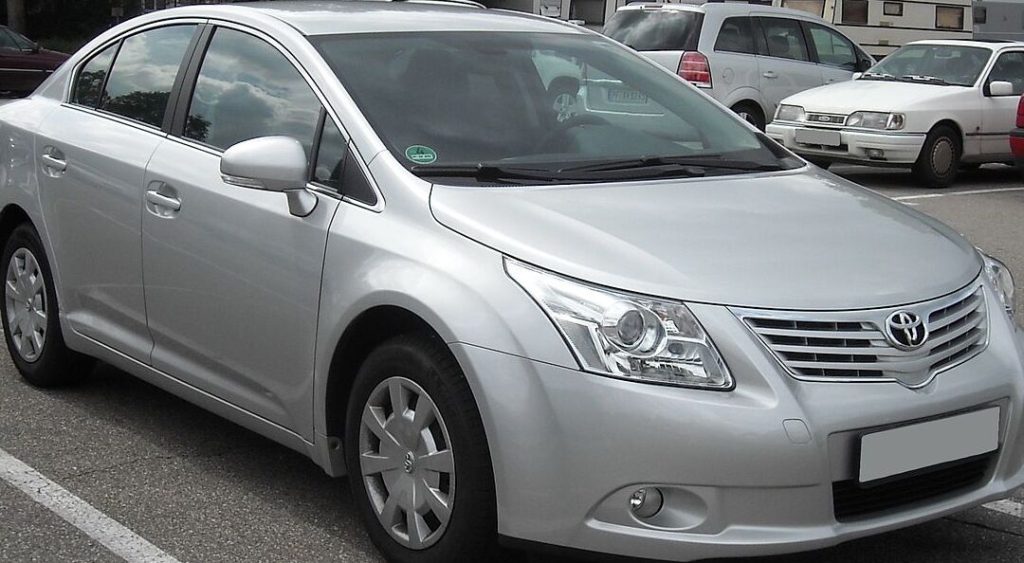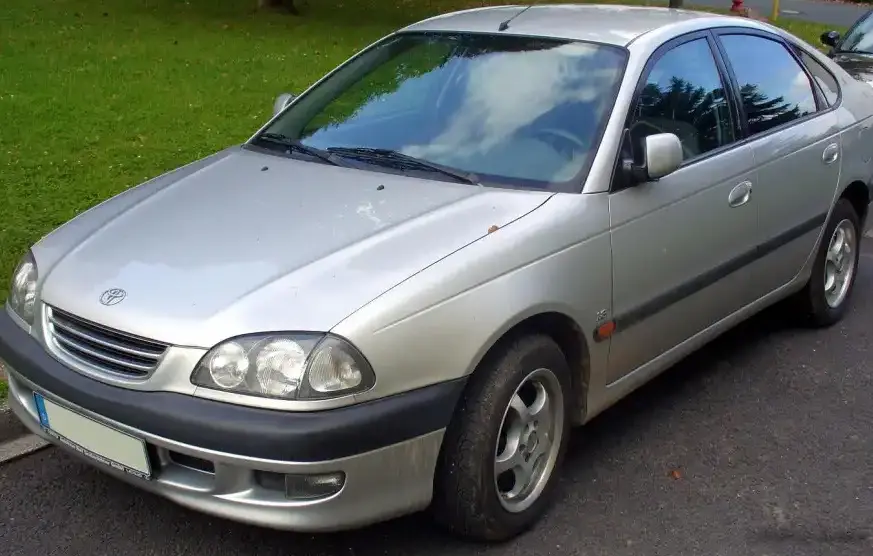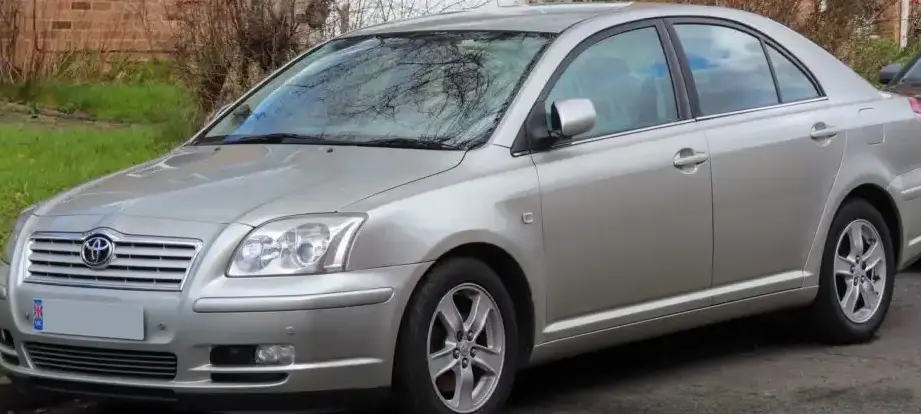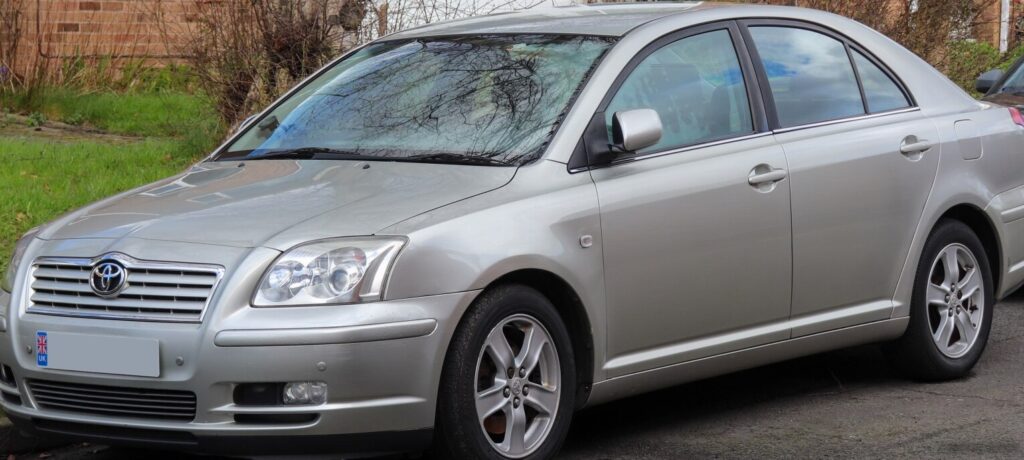
The Toyota Avensis II Hatch 1.6 VVT-i, produced between 2003 and 2009, represented a key offering in Toyota’s European D-segment lineup. Positioned as an entry-level to mid-range trim within the second-generation Avensis (T27) series, this variant aimed to provide a balance of practicality, fuel efficiency, and affordability. The Avensis, in general, was Toyota’s attempt to directly compete with established European rivals like the Ford Mondeo, Vauxhall/Opel Vectra, and Volkswagen Passat, offering a Japanese alternative focused on reliability and build quality. This hatchback body style, introduced with the second generation, broadened the Avensis’ appeal to buyers seeking a more compact and versatile package compared to the traditional sedan.
Technical Specifications
| Brand | Toyota |
| Model | Avensis |
| Generation | Avensis II Hatch |
| Type (Engine) | 1.6 VVT-i (110 Hp) |
| Start of production | 2003 |
| End of production | 2009 |
| Powertrain Architecture | Internal Combustion engine |
| Body type | Hatchback |
| Seats | 5 |
| Doors | 5 |
| Fuel consumption (urban) | 9.4 l/100 km (25 US mpg, 30.1 UK mpg) |
| Fuel consumption (extra urban) | 5.8 l/100 km (40.6 US mpg, 48.7 UK mpg) |
| Fuel consumption (combined) | 7.2 l/100 km (32.7 US mpg, 39.2 UK mpg) |
| Fuel Type | Petrol (Gasoline) |
| Acceleration 0 – 100 km/h | 12 sec |
| Acceleration 0 – 62 mph | 12 sec |
| Acceleration 0 – 60 mph | 11.4 sec |
| Maximum speed | 190 km/h (118.06 mph) |
| Weight-to-power ratio | 11.5 kg/Hp |
| Weight-to-torque ratio | 8.4 kg/Nm |
| Power | 110 Hp @ 6000 rpm |
| Torque | 150 Nm @ 4800 rpm (110.63 lb.-ft. @ 4800 rpm) |
| Engine layout | Front, Transverse |
| Engine Model/Code | 3ZZ-FE |
| Engine displacement | 1598 cm3 (97.52 cu. in.) |
| Number of cylinders | 4 |
| Engine configuration | Inline |
| Cylinder Bore | 79 mm (3.11 in.) |
| Piston Stroke | 81.5 mm (3.21 in.) |
| Compression ratio | 10.5:1 |
| Number of valves per cylinder | 4 |
| Fuel injection system | Multi-port manifold injection |
| Engine aspiration | Naturally aspirated engine |
| Valvetrain | DOHC |
| Engine oil capacity | 4.2 l (4.44 US qt | 3.7 UK qt) |
| Coolant capacity | 5.8 l (6.13 US qt | 5.1 UK qt) |
| Kerb Weight | 1265 kg (2788.85 lbs.) |
| Max. weight | 1820 kg (4012.41 lbs.) |
| Max load | 555 kg (1223.57 lbs.) |
| Trunk (boot) space – minimum | 510 l (18.01 cu. ft.) |
| Trunk (boot) space – maximum | 1320 l (46.62 cu. ft.) |
| Fuel tank capacity | 60 l (15.85 US gal | 13.2 UK gal) |
| Length | 4630 mm (182.28 in.) |
| Width | 1760 mm (69.29 in.) |
| Height | 1480 mm (58.27 in.) |
| Wheelbase | 2700 mm (106.3 in.) |
| Front track | 1505 mm (59.25 in.) |
| Rear track | 1510 mm (59.45 in.) |
| Drivetrain Architecture | Front wheel drive |
| Number of gears | 5 |
| Gearbox type | Manual transmission |
| Front suspension | Coil spring |
| Rear suspension | Coil spring |
| Front brakes | Ventilated discs |
| Rear brakes | Disc |
| Assisting systems | ABS (Anti-lock braking system) |
| Steering type | Steering rack and pinion |
| Tires size | 205/55 R16 |
Powertrain & Engine Architecture
The heart of the Avensis II Hatch 1.6 VVT-i was the 3ZZ-FE engine, a 1.6-liter inline-four cylinder gasoline engine. This engine was part of Toyota’s ZZ engine family, known for its lightweight aluminum block and cylinder head. The ‘VVT-i’ designation stands for Variable Valve Timing – intelligent, and refers to Toyota’s system for optimizing valve timing based on engine speed and load, improving both performance and fuel efficiency. The 3ZZ-FE utilized multi-port fuel injection, delivering fuel directly into the intake ports. The engine produced 110 horsepower at 6000 rpm and 150 Nm (110.63 lb-ft) of torque at 4800 rpm. The engine’s relatively simple design contributed to its reputation for reliability. The standard transmission for this variant was a five-speed manual gearbox, although a four-speed automatic transmission was also available, albeit less common.
Driving Characteristics
The 1.6L engine paired with the five-speed manual transmission provided adequate, but not exhilarating, performance. Acceleration from 0 to 60 mph took around 11.4 seconds, and top speed was approximately 118 mph. The engine felt most comfortable in the mid-range, offering sufficient power for everyday driving and highway cruising. Compared to the more powerful 2.0L and 2.4L Avensis variants, the 1.6L felt noticeably less responsive, particularly when fully loaded or tackling steep inclines. The manual gearbox was generally well-regarded for its smooth operation, although the shift linkage wasn’t particularly sporty. The automatic transmission, while offering convenience, further diminished acceleration and often felt sluggish during overtaking maneuvers.
Equipment & Trim Levels
The 1.6 VVT-i trim typically served as the entry point to the Avensis II Hatch range. Standard equipment generally included air conditioning, power steering, central locking, electric front windows, and an integrated audio system. Safety features such as ABS and front airbags were also standard. Higher trim levels, such as the 1.8 and 2.0 variants, added features like alloy wheels, climate control, rear electric windows, and upgraded audio systems. Optional extras for the 1.6L included metallic paint, sunroof, and upgraded upholstery.
Chassis & Braking
The Avensis II Hatch utilized a MacPherson strut front suspension and a coil spring rear suspension. This setup provided a comfortable ride, prioritizing smoothness over outright handling prowess. The front brakes were ventilated discs, while the rear brakes were solid discs. ABS was standard across the range. The suspension was tuned to provide a balanced ride, absorbing bumps effectively without excessive body roll. Stabilizer bars were fitted to both the front and rear axles to further reduce body roll during cornering.
Market Reception & Comparison
The Avensis II Hatch 1.6 VVT-i was generally well-received by critics as a practical and reliable family car. However, it wasn’t considered a particularly exciting or dynamic vehicle. Its fuel economy of around 32.7 US mpg combined was competitive for its class. Compared to the more powerful Avensis variants, the 1.6L offered lower running costs but sacrificed performance. Against rivals like the Ford Mondeo and Vauxhall/Opel Vectra, the Avensis was often praised for its build quality and reliability, but criticized for its somewhat bland styling and less engaging driving experience.
Legacy
The 3ZZ-FE engine, when properly maintained, proved to be a durable and reliable unit. The Avensis II Hatch 1.6 VVT-i remains a relatively common sight on used car markets today. Its reputation for dependability makes it a popular choice for budget-conscious buyers seeking a practical and trustworthy family car. While not a performance icon, the 1.6L Avensis Hatch offered a sensible and economical option within Toyota’s lineup, contributing to the Avensis’ overall success as a dependable and long-lasting vehicle.