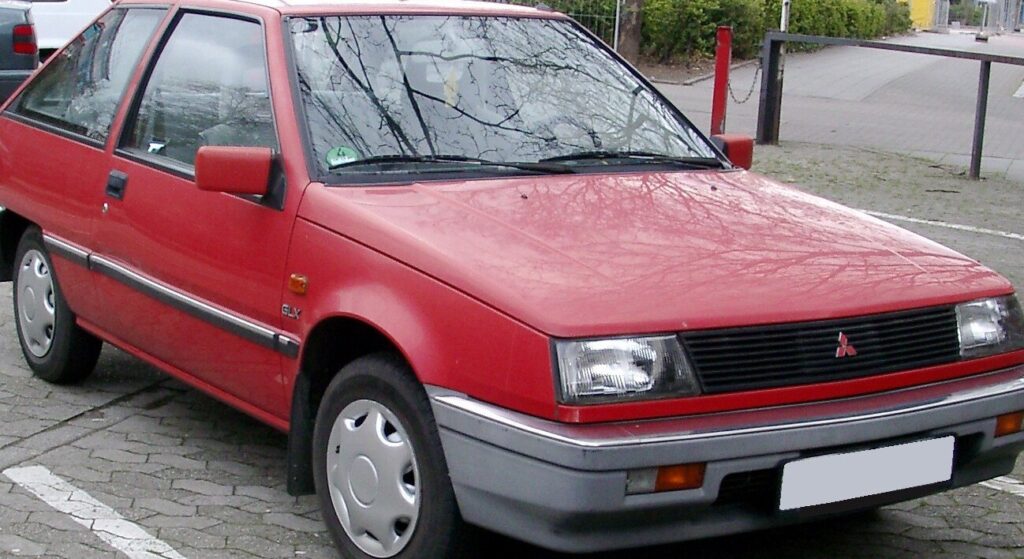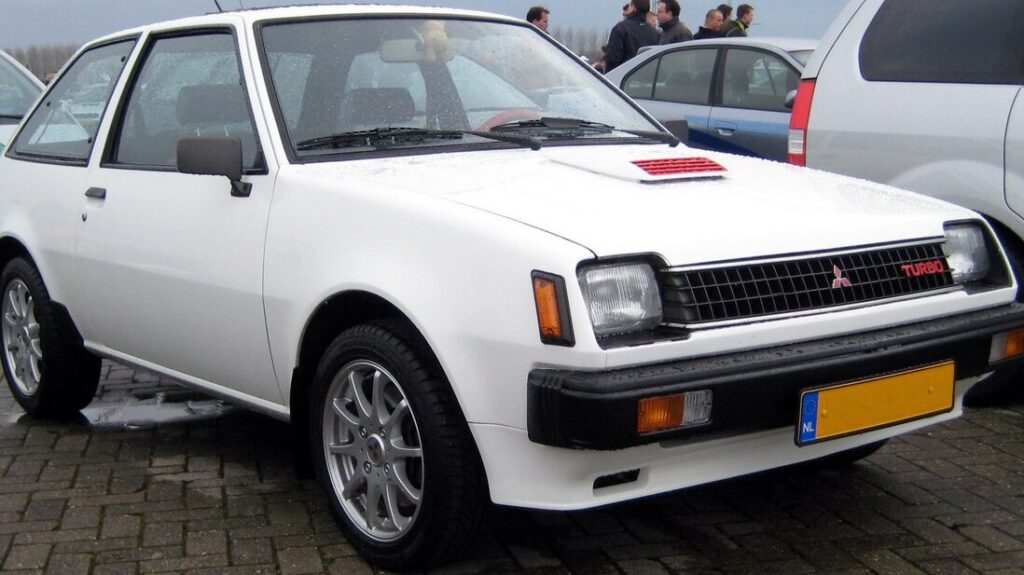
The Mitsubishi Colt I (A150) 1.4 Turbo, designated with engine code A152A and producing 105 horsepower, was a short-lived but significant variant of the first-generation Colt. Produced between 1981 and 1984, this model represented Mitsubishi’s foray into forced induction for the compact hatchback segment, primarily aimed at the European market. While the Colt was sold in various forms globally, the 1.4 Turbo offered a performance-oriented option within the A150 series, distinguishing itself from the naturally aspirated engines available. It was positioned as a slightly more upscale and sporty offering compared to the base models, though it didn’t achieve the same sales volume as its more economical counterparts.
Technical Specifications
| Brand | Mitsubishi |
| Model | Colt |
| Generation | Colt I (A150) |
| Type (Engine) | 1.4 Turbo (A152A) (105 Hp) |
| Start of Production | 1981 |
| End of Production | 1984 |
| Powertrain Architecture | Internal Combustion Engine |
| Body Type | Hatchback |
| Fuel Type | Petrol (Gasoline) |
| Power | 105 Hp |
| Engine Aspiration | Turbocharger |
Introduction
The Mitsubishi Colt I (A150) was launched in 1981 as a subcompact hatchback designed to compete with established European and Japanese rivals like the Ford Fiesta, Renault 5, and Nissan Micra. The A150 chassis code designates the first generation. The 1.4 Turbo variant, powered by the A152A engine, was introduced as a performance upgrade within the range. It aimed to provide a more engaging driving experience without significantly compromising fuel efficiency. The Colt I was a relatively small car, measuring approximately 3.75 meters (12.3 feet) in length, and was available in three and five-door configurations. The Turbo model was generally offered in the higher trim levels.
Powertrain & Engine Architecture
The heart of the 1.4 Turbo Colt is the A152A engine, a 1.4-liter (1397cc) inline-four cylinder gasoline engine equipped with a turbocharger. This engine utilized a single overhead camshaft (SOHC) valvetrain with eight valves. Fuel delivery was managed by a carburetor, a common feature for the time, though some later iterations may have incorporated early forms of electronic fuel injection. The turbocharger itself was a relatively small unit, designed to provide a boost in power across the rev range rather than peak horsepower. The A152A engine produced 105 horsepower at approximately 5,800 rpm and around 134 lb-ft of torque. The transmission paired with the A152A was typically a four-speed automatic, although a five-speed manual transmission was also available in some markets. The automatic transmission was chosen to broaden the appeal of the car, offering ease of use for everyday driving.
Driving Characteristics
The 1.4 Turbo Colt offered a noticeable performance improvement over the standard, naturally aspirated versions. The turbocharger provided a significant boost in torque, making the car feel more responsive in everyday driving situations. While not a sports car by any means, the Turbo model offered brisk acceleration for its class, particularly in the mid-range. The four-speed automatic transmission, while convenient, did detract somewhat from the driving experience. Gear changes weren’t particularly quick or sporty, and the transmission could sometimes feel hesitant when downshifting. Compared to the manual transmission, the automatic resulted in a slight reduction in fuel economy and a less direct connection to the engine. The suspension was tuned for comfort, providing a reasonably smooth ride, but the car’s light weight and relatively short wheelbase meant that it could feel somewhat unsettled on uneven surfaces.
Equipment & Trim Levels
The 1.4 Turbo Colt was typically offered in higher trim levels, featuring more standard equipment than the base models. Standard features often included upgraded interior upholstery (typically cloth, sometimes with patterned designs), a more comprehensive instrument cluster, and features like a radio (often a cassette player), and sometimes power windows. Optional extras could include alloy wheels, a sunroof, and upgraded sound systems. The interior design was functional and relatively simple, reflecting the car’s overall affordability. The dashboard layout was straightforward, with easy-to-read gauges and logically placed controls. The Turbo model often featured unique badging and styling cues to differentiate it from the other variants.
Chassis & Braking
The Colt I (A150) utilized a front-engine, front-wheel-drive layout. The suspension consisted of MacPherson struts at the front and a twist-beam axle at the rear. The braking system was typically comprised of disc brakes at the front and drum brakes at the rear. Stabilizer bars were often included, particularly on the Turbo model, to reduce body roll during cornering. The chassis was relatively lightweight, contributing to the car’s nimble handling. The steering was rack-and-pinion, providing reasonably precise control. The braking performance was adequate for the car’s weight and power, but it wasn’t particularly outstanding. The drum brakes at the rear could be prone to fading under heavy use.
Market Reception & Comparison
The Mitsubishi Colt I 1.4 Turbo received mixed reviews from automotive critics. While the performance upgrade was generally praised, some reviewers criticized the carburetor-based fuel system and the relatively basic interior. Compared to other turbocharged hatchbacks of the era, such as the Volkswagen Golf GTI, the Colt Turbo was less refined and lacked the same level of performance. However, it was also significantly more affordable. Within the Colt lineup, the 1.4 Turbo offered a compelling alternative to the more economical 1.2-liter and 1.5-liter models. Fuel economy was reasonable for a turbocharged car of the time, averaging around 35-40 mpg. Reliability was generally good, although the turbocharger itself could be a potential source of problems if not properly maintained.
Legacy
The Mitsubishi Colt I 1.4 Turbo, while not a long-lived model, represents an interesting chapter in Mitsubishi’s history. It demonstrated the company’s willingness to experiment with forced induction technology in the subcompact segment. Today, the A150 1.4 Turbo is a relatively rare and sought-after classic car, particularly among Mitsubishi enthusiasts. The A152A engine, while not known for its exceptional durability, is generally reliable if properly maintained. Parts availability can be a challenge, as many components are now discontinued. However, a dedicated community of Colt owners and enthusiasts exists, providing support and resources for keeping these cars on the road. The 1.4 Turbo Colt remains a testament to a time when manufacturers were beginning to explore the potential of turbocharging in smaller, more affordable vehicles.