
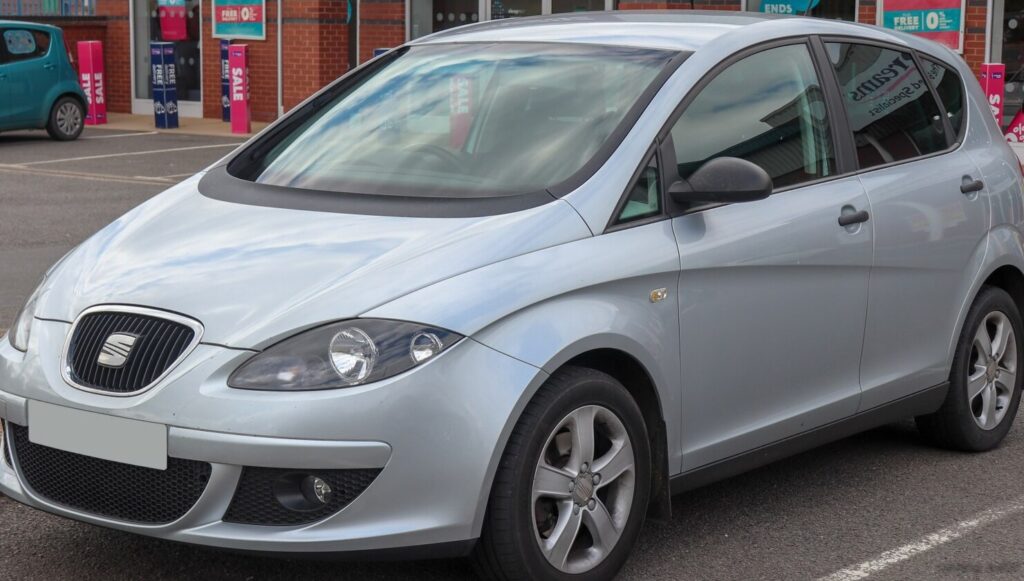
The SEAT Altea 2.0 FSI, produced between May 2004 and March 2009, represents a significant offering within the first generation (5P) of the Altea model range. Positioned as a mid-range variant, it aimed to provide a balance between performance and fuel efficiency in the compact minivan segment. The Altea, as a whole, was SEAT’s attempt to carve out a niche between traditional hatchbacks and larger MPVs, offering a more stylish and driver-focused alternative. This 2.0 FSI model, with its 150 horsepower engine, was a key component in establishing the Altea’s reputation for a more engaging driving experience compared to some of its competitors.
Technical Specifications
| Brand | Seat |
| Model | Altea |
| Generation | Altea (5P) |
| Type (Engine) | 2.0 FSI (150 Hp) |
| Start of production | May, 2004 |
| End of production | March, 2009 |
| Powertrain Architecture | Internal Combustion engine |
| Body type | Minivan |
| Seats | 5 |
| Doors | 5 |
| Fuel consumption (urban) | 10.6 l/100 km (22.2 US mpg) |
| Fuel consumption (extra urban) | 6.3 l/100 km (37.3 US mpg) |
| Fuel consumption (combined) | 7.8 l/100 km (30.2 US mpg) |
| Fuel Type | Petrol (Gasoline) |
| Acceleration 0 – 100 km/h | 9.6 sec |
| Acceleration 0 – 62 mph | 9.6 sec |
| Acceleration 0 – 60 mph | 9.1 sec |
| Maximum speed | 206 km/h (128 mph) |
| Weight-to-power ratio | 9.2 kg/Hp |
| Weight-to-torque ratio | 6.9 kg/Nm |
| Power | 150 Hp @ 6000 rpm |
| Torque | 200 Nm @ 3500 rpm (147.51 lb.-ft. @ 3500 rpm) |
| Engine layout | Front, Transverse |
| Engine Model/Code | BVY |
| Engine displacement | 1984 cm3 (121.07 cu. in.) |
| Number of cylinders | 4 |
| Engine configuration | Inline |
| Cylinder Bore | 82.5 mm (3.25 in.) |
| Piston Stroke | 92.8 mm (3.65 in.) |
| Compression ratio | 11.5:1 |
| Number of valves per cylinder | 4 |
| Fuel injection system | Direct injection |
| Engine aspiration | Naturally aspirated engine |
| Engine oil capacity | 4.6 l (4.86 US qt | 4.05 UK qt) |
| Kerb Weight | 1375 kg (3031.36 lbs.) |
| Max. weight | 1970 kg (4343.11 lbs.) |
| Max load | 595 kg (1311.75 lbs.) |
| Trunk (boot) space – minimum | 409 l (14.44 cu. ft.) |
| Trunk (boot) space – maximum | 409 l (14.44 cu. ft.) |
| Fuel tank capacity | 55 l (14.53 US gal | 12.1 UK gal) |
| Length | 4280 mm (168.5 in.) |
| Width | 1768 mm (69.61 in.) |
| Height | 1568 mm (61.73 in.) |
| Wheelbase | 2578 mm (101.5 in.) |
| Front track | 1534 mm (60.39 in.) |
| Rear (Back) track | 1523 mm (59.96 in.) |
| Minimum turning circle | 10.9 m (35.76 ft.) |
| Drivetrain Architecture | Front wheel drive |
| Number of gears | 6 gears, manual transmission |
| Front suspension | Independent, type McPherson with coil spring and anti-roll bar |
| Rear suspension | Several levers and rods |
| Front brakes | Ventilated discs |
| Rear brakes | Disc |
| Assisting systems | ABS (Anti-lock braking system) |
| Steering type | Steering rack and pinion |
| Power steering | Electric Steering |
| Tires size | 205/55 R16 |
| Wheel rims size | 6.5J x 16 |
Powertrain & Engine Architecture
The heart of the Altea 2.0 FSI is the BVY engine code, a 1.984-liter inline-four cylinder gasoline engine. This engine utilizes direct fuel injection (FSI – Fuel Stratified Injection), a technology that allows for precise fuel delivery directly into the combustion chamber, improving efficiency and power output. The FSI system, a key feature of Volkswagen Group engines of this era, contributed to the engine’s relatively high specific output of 75.6 horsepower per liter. The engine features a dual overhead camshaft (DOHC) valvetrain with four valves per cylinder, optimizing airflow for enhanced performance. The six-speed manual transmission, standard on this model, was chosen to complement the engine’s power band and provide a more engaging driving experience. The transmission’s gear ratios were tuned to maximize acceleration and maintain reasonable fuel economy during highway cruising.
Driving Characteristics
The 2.0 FSI engine in the Altea delivered a noticeable step up in performance compared to the lower-displacement options available. With 150 horsepower and 147.51 lb-ft of torque, the Altea 2.0 FSI could accelerate from 0 to 60 mph in approximately 9.1 seconds and achieve a top speed of 128 mph. While not a sports car, the engine provided ample power for everyday driving and overtaking maneuvers. The six-speed manual transmission allowed drivers to keep the engine in its optimal power band, resulting in responsive acceleration. Compared to the diesel variants, the 2.0 FSI offered a more linear power delivery and a higher revving character. However, it lacked the low-end torque of the TDI models. The Altea’s suspension, tuned for comfort, provided a stable and predictable ride, although it wasn’t as sporty as some of its rivals.
Equipment & Trim Levels
The Altea 2.0 FSI typically came equipped with a reasonable level of standard features. These included air conditioning, power windows, power mirrors, and a basic audio system. Higher trim levels, such as the Stylance and Sport, added features like alloy wheels, fog lights, a multi-function steering wheel, and upgraded interior upholstery. Optional extras included a sunroof, parking sensors, and a more advanced audio system with CD changer. Interior materials were generally of good quality, although the overall design was functional rather than luxurious. The dashboard layout was straightforward and easy to use, with logically placed controls.
Chassis & Braking
The Altea 2.0 FSI utilized a McPherson strut front suspension and a multi-link rear suspension. This setup provided a good balance between ride comfort and handling. The front suspension featured a stabilizer bar to reduce body roll during cornering. The braking system consisted of ventilated discs on the front wheels and solid discs on the rear wheels. Anti-lock Braking System (ABS) was standard, enhancing safety and control during emergency braking situations. The Altea’s chassis was relatively lightweight, contributing to its agile handling characteristics.
Market Reception & Comparison
The SEAT Altea 2.0 FSI was generally well-received by automotive critics. It was praised for its stylish design, spacious interior, and engaging driving experience. However, some critics noted that the engine could be a bit noisy at higher revs and that the fuel economy wasn’t as competitive as some of its diesel rivals. Compared to other gasoline-powered compact minivans, the Altea 2.0 FSI offered a good balance of performance and practicality. It was often seen as a more driver-focused alternative to models like the Renault Scenic and the Citroën C4 Picasso. The TDI diesel versions of the Altea were more popular in Europe due to their superior fuel economy and lower running costs.
Legacy
The 2.0 FSI engine, while generally reliable, is known to have some potential issues related to carbon buildup on the intake valves, a common problem with direct injection engines. Regular maintenance, including the use of high-quality fuel and occasional intake valve cleaning, can help mitigate this issue. Today, the Altea 2.0 FSI can be found on the used car market at relatively affordable prices. It remains a practical and stylish option for those seeking a spacious and versatile vehicle. Its relatively strong engine and engaging driving dynamics make it a more appealing choice for drivers who prioritize performance over ultimate fuel efficiency. The Altea, as a whole, represents a bold design statement from SEAT and a unique offering in the compact minivan segment.
