
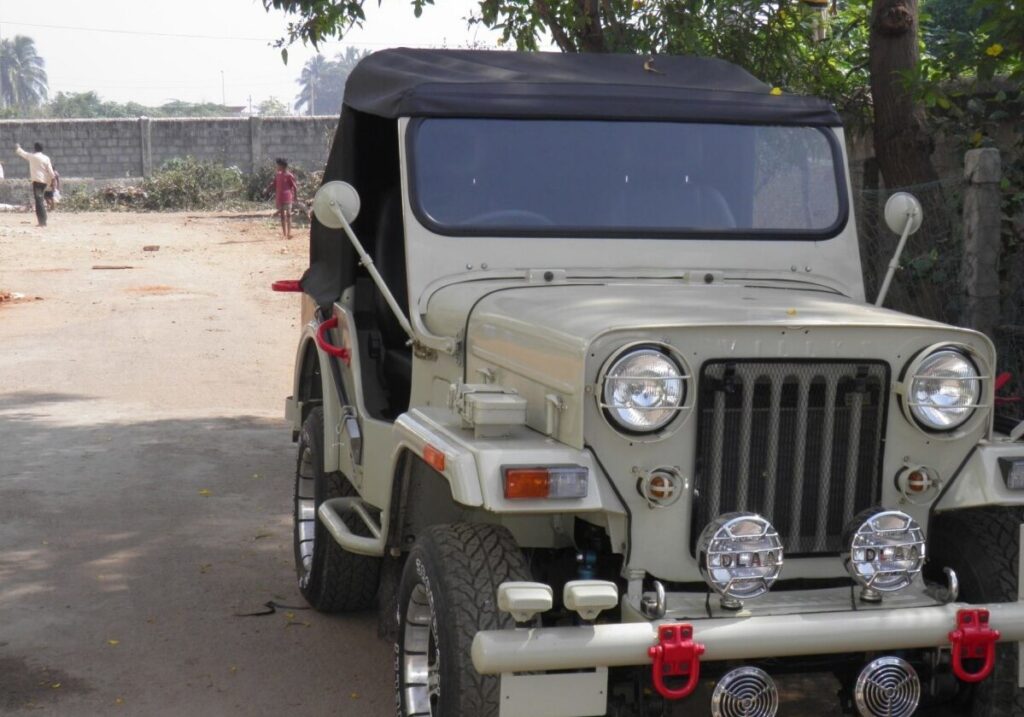
The Mahindra CJ 3 2.3 D, produced between 1988 and 1992, represents a significant iteration of the iconic CJ (Civilian Jeep) series adapted for the Indian market. This variant, powered by a 2.3-liter diesel engine producing 38 horsepower, served as a workhorse vehicle, primarily aimed at agricultural and utility applications. It built upon the foundation of the original Willys Jeep design, licensed and manufactured by Mahindra & Mahindra, and played a crucial role in the motorization of rural India. The CJ 3 2.3 D occupied a specific niche within the CJ lineup, offering a diesel-powered option for those requiring durability and fuel efficiency over outright speed or comfort. It was positioned as a more affordable and practical alternative to gasoline-powered models, and a precursor to more powerful diesel offerings from Mahindra.
Technical Specifications
| Brand | Mahindra |
| Model | CJ 3 |
| Generation | CJ 3 |
| Type (Engine) | 2.3 D (38 Hp) |
| Start of Production | 1988 |
| End of Production | 1992 |
| Powertrain Architecture | Internal Combustion Engine |
| Body Type | Off-road Vehicle |
| Fuel Type | Diesel |
| Power | 38 Hp |
| Engine Aspiration | Naturally Aspirated |
Powertrain & Engine Architecture
The heart of the CJ 3 2.3 D is its 2.3-liter, naturally aspirated diesel engine. This engine, while relatively simple in design, was renowned for its robustness and ability to operate reliably in harsh conditions. It’s a direct-injection diesel, meaning fuel is injected directly into the combustion chamber, rather than pre-combustion chambers common in some older diesel designs. The engine utilizes a mechanical fuel injection pump, a characteristic of the era, which delivers fuel at high pressure. The engine’s valvetrain consists of a single overhead camshaft operating two valves per cylinder. The 38 horsepower output is achieved at a relatively low engine speed, prioritizing torque over peak power. The engine is coupled to a four-speed manual transmission, chosen for its simplicity and durability. The transmission sends power to all four wheels via a part-time four-wheel-drive system, engaged manually via a transfer case. The transfer case provides high and low range gearing, essential for tackling challenging off-road terrain.
Driving Characteristics
The driving experience of the CJ 3 2.3 D is decidedly utilitarian. With only 38 horsepower, acceleration is slow, and top speed is limited. However, the engine produces a respectable amount of low-end torque, making it capable of hauling loads and navigating difficult terrain. The four-speed manual transmission requires frequent shifting, especially when ascending hills or carrying a load. The gear ratios are optimized for low-speed pulling power rather than highway cruising. Steering is typically non-power-assisted, requiring considerable effort, particularly at low speeds. The suspension, consisting of leaf springs front and rear, provides a firm ride, prioritizing load-carrying capacity over comfort. While not a vehicle designed for speed or refinement, the CJ 3 2.3 D excels in its intended role as a rugged and dependable work vehicle. Compared to gasoline-powered CJ 3 models, the diesel offered significantly improved fuel economy, a crucial factor for operators in rural areas.
Equipment & Trim Levels
The CJ 3 2.3 D was offered with minimal creature comforts, reflecting its utilitarian purpose. Standard equipment typically included basic steel wheels, a simple dashboard with essential gauges (speedometer, fuel level, temperature), and bench seating upholstered in vinyl. Doors were often equipped with simple latches and minimal weather sealing. A canvas top was available as an optional extra, providing some protection from the elements. Other optional equipment included a winch, useful for self-recovery in off-road situations, and auxiliary lighting. The interior was spartan, focusing on functionality rather than aesthetics. There were very few trim levels available; the CJ 3 2.3 D was largely standardized, with options being added individually as needed. The focus was on providing a durable and affordable vehicle, rather than offering a wide range of customization options.
Chassis & Braking
The chassis of the CJ 3 2.3 D is a ladder frame construction, providing a robust and durable foundation. The suspension utilizes leaf springs at both the front and rear, offering a simple and effective solution for handling rough terrain and carrying heavy loads. The front axle is a solid axle, providing excellent articulation for off-road driving. The rear axle is also a solid axle, further enhancing the vehicle’s off-road capability. Braking is accomplished via drum brakes on all four wheels. The braking system, while adequate for the vehicle’s weight and performance, lacks the stopping power of more modern disc brake systems. Steering is a recirculating ball system, providing a direct but somewhat heavy feel. The vehicle’s relatively short wheelbase contributes to its maneuverability in tight spaces.
Market Reception & Comparison
The Mahindra CJ 3 2.3 D was well-received in the Indian market, particularly among farmers, landowners, and those requiring a rugged and reliable vehicle for utility purposes. Critics praised its durability, fuel efficiency, and ability to operate in challenging conditions. Compared to the gasoline-powered CJ 3 models, the diesel variant offered significantly better fuel economy, making it a more cost-effective option for long-term ownership. It also provided more torque at lower engine speeds, making it better suited for hauling and towing. Compared to later Mahindra vehicles, such as the Armada and Bolero, the CJ 3 2.3 D was smaller and less refined, but it offered a more affordable entry point into the Mahindra lineup. Its simplicity and ease of maintenance were also key selling points.
Legacy
The Mahindra CJ 3 2.3 D holds a significant place in the history of the Indian automotive industry. It helped to popularize diesel power in the country and established Mahindra & Mahindra as a leading manufacturer of utility vehicles. While production ceased in 1992, many CJ 3 2.3 D models remain in use today, testament to their durability and reliability. In the used car market, these vehicles are sought after by enthusiasts and collectors, as well as those seeking a simple and dependable work vehicle. Parts availability can be a challenge, but the vehicle’s simple design makes it relatively easy to repair and maintain. The CJ 3 2.3 D represents a bygone era of automotive engineering, characterized by robustness, simplicity, and a focus on functionality over luxury. It remains a symbol of rural India and a reminder of the enduring appeal of the original Willys Jeep design.

