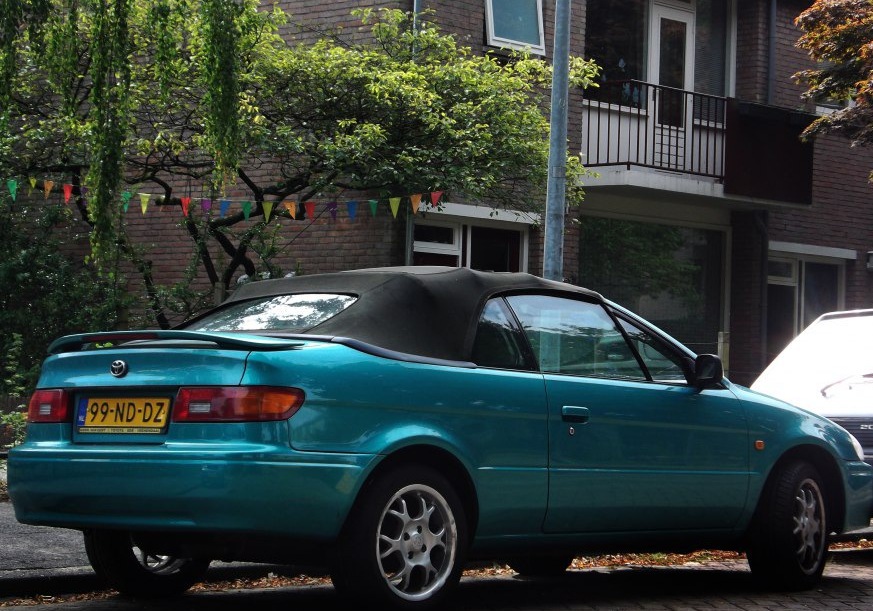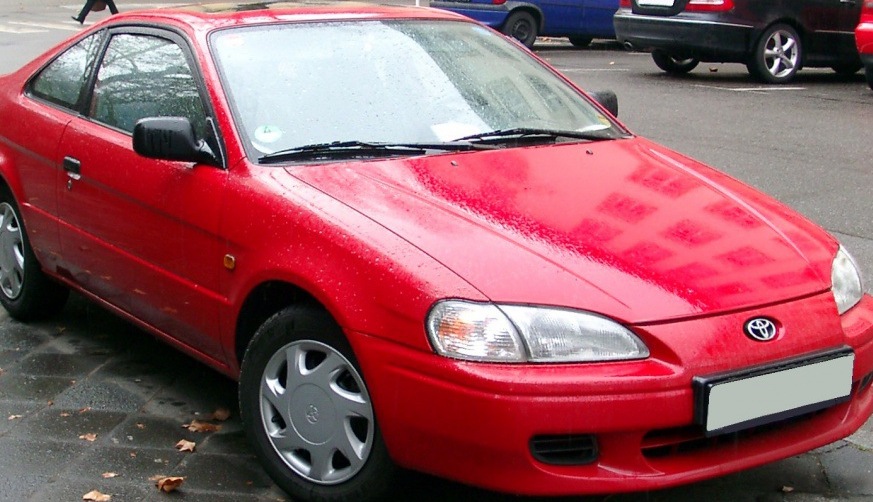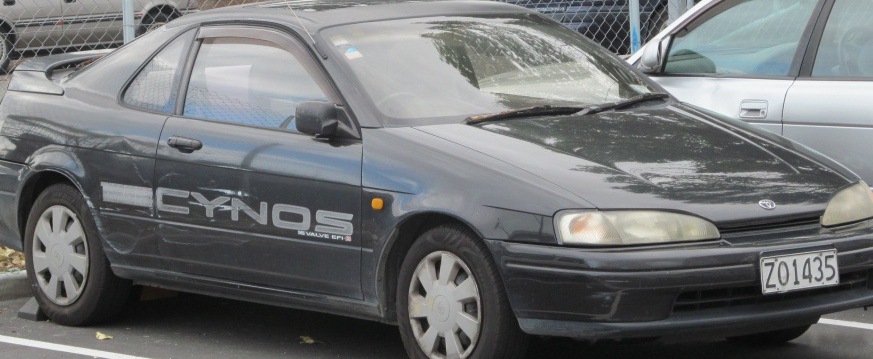
The Toyota Cynos (L44) 1.5i 16V Automatic, produced between 1991 and 1995, represents a unique offering within Toyota’s early 1990s lineup. Positioned as a compact, sporty coupe, the Cynos was primarily aimed at the Japanese domestic market (JDM) and select export markets, including Australia and parts of Europe. It was built on the E-platform, shared with other Toyota models of the era like the Corolla and Sprinter. The 1.5i 16V Automatic trim occupied a middle ground in the Cynos range, offering a balance between performance and affordability, appealing to buyers seeking a stylish and relatively economical coupe.
Technical Specifications
| Brand | Toyota |
| Model | Cynos |
| Generation | Cynos (L44) |
| Type (Engine) | 1.5i 16V (115 Hp) Automatic |
| Start of production | 1991 |
| End of production | 1995 |
| Powertrain Architecture | Internal Combustion engine |
| Body type | Coupe |
| Seats | 4 |
| Doors | 2 |
| Fuel consumption (urban) | 6.76 l/100 km (34.8 US mpg, 41.8 UK mpg, 14.8 km/l) |
| Fuel consumption (extra urban) | 3.92 l/100 km (60 US mpg, 72.1 UK mpg, 25.5 km/l) |
| Fuel consumption (combined) | 6.8 l/100 km (34.6 US mpg, 41.5 UK mpg, 14.7 km/l) |
| Fuel Type | Petrol (Gasoline) |
| Weight-to-power ratio | 7.7 kg/Hp, 129.2 Hp/tonne |
| Weight-to-torque ratio | 6.6 kg/Nm, 151.7 Nm/tonne |
| Power | 115 Hp @ 6600 rpm |
| Power per litre | 76.8 Hp/l |
| Torque | 135 Nm @ 3200 rpm (99.57 lb.-ft. @ 3200 rpm) |
| Engine layout | Front, Transverse |
| Engine Model/Code | 5E-FHE |
| Engine displacement | 1497 cm3 (91.35 cu. in.) |
| Number of cylinders | 4 |
| Engine configuration | Inline |
| Cylinder Bore | 74 mm (2.91 in.) |
| Piston Stroke | 87 mm (3.43 in.) |
| Compression ratio | 9.8:1 |
| Number of valves per cylinder | 4 |
| Fuel injection system | Multi-port manifold injection |
| Engine aspiration | Naturally aspirated engine |
| Valvetrain | DOHC |
| Kerb Weight | 890 kg (1962.11 lbs.) |
| Max. weight | 1110 kg (2447.13 lbs.) |
| Max load | 220 kg (485.02 lbs.) |
| Fuel tank capacity | 45 l (11.89 US gal | 9.9 UK gal) |
| Length | 4145 mm (163.19 in.) |
| Width | 1645 mm (64.76 in.) |
| Height | 1295 mm (50.98 in.) |
| Wheelbase | 2380 mm (93.7 in.) |
| Front track | 1405 mm (55.31 in.) |
| Rear track | 1395 mm (54.92 in.) |
| Minimum turning circle | 9.4 m (30.84 ft.) |
| Drivetrain Architecture | Front wheel drive |
| Number of gears | 4 |
| Gearbox type | Automatic transmission |
| Front suspension | Wishbone |
| Rear suspension | Coil spring |
| Front brakes | Ventilated discs |
| Rear brakes | Drum |
| Assisting systems | ABS (Anti-lock braking system) |
| Steering type | Steering rack and pinion |
| Power steering | Hydraulic Steering |
| Tires size | 175/65 R14 |
| Wheel rims size | 14 |
Powertrain & Engine Architecture
The Cynos 1.5i 16V Automatic is powered by the 5E-FHE engine, a 1.5-liter inline-four cylinder gasoline engine. This engine features a double overhead camshaft (DOHC) valvetrain operating 16 valves (four per cylinder), contributing to its relatively high output for its displacement. The 5E-FHE utilizes multi-port fuel injection, a common technology in the early 1990s, for precise fuel delivery. The engine’s 9.8:1 compression ratio was a compromise between performance and the fuel quality available in various markets. Paired with this engine is a four-speed automatic transmission, designed for smooth and convenient operation. This transmission, while not known for its sportiness, provided comfortable shifting and suited the Cynos’ intended role as a daily driver. The engine code ‘E’ denotes it was designed for economic fuel consumption.
Driving Characteristics
The 115 horsepower and 135 Nm (99.57 lb-ft) of torque produced by the 5E-FHE engine, when coupled with the four-speed automatic, resulted in adequate, but not exhilarating, performance. Acceleration was respectable for its class, but noticeably slower than versions equipped with the five-speed manual transmission or the more powerful 1.6-liter engine available in some markets. The automatic transmission’s gear ratios were tuned for fuel efficiency and smooth cruising, rather than aggressive acceleration. The Cynos 1.5i Automatic felt most comfortable during highway driving, where the engine could operate within its optimal power band. Compared to the manual transmission variants, the automatic offered less driver engagement but greater ease of use, particularly in urban traffic.
Equipment & Trim Levels
The Cynos 1.5i 16V Automatic typically came equipped with features considered standard for a compact coupe in the early 1990s. These included power steering, a basic audio system, and cloth upholstery. Air conditioning was often included, but sometimes offered as an optional extra. The interior design was functional and relatively simple, prioritizing practicality over luxury. Optional extras could include upgraded audio systems, alloy wheels, and power windows. The trim level generally featured a color-keyed interior, matching the exterior paint. The dashboard layout was straightforward, with easily accessible controls.
Chassis & Braking
The Cynos utilized a front-wheel-drive layout with independent wishbone suspension at the front and a coil spring setup at the rear. This suspension configuration provided a reasonable balance between ride comfort and handling. Braking duties were handled by ventilated discs at the front and drum brakes at the rear. An Anti-lock Braking System (ABS) was often included as standard equipment, enhancing safety. The steering system employed a rack and pinion setup with hydraulic power assistance, providing responsive and relatively light steering feel. The relatively light curb weight of around 890 kg (1962 lbs) helped to mitigate the limitations of the engine’s output.
Market Reception & Comparison
The Toyota Cynos, particularly the 1.5i Automatic variant, received mixed reviews. Critics generally praised its stylish design and fuel efficiency, but noted its lack of outright performance compared to some competitors. The automatic transmission was seen as a convenient feature, but also as a detriment to driving enjoyment. Compared to other trims in the Cynos lineup, such as the 1.6-liter models, the 1.5i Automatic offered a more affordable entry point, but at the expense of power and responsiveness. Fuel economy was a strong point, with combined figures around 6.8 l/100 km (34.6 US mpg), making it an attractive option for budget-conscious buyers.
Legacy
The Toyota Cynos, while not a mainstream success in many markets, has gained a following among enthusiasts, particularly in Japan and Australia. The 5E-FHE engine, when properly maintained, is known for its reliability and longevity. However, like many vehicles of its age, the Cynos is susceptible to rust and age-related wear and tear. Finding parts can be challenging in some regions, but a dedicated aftermarket and online communities exist to support owners. Today, well-maintained Cynos 1.5i Automatic models are sought after by collectors and enthusiasts who appreciate their unique styling and nostalgic appeal. The automatic transmission, while not a performance enhancer, has proven to be durable and relatively trouble-free over the long term.