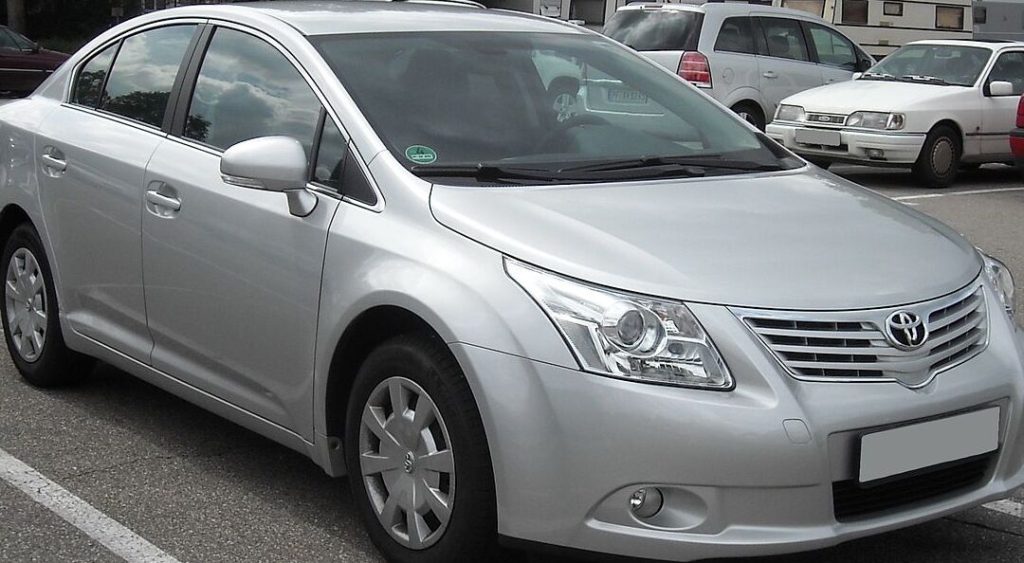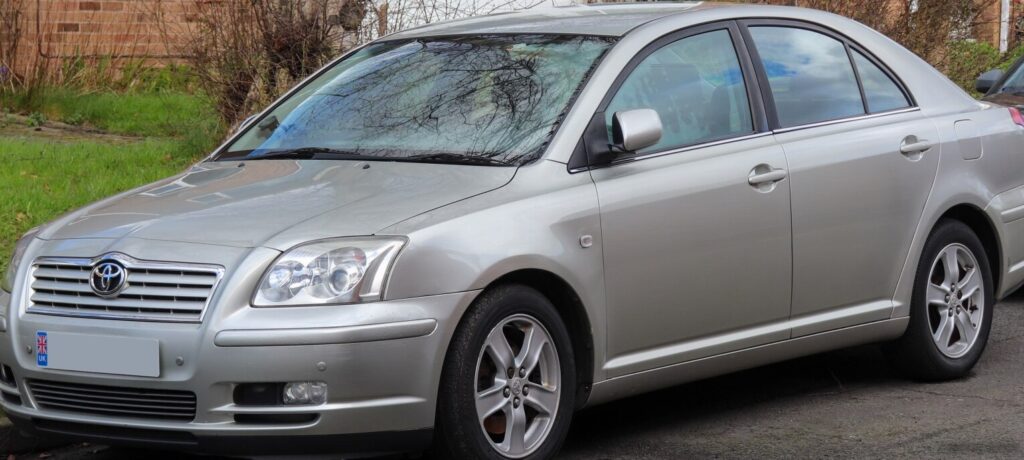
The Toyota Avensis II Hatch 2.0 D-4D (116 hp) was a popular European market offering from Toyota, produced between 2003 and 2009. Positioned as a mid-range trim within the Avensis II Hatchback lineup, it aimed to balance fuel efficiency with reasonable performance for family and fleet buyers. This variant represented Toyota’s commitment to diesel technology in a segment increasingly demanding fuel economy. The Avensis II, built on the Toyota T27 platform, was designed to compete with established European rivals like the Ford Mondeo, Vauxhall/Opel Vectra, and Peugeot 406.
Technical Specifications
| Brand | Toyota |
| Model | Avensis |
| Generation | Avensis II Hatch |
| Type (Engine) | 2.0 D-4D (116 Hp) |
| Start of production | 2003 |
| End of production | 2009 |
| Powertrain Architecture | Internal Combustion engine |
| Body type | Hatchback |
| Seats | 5 |
| Doors | 5 |
| Fuel consumption (urban) | 7.5 l/100 km (31.4 US mpg) |
| Fuel consumption (extra urban) | 4.9 l/100 km (48 US mpg) |
| Fuel consumption (combined) | 5.6 l/100 km (42 US mpg) |
| Fuel Type | Diesel |
| Acceleration 0 – 100 km/h | 11.2 sec |
| Acceleration 0 – 62 mph | 11.2 sec |
| Acceleration 0 – 60 mph | 10.6 sec |
| Maximum speed | 195 km/h (121.17 mph) |
| Weight-to-power ratio | 12.1 kg/Hp |
| Weight-to-torque ratio | 5 kg/Nm |
| Power | 116 Hp @ 3600 rpm |
| Torque | 280 Nm @ 2000 rpm (206.52 lb.-ft. @ 2000 rpm) |
| Engine layout | Front, Transverse |
| Engine Model/Code | 1CD-FTV |
| Engine displacement | 1995 cm3 (121.74 cu. in.) |
| Number of cylinders | 4 |
| Engine configuration | Inline |
| Cylinder Bore | 82.2 mm (3.24 in.) |
| Piston Stroke | 94 mm (3.7 in.) |
| Compression ratio | 18.6:1 |
| Number of valves per cylinder | 4 |
| Fuel injection system | Diesel Commonrail |
| Engine aspiration | Turbocharger, Intercooler |
| Valvetrain | DOHC |
| Engine oil capacity | 5.9 l (6.23 US qt | 5.19 UK qt) |
| Coolant capacity | 7.6 l (8.03 US qt | 6.69 UK qt) |
| Kerb Weight | 1400 kg (3086.47 lbs.) |
| Max. weight | 1970 kg (4343.11 lbs.) |
| Max load | 570 kg (1256.63 lbs.) |
| Trunk (boot) space – minimum | 510 l (18.01 cu. ft.) |
| Trunk (boot) space – maximum | 1320 l (46.62 cu. ft.) |
| Fuel tank capacity | 60 l (15.85 US gal | 13.2 UK gal) |
| Length | 4630 mm (182.28 in.) |
| Width | 1760 mm (69.29 in.) |
| Height | 1480 mm (58.27 in.) |
| Wheelbase | 2700 mm (106.3 in.) |
| Front track | 1505 mm (59.25 in.) |
| Rear track | 1510 mm (59.45 in.) |
| Drivetrain | Front wheel drive |
| Number of gears | 5 |
| Gearbox type | Manual transmission |
Powertrain & Engine Architecture
The heart of the Avensis II 2.0 D-4D was the 1CD-FTV engine, a 1.995-liter inline-four cylinder diesel. This engine was a key component of Toyota’s D-4D (Direct-4 Injection Diesel) technology, which focused on maximizing fuel efficiency and reducing emissions. The 1CD-FTV utilized a common rail direct injection system, delivering fuel at extremely high pressure for optimized combustion. A turbocharger with an intercooler was employed to boost power output and improve torque across the rev range. The engine featured a double overhead camshaft (DOHC) valvetrain with four valves per cylinder, contributing to its relatively high specific output for a diesel engine of its era. The 5-speed manual transmission was the standard offering, providing a balance between fuel economy and drivability.
Driving Characteristics
The 116 hp output and 280 Nm (206 lb-ft) of torque provided adequate, though not exhilarating, performance. Acceleration from 0-60 mph took around 10.6 seconds, making it suitable for everyday driving and highway cruising. The engine’s torque curve was relatively flat, offering good responsiveness in most driving situations. Compared to the higher-output 2.2 D-4D variants, the 2.0 D-4D felt less powerful, particularly when fully loaded or tackling steep inclines. However, the 2.0 D-4D offered superior fuel economy compared to its more powerful siblings. The manual transmission’s gear ratios were well-matched to the engine’s characteristics, providing smooth shifts and efficient power delivery.
Equipment & Trim Levels
The 2.0 D-4D trim typically included standard features such as air conditioning, power windows, central locking, and an integrated audio system. Interior upholstery was generally cloth, with options for upgraded materials available. Higher trim levels within the Avensis II range offered features like alloy wheels, automatic climate control, and a sunroof. Safety features included ABS brakes, front airbags, and side impact protection. Optional extras could include a navigation system, parking sensors, and leather upholstery.
Chassis & Braking
The Avensis II Hatch utilized a MacPherson strut front suspension and a coil spring rear suspension. This setup provided a comfortable ride quality, suitable for long journeys. The front brakes were ventilated discs, while the rear brakes were solid discs, offering adequate stopping power for the vehicle’s weight. Anti-lock Braking System (ABS) was standard, enhancing safety during emergency braking situations. The chassis was designed to provide a good balance between handling and ride comfort, although it wasn’t particularly sporty in its dynamics.
Market Reception & Comparison
The Avensis II 2.0 D-4D was generally well-received by automotive critics for its fuel efficiency, reliability, and comfortable ride. It was often praised as a practical and sensible choice for families and fleet operators. However, some reviewers noted that the engine lacked the refinement and performance of some of its competitors, particularly those from German manufacturers. Compared to the 2.2 D-4D, the 2.0 D-4D offered better fuel economy but less power. The 2.0 D-4D also represented a more affordable entry point into the Avensis II range, making it attractive to budget-conscious buyers.
Legacy
The 1CD-FTV engine, while generally reliable, has been known to exhibit issues with the diesel particulate filter (DPF) and the fuel injectors, particularly on vehicles that have primarily been used for short journeys. However, with regular maintenance and proper servicing, these engines can provide many years of reliable service. Today, the Avensis II 2.0 D-4D remains a popular choice in the used car market, particularly for those seeking a fuel-efficient and dependable family hatchback. Its reputation for reliability and relatively low running costs continues to make it a viable option for buyers looking for a practical and affordable vehicle.