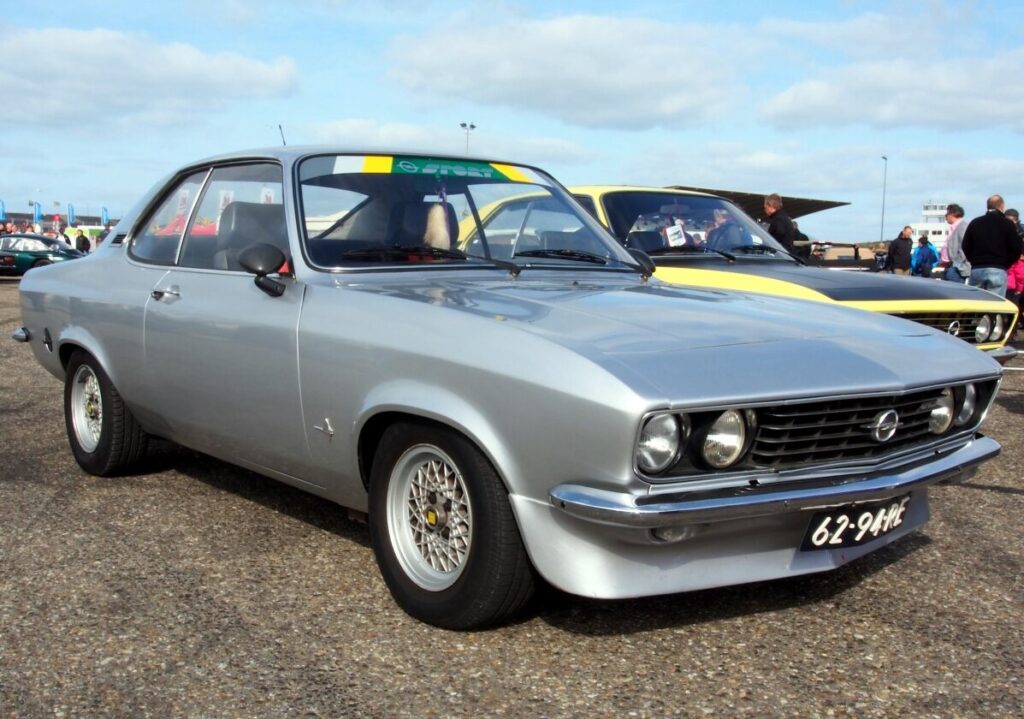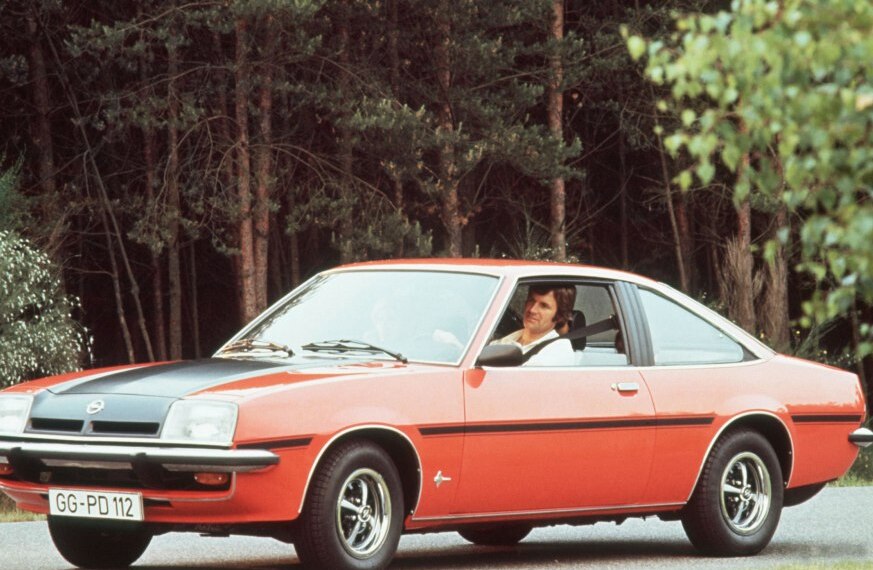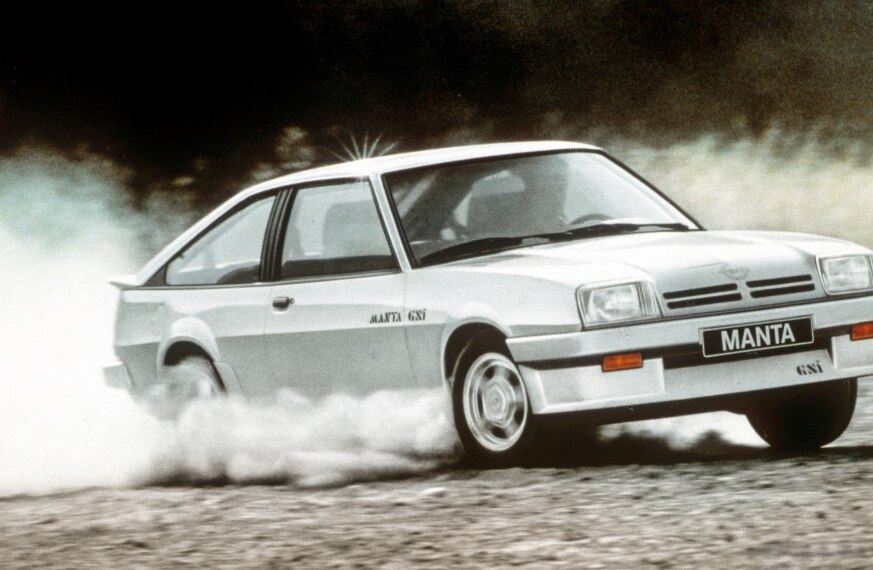
The Opel Manta B CC (Coupé Classic facelift, 1982) 2.0 GSi, produced from 1984 to 1988, is a notable variant of Opel’s iconic Manta coupe. Positioned as a sporty trim within the Manta B range, the 2.0 GSi aimed to deliver enhanced performance and a more engaging driving experience. It was a key model in Opel’s lineup during a period focused on accessible performance cars for the European market. This particular 2.0 GSi variant, with its 110 horsepower engine, occupied a middle ground in the Manta B lineup, balancing affordability and performance, sitting above the base models and below the more potent options like the GT/E.
Technical Specifications
| Brand | Opel |
| Model | Manta |
| Generation | Manta B CC (facelift 1982) |
| Type (Engine) | 2.0 GSi (110 Hp) |
| Start of production | 1984 |
| End of production | 1988 |
| Powertrain Architecture | Internal Combustion engine |
| Body type | Hatchback |
| Seats | 4 |
| Doors | 3 |
| Fuel Type | Petrol (Gasoline) |
| Acceleration 0 – 100 km/h | 10 sec |
| Acceleration 0 – 62 mph | 10 sec |
| Acceleration 0 – 60 mph | 9.5 sec |
| Maximum speed | 187 km/h (116.2 mph) |
| Weight-to-power ratio | 9.9 kg/Hp, 100.9 Hp/tonne |
| Weight-to-torque ratio | 6.7 kg/Nm, 148.6 Nm/tonne |
| Power | 110 Hp @ 5400 rpm |
| Power per litre | 55.6 Hp/l |
| Torque | 162 Nm @ 3400 rpm (119.49 lb.-ft. @ 3400 rpm) |
| Engine layout | Front, Longitudinal |
| Engine Model/Code | 20S, 20E |
| Engine displacement | 1979 cm3 (120.77 cu. in.) |
| Number of cylinders | 4 |
| Engine configuration | Inline |
| Cylinder Bore | 95 mm (3.74 in.) |
| Piston Stroke | 69.8 mm (2.75 in.) |
| Compression ratio | 9.4:1 |
| Number of valves per cylinder | 2 |
| Fuel injection system | Multi-port manifold injection |
| Engine aspiration | Naturally aspirated engine |
| Valvetrain | SOHC |
| Engine oil capacity | 3.8 l (4.02 US qt | 3.34 UK qt) |
| Coolant | 6.2 l (6.55 US qt | 5.46 UK qt) |
| Kerb Weight | 1090 kg (2403.04 lbs.) |
| Max. weight | 1470 kg (3240.8 lbs.) |
| Max load | 380 kg (837.76 lbs.) |
| Trunk (boot) space – minimum | 330 l (11.65 cu. ft.) |
| Trunk (boot) space – maximum | 670 l (23.66 cu. ft.) |
| Fuel tank capacity | 50 l (13.21 US gal | 11 UK gal) |
| Permitted trailer load with brakes (12%) | 1300 kg (2866.01 lbs.) |
| Length | 4384 mm (172.6 in.) |
| Width | 1686 mm (66.38 in.) |
| Height | 1320 mm (51.97 in.) |
| Wheelbase | 2518 mm (99.13 in.) |
| Front track | 1394 mm (54.88 in.) |
| Rear (Back) track | 1389 mm (54.69 in.) |
| Minimum turning circle | 10.8 m (35.43 ft.) |
| Drivetrain Architecture | Rear wheel drive |
| Number of gears and type of gearbox | 5 gears, manual transmission |
| Front suspension | Double wishbone |
| Front brakes | Disc |
| Rear brakes | Drum |
| Tires size | 195/60 R14 |
| Wheel rims size | 14 |
Powertrain & Engine Architecture
The heart of the Manta B CC 2.0 GSi is the Opel 20S or 20E inline-four cylinder engine, displacing 1979cc. These engines were part of Opel’s ‘E’ family, known for their robustness and relatively simple design. The 20S version typically featured a slightly higher compression ratio and a different camshaft profile for increased performance. Fuel delivery is managed by a Bosch multi-port fuel injection system, a significant upgrade over the carburetors used in earlier Manta models, improving fuel efficiency and throttle response. The engine utilizes a single overhead camshaft (SOHC) valvetrain, operating two valves per cylinder. The engine is longitudinally mounted in the front of the vehicle, driving the rear wheels. A five-speed manual transmission, standard, was chosen for its durability and driver engagement. The transmission’s gear ratios were tuned for a balance between acceleration and cruising efficiency, though some reviewers found them somewhat spaced apart.
Driving Characteristics
The 2.0 GSi offered a noticeable performance increase compared to lower-spec Manta B models. The 110 horsepower engine provided adequate acceleration, reaching 0-60 mph in around 9.5 seconds, with a top speed of approximately 116 mph. While not a modern sports car, the Manta GSi delivered a lively driving experience, especially on winding roads. The rear-wheel-drive layout contributed to a balanced feel, though oversteer could occur with aggressive throttle application. The manual transmission allowed precise control over the engine’s power band. Compared to the more powerful Manta GT/E models, the 2.0 GSi felt less frantic, making it a more approachable and comfortable daily driver. The suspension, firm enough for decent handling, wasn’t overly harsh, offering reasonable ride quality.
Equipment & Trim Levels
The 2.0 GSi trim included features to enhance comfort and aesthetics. Standard equipment typically included a sports steering wheel, upgraded cloth upholstery, a more comprehensive instrument cluster, and a rear window wiper. Exterior features included distinctive GSi badging, a front spoiler, and often, alloy wheels. Optional extras included a sunroof, upgraded sound system, and metallic paint finishes. The interior design was functional and straightforward, reflecting the car’s focus on affordability and practicality. The dashboard layout was typical of early 1980s European cars, with clearly marked gauges and easy-to-use controls.
Chassis & Braking
The Manta B CC utilized a relatively simple chassis design. The front suspension employed a double wishbone setup, providing good handling. The rear suspension featured a solid axle with leaf springs, a cost-effective solution offering adequate ride quality. Braking duties were handled by disc brakes at the front and drum brakes at the rear. While adequate for normal driving, the braking system wasn’t particularly powerful by modern standards. Stabilizer bars were fitted to both axles to reduce body roll during cornering. The car’s weight distribution was reasonably balanced, contributing to its neutral handling.
Market Reception & Comparison
The Opel Manta B CC 2.0 GSi was generally well-received by automotive critics. It was praised for its sporty styling, engaging driving experience, and relatively affordable price. Some reviewers criticized the interior quality and dated technology. Compared to cars like the Ford Capri and the Volkswagen Scirocco, the Manta GSi offered a compelling combination of performance and value. The 2.0 GSi’s fuel economy was reasonable for the time, but not as efficient as the diesel Mantas. Reliability was generally good, though the engine could be prone to oil leaks if not properly maintained.
Legacy
The Opel Manta B CC 2.0 GSi remains a popular classic car among enthusiasts. The 20S/20E engine, while not overly complex, is known for its durability and ease of maintenance. Parts availability is generally good, though some trim pieces can be difficult to find. Well-maintained examples command a respectable price in the used car market today. The car’s enduring appeal lies in its distinctive styling, engaging driving experience, and its status as a symbol of 1980s European motoring. It represents a time when Opel produced affordable, sporty cars appealing to a wide range of drivers.