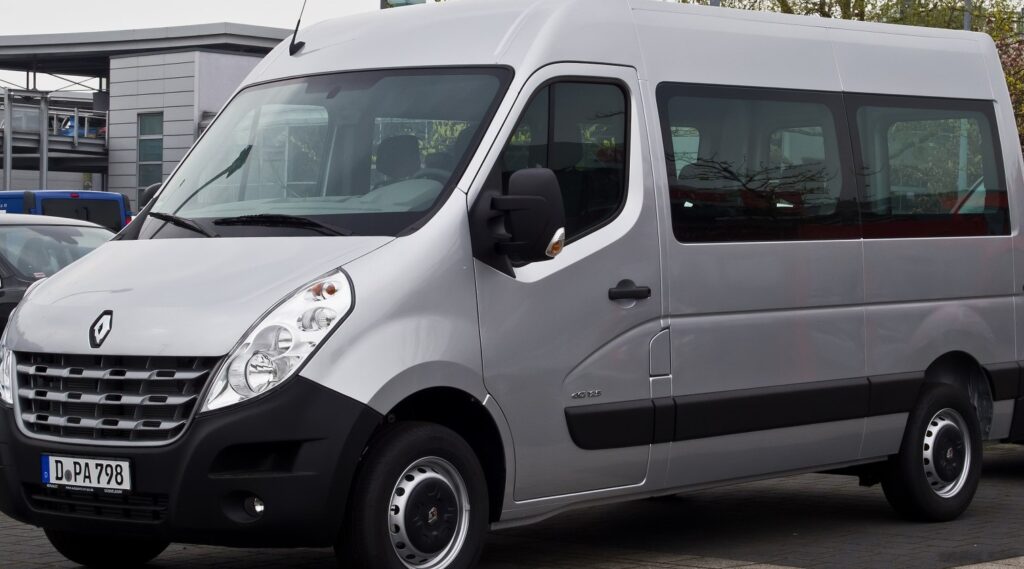
The Renault Master III, specifically the Phase II Crew Van introduced in 2014, represented a significant update to Renault’s large van lineup. This variant, equipped with the 2.3 dCi engine producing 150 horsepower and paired with a six-speed automatic transmission, was positioned as a versatile option for businesses and tradespeople requiring both passenger and cargo capacity. The “L2H2” designation indicates a medium length and medium height body configuration, offering a balance between interior space and maneuverability. Production of this specific configuration ran from 2014 to 2017, falling within the broader Master III generation (2010-2019). It primarily served the European commercial vehicle market, competing with vans like the Fiat Ducato, Mercedes-Benz Sprinter, and Volkswagen Crafter.
Technical Specifications
| Brand | Renault |
| Model | Master |
| Generation | Master III (Phase II, 2014) Crew Van |
| Type (Engine) | 2.3 dCi (150 Hp) L2H2 Automatic |
| Start of production | 2014 |
| End of production | 2017 |
| Powertrain Architecture | Internal Combustion engine |
| Body type | Minivan, MPV |
| Seats | 7 |
| Doors | 4 |
| Fuel consumption (urban) | 8.5-8.8 l/100 km (27.7 – 26.7 US mpg) |
| Fuel consumption (extra urban) | 7.7-8.0 l/100 km (30.5 – 29.4 US mpg) |
| Fuel consumption (combined) | 8.0-8.3 l/100 km (29.4 – 28.3 US mpg) |
| CO2 emissions | 209-217 g/km |
| Fuel Type | Diesel |
| Emission standard | Euro 5 |
| Power | 150 Hp @ 3500 rpm |
| Torque | 350 Nm @ 1500 rpm (258.15 lb.-ft. @ 1500 rpm) |
| Engine Model/Code | M9T |
| Engine displacement | 2298 cm3 (140.23 cu. in.) |
| Number of cylinders | 4 |
| Engine configuration | Inline |
| Number of valves per cylinder | 4 |
| Fuel injection system | Diesel Commonrail |
| Engine aspiration | Turbocharger, Intercooler |
| Engine oil capacity | 8 l (8.45 US qt | 7.04 UK qt) |
| Coolant capacity | 11 l (11.62 US qt | 9.68 UK qt) |
| Max. weight | 3500 kg (7716.18 lbs.) |
| Trunk (boot) space – maximum | 6900 l (243.67 cu. ft.) |
| Fuel tank capacity | 105 l (27.74 US gal | 23.1 UK gal) |
| Length | 5548 mm (218.43 in.) |
| Width | 2070 mm (81.5 in.) |
| Width including mirrors | 2470 mm (97.24 in.) |
| Height | 2502 mm (98.5 in.) |
| Wheelbase | 3682 mm (144.96 in.) |
| Front track | 1750 mm (68.9 in.) |
| Rear track | 1730 mm (68.11 in.) |
| Front overhang | 842 mm (33.15 in.) |
| Rear overhang | 1024 mm (40.31 in.) |
| Ride height (ground clearance) | 174 mm (6.85 in.) |
| Drivetrain Architecture | Front wheel drive |
| Number of gears | 6 |
| Gearbox type | Automatic transmission |
| Front suspension | Independent, McPherson with coil spring and anti-roll bar |
| Rear suspension | Leaf spring |
| Front brakes | Ventilated discs, 302 mm |
| Rear brakes | Disc, 305 mm |
| Tires size | 225/65 R16 |
| Wheel rims size | 16 |
Powertrain & Engine Architecture
The heart of this Master variant is the Renault M9T 2.3-liter four-cylinder diesel engine. This engine utilizes a common rail direct injection system, delivering fuel at extremely high pressure for optimized combustion. A turbocharger with an intercooler further enhances performance by forcing more air into the cylinders. The M9T engine is known for its relatively robust construction, though it does feature a diesel particulate filter (DPF) to meet Euro 5 emissions standards, a component that requires periodic maintenance or regeneration. The six-speed automatic transmission, sourced from ZF, provides smooth gear changes and contributes to ease of driving, particularly in urban environments. While not a performance-oriented transmission, it is well-suited to the van’s intended use as a work vehicle.
Driving Characteristics
The 150 horsepower and 350 Nm (258 lb-ft) of torque offered by the 2.3 dCi engine, when coupled with the automatic transmission, provides adequate, though not exhilarating, performance. Acceleration is reasonable when unladen, but the van’s weight becomes noticeable when fully loaded. The automatic transmission prioritizes fuel efficiency and smooth operation over sporty responsiveness. Gear ratios are tuned for hauling and towing, with a focus on providing sufficient torque at lower engine speeds. Compared to the manual transmission versions of the same engine, the automatic offers greater convenience, especially in stop-and-go traffic. However, it typically results in slightly lower fuel economy and a less engaging driving experience. Compared to higher-output versions of the 2.3 dCi (available in some markets), this 150 hp variant offers a more economical option, sacrificing some performance for improved fuel efficiency.
Equipment & Trim Levels
The Crew Van configuration of the Master III is designed to accommodate both passengers and cargo. It typically features seating for up to seven occupants, with a three-seat bench in the front and a four-seat bench in the rear. Standard equipment generally includes air conditioning, power windows, a basic audio system, and a driver’s airbag. Higher trim levels, available as options, could add features such as navigation, rear parking sensors, cruise control, and upgraded upholstery. The interior is functional and durable, prioritizing practicality over luxury. The dashboard layout is straightforward, with easily accessible controls.
Chassis & Braking
The Renault Master III utilizes a front-wheel-drive layout, contributing to a lower load floor and improved space utilization. The front suspension employs an independent McPherson strut design with coil springs and an anti-roll bar, providing a comfortable ride and predictable handling. The rear suspension utilizes a leaf spring setup, chosen for its durability and load-carrying capacity. Braking duties are handled by ventilated discs at the front and solid discs at the rear. The braking system is adequate for the van’s weight, but it’s not particularly powerful. The 16-inch wheels are typically fitted with 225/65 R16 tires, offering a good balance between comfort and grip.
Market Reception & Comparison
The Renault Master III 2.3 dCi 150 Automatic Crew Van was generally well-received by commercial vehicle operators. Critics praised its spacious interior, comfortable ride, and relatively fuel-efficient engine. The automatic transmission was seen as a significant benefit for drivers spending long hours in traffic. However, some reviewers noted that the engine could feel strained when fully loaded, and the interior lacked the refinement of some competitors. Compared to the manual transmission version, the automatic offered a slight fuel economy penalty but a significant improvement in driving convenience. Against rivals like the Fiat Ducato and Mercedes-Benz Sprinter, the Master offered a competitive price point and a good level of standard equipment.
Legacy
The Renault Master III, and specifically this 2.3 dCi 150 Automatic variant, has proven to be a relatively reliable workhorse in the used vehicle market. The M9T engine, while not without its potential issues (particularly related to the DPF), is generally durable if properly maintained. Regular oil changes and adherence to the manufacturer’s service schedule are crucial for long-term reliability. The ZF automatic transmission is also known for its robustness. Today, these vans can be found with relatively high mileage, still actively used for commercial purposes. Their affordability and practicality continue to make them a popular choice for businesses and tradespeople seeking a versatile and dependable large van.