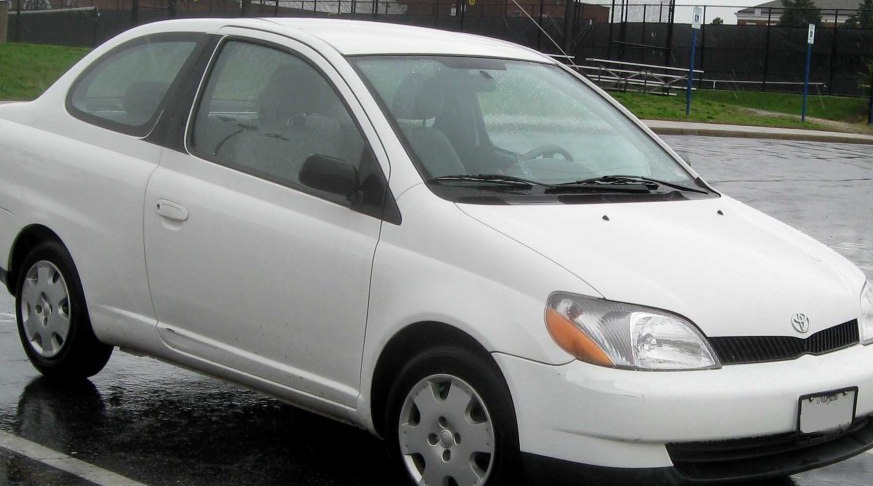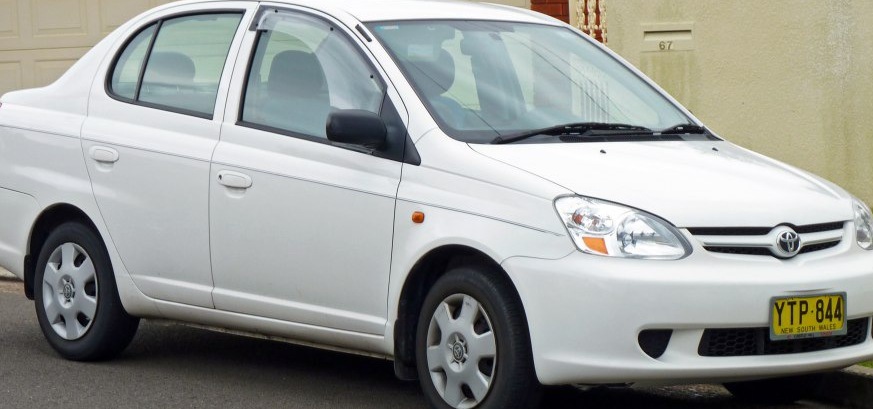
The Toyota Echo, produced from 1999 to 2005, was a subcompact car designed as an affordable and practical transportation solution. The 1.5i 16V variant, powered by the 1NZ-FE engine producing 109 horsepower, represented a significant portion of the Echo lineup, particularly in markets where fuel efficiency and low cost of ownership were prioritized. It was sold primarily in North America, Japan, Europe, and Australia, serving as a direct competitor to vehicles like the Honda Civic, Nissan Sentra, and Ford Focus. The Echo was part of Toyota’s strategy to offer a no-frills, reliable vehicle in a segment often dominated by more expensive and feature-rich options.
Technical Specifications
| Brand | Toyota |
| Model | Echo |
| Generation | Echo |
| Type (Engine) | 1.5i 16V (109 Hp) |
| Start of production | 1999 |
| End of production | 2005 |
| Powertrain Architecture | Internal Combustion engine |
| Body type | Sedan |
| Seats | 5 |
| Doors | 4 |
| Fuel Type | Petrol (Gasoline) |
| Maximum speed | 180 km/h (111.85 mph) |
| Weight-to-power ratio | 8.3 kg/Hp, 119.8 Hp/tonne |
| Weight-to-torque ratio | 6.4 kg/Nm, 157.1 Nm/tonne |
| Power | 109 Hp @ 6000 rpm |
| Power per litre | 72.9 Hp/l |
| Torque | 143 Nm @ 4200 rpm (105.47 lb.-ft. @ 4200 rpm) |
| Engine layout | Front, Transverse |
| Engine Model/Code | 1NZ-FE |
| Engine displacement | 1496 cm3 (91.29 cu. in.) |
| Number of cylinders | 4 |
| Engine configuration | Inline |
| Cylinder Bore | 75 mm (2.95 in.) |
| Piston Stroke | 84.7 mm (3.33 in.) |
| Compression ratio | 10.5:1 |
| Number of valves per cylinder | 4 |
| Fuel injection system | Multi-port manifold injection |
| Engine aspiration | Naturally aspirated engine |
| Valvetrain | DOHC |
| Engine oil capacity | 3.7 l (3.91 US qt | 3.26 UK qt) |
| Coolant | 4.4 l (4.65 US qt | 3.87 UK qt) |
| Kerb Weight | 910 kg (2006.21 lbs.) |
| Max. weight | 1185 kg (2612.48 lbs.) |
| Max load | 275 kg (606.27 lbs.) |
| Trunk (boot) space – minimum | 435 l (15.36 cu. ft.) |
| Fuel tank capacity | 45 l (11.89 US gal | 9.9 UK gal) |
| Length | 4145 mm (163.19 in.) |
| Width | 1660 mm (65.35 in.) |
| Height | 1500 mm (59.06 in.) |
| Wheelbase | 2370 mm (93.31 in.) |
| Front track | 1440 mm (56.69 in.) |
| Rear (Back) track | 1420 mm (55.91 in.) |
| Drivetrain Architecture | The Internal combustion engine (ICE) drives the front wheels of the vehicle. |
| Drive wheel | Front wheel drive |
| Number of gears and type of gearbox | 5 gears, manual transmission |
| Front suspension | Wishbone |
| Rear suspension | Coil spring |
| Front brakes | Ventilated discs |
| Rear brakes | Drum |
| Steering type | Steering rack and pinion |
| Power steering | Hydraulic Steering |
| Tires size | 175/65 R14 S |
Powertrain & Engine Architecture
The heart of the Echo 1.5i 16V is the 1NZ-FE engine, a 1.5-liter inline-four cylinder gasoline engine. This engine is notable for its lightweight aluminum block and cylinder head, contributing to the Echo’s overall efficiency. The 1NZ-FE utilizes a multi-port fuel injection system, delivering fuel directly into the intake ports, and a double overhead camshaft (DOHC) valvetrain with four valves per cylinder. This configuration optimizes airflow for improved performance and fuel economy. The engine’s 109 horsepower and 143 Nm (105.47 lb-ft) of torque were considered adequate for the vehicle’s size and intended purpose. The five-speed manual transmission was the standard offering, providing a direct connection between the engine and the front wheels. The transmission’s gear ratios were tuned for fuel efficiency and everyday drivability rather than outright acceleration.
Driving Characteristics
The Echo 1.5i 16V with the manual transmission offered a surprisingly engaging driving experience for a subcompact car. While not particularly quick, the engine provided sufficient power for merging onto highways and navigating city streets. The five-speed manual allowed drivers to keep the engine in its optimal power band, maximizing acceleration. Compared to larger, more powerful vehicles, the Echo felt nimble and responsive. The relatively light weight of the car contributed to its agility. The suspension, while basic, provided a comfortable ride on most road surfaces. The manual transmission offered a more connected feel compared to the optional automatic, which could sometimes feel sluggish due to the engine’s limited torque.
Equipment & Trim Levels
The Echo 1.5i 16V was generally offered in a fairly basic trim level, reflecting its focus on affordability. Standard features typically included air conditioning, power steering, and an AM/FM radio. Interior upholstery was typically cloth, and the dashboard featured a simple, functional design. Optional extras included power windows and locks, and a CD player. The interior space was maximized through clever packaging, offering a surprisingly roomy cabin for a subcompact car. Safety features were relatively basic for the time, typically including dual airbags and anti-lock brakes (ABS) on some trims.
Chassis & Braking
The Echo utilized a front-wheel-drive layout with a simple yet effective chassis design. The front suspension consisted of wishbone components, while the rear suspension employed a coil spring setup. This configuration provided a balance between ride comfort and handling. The braking system featured ventilated discs on the front wheels and drum brakes on the rear. The braking performance was adequate for the vehicle’s weight and power, but not particularly sporty. The steering system utilized a rack and pinion setup with hydraulic power assistance, providing precise and responsive steering feel.
Market Reception & Comparison
The Toyota Echo 1.5i 16V was generally well-received by critics for its fuel efficiency, reliability, and affordability. However, it was often criticized for its basic interior and lack of features compared to some of its competitors. Compared to other trims in the Echo lineup, the 1.5i 16V offered a good balance between performance and fuel economy. The manual transmission version was favored by enthusiasts for its more engaging driving experience. Fuel economy was a major selling point, with the Echo consistently achieving impressive gas mileage figures. Reliability was also a key strength, with the 1NZ-FE engine proving to be exceptionally durable.
Legacy
The Toyota Echo, and specifically the 1.5i 16V variant, has developed a reputation for exceptional reliability and longevity. Many examples are still on the road today, a testament to the quality of Toyota’s engineering. The 1NZ-FE engine is known for its ability to withstand high mileage with minimal maintenance. In the used car market, the Echo remains a popular choice for budget-conscious buyers seeking a dependable and fuel-efficient vehicle. While it may not offer the same level of refinement or features as more modern vehicles, the Echo’s simplicity and reliability continue to make it a valuable option for those seeking basic transportation.