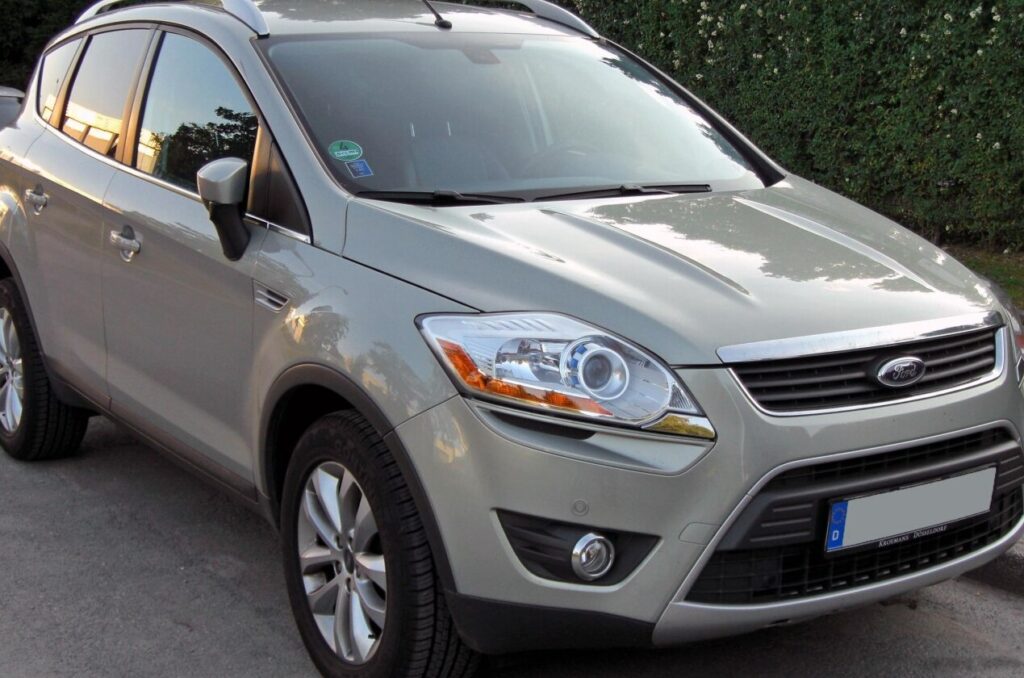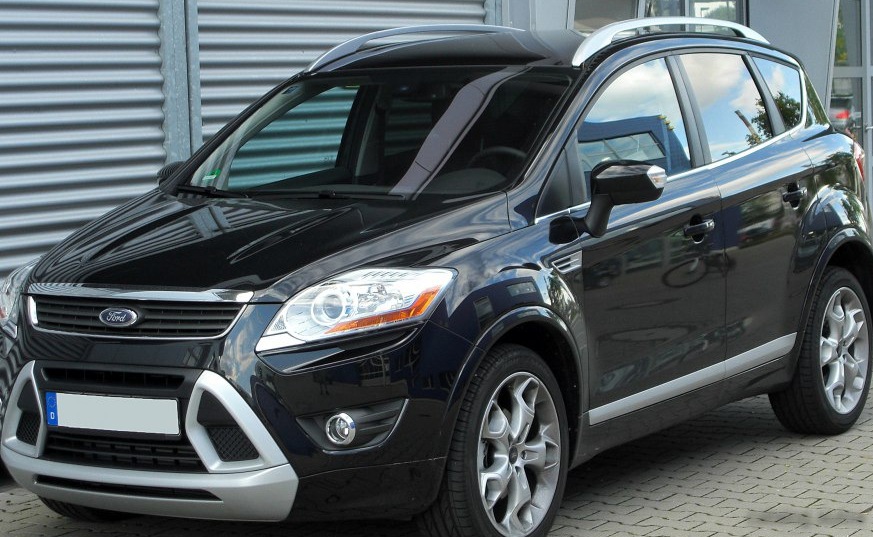
The Ford Kuga I (facelift, produced from 2010 to 2012) 2.0 Duratorq TDCi 163 hp variant represented a significant offering in the compact SUV segment for the European market. Positioned as a mid-range option within the Kuga lineup, it aimed to balance fuel efficiency with respectable performance, appealing to families and individuals seeking a practical and versatile vehicle. This facelifted version of the original Kuga (introduced in 2008) brought styling updates and refinements to the already popular model, solidifying its position as a competitor to vehicles like the Nissan Qashqai and Volkswagen Tiguan.
Technical Specifications
| Brand | Ford |
| Model | Kuga |
| Generation | Kuga I (facelift 2010) |
| Type (Engine) | 2.0 Duratorq TDCi (163 Hp) DPF |
| Start of production | 2010 |
| End of production | 2012 |
| Powertrain Architecture | Internal Combustion engine |
| Body type | SUV |
| Seats | 5 |
| Doors | 5 |
| Fuel consumption (urban) | 7.2 l/100 km (32.7 US mpg, 39.2 UK mpg, 13.9 km/l) |
| Fuel consumption (extra urban) | 5.1 l/100 km (46.1 US mpg, 55.4 UK mpg, 19.6 km/l) |
| Fuel consumption (combined) | 5.9 l/100 km (39.9 US mpg, 47.9 UK mpg, 16.9 km/l) |
| Fuel Type | Diesel |
| Acceleration 0 – 100 km/h | 9.9 sec |
| Acceleration 0 – 62 mph | 9.9 sec |
| Acceleration 0 – 60 mph | 9.4 sec |
| Maximum speed | 198 km/h (123.03 mph) |
| Emission standard | Euro 5 |
| Weight-to-power ratio | 10.4 kg/Hp, 96.3 Hp/tonne |
| Power | 163 Hp |
| Engine layout | Front, Transverse |
| Engine Model/Code | TXDA |
| Engine configuration | Inline |
| Fuel injection system | Diesel Commonrail |
| Engine aspiration | Turbocharger, Intercooler |
| Engine oil capacity | 5.5 l (5.81 US qt, 4.84 UK qt) |
| Coolant capacity | 8.6 l (9.09 US qt, 7.57 UK qt) |
| Kerb Weight | 1692 kg (3730.22 lbs) |
| Max. weight | 2250 kg (4960.4 lbs) |
| Max load | 558 kg (1230.18 lbs) |
| Length | 4443 mm (174.92 in) |
| Width | 1842 mm (72.52 in) |
| Height | 1710 mm (67.32 in) |
| Wheelbase | 2690 mm (105.91 in) |
| Drive wheel | All wheel drive (4×4) |
| Number of gears and type of gearbox | 6 gears, manual transmission |
| Assisting systems | ABS (Anti-lock braking system) |
| Steering type | Steering rack and pinion |
Powertrain & Engine Architecture
The heart of this Kuga variant is the 2.0-liter Duratorq TDCi engine, specifically the TXDA code. This engine is a four-cylinder, inline diesel powerplant featuring a common-rail direct fuel injection system. The common-rail system, operating at very high pressures, allows for precise fuel metering and optimized combustion, contributing to both power and efficiency. A turbocharger with an intercooler further enhances performance by forcing more air into the cylinders. The intercooler cools the compressed air, increasing its density and further improving combustion. The engine utilizes a Diesel Particulate Filter (DPF) to reduce harmful particulate matter emissions, meeting the stringent Euro 5 emission standards. The 6-speed manual transmission was the standard offering, providing a good balance between fuel economy and driver control.
Driving Characteristics
The 163 hp Duratorq TDCi engine, paired with the 6-speed manual gearbox, delivered a respectable driving experience. Acceleration from 0-60 mph took approximately 9.4 seconds, making it competitive within its class. While not a performance-oriented SUV, the engine provided sufficient torque for everyday driving and overtaking maneuvers. The all-wheel-drive system offered enhanced traction, particularly in adverse weather conditions. Compared to the lower-powered 1.6 TDCi versions, the 2.0 TDCi offered a noticeable improvement in responsiveness and overall performance. However, it didn’t possess the outright power of the higher-spec petrol engines available in the Kuga range. The gear ratios were well-chosen for both urban and highway driving, providing a comfortable and efficient experience.
Equipment & Trim Levels
The 2.0 Duratorq TDCi 163 hp Kuga typically came equipped with a reasonable level of standard features. These included air conditioning, electric front and rear windows, a CD/radio system, alloy wheels, and ABS brakes. Higher trim levels, such as Titanium, added features like automatic climate control, rear parking sensors, cruise control, and upgraded interior trim. Interior upholstery was typically cloth, with options for leather available on higher-spec models. The dashboard layout was functional and user-friendly, with a clear instrument cluster and logically placed controls. Optional extras included a panoramic sunroof, satellite navigation, and a premium sound system.
Chassis & Braking
The Kuga I utilized a MacPherson strut front suspension and a multi-link rear suspension, providing a comfortable ride and good handling characteristics. The all-wheel-drive system employed a Haldex clutch, automatically distributing torque between the front and rear axles as needed. Braking systems varied slightly depending on the trim level, with lower trims often featuring disc brakes on the front and drum brakes on the rear. Higher trims typically had disc brakes all around. Stabilizer bars were fitted to both the front and rear axles to reduce body roll during cornering. The steering was a rack and pinion system, providing precise and responsive steering feel.
Market Reception & Comparison
The Ford Kuga I 2.0 Duratorq TDCi 163 hp received generally positive reviews from automotive critics. It was praised for its practicality, spacious interior, and comfortable ride. The engine was considered a good compromise between performance and fuel economy. Compared to the 1.6 TDCi versions, the 2.0 TDCi offered a more refined and capable driving experience, although it came at a slightly higher price point. Fuel economy was a strong point, with combined figures averaging around 39.9 US mpg. Reliability was generally good, although some owners reported issues with the DPF system, a common concern with diesel vehicles of this era.
Legacy
The Ford Kuga I, particularly the 2.0 Duratorq TDCi variants, established Ford as a serious contender in the compact SUV market. The Duratorq engine proved to be a robust and reliable powerplant, and many examples are still on the road today. In the used car market, these models represent a good value proposition, offering a practical and well-equipped SUV at an affordable price. However, potential buyers should be aware of the potential for DPF-related issues and ensure that the vehicle has been properly maintained. The Kuga I paved the way for the subsequent generations of Kuga, which have continued to build on its success and popularity.