Technical Specifications
| Brand | Opel |
| Model | Manta |
| Generation | Manta B (facelift 1982) |
| Type (Engine) | 1.8 S (90 Hp) |
| Start of production | 1983 |
| End of production | 1988 |
| Powertrain Architecture | Internal Combustion engine |
| Body type | Coupe |
| Seats | 4 |
| Doors | 2 |
| Fuel Type | Petrol (Gasoline) |
| Acceleration 0 – 100 km/h | 11.5 sec |
| Acceleration 0 – 62 mph | 11.5 sec |
| Acceleration 0 – 60 mph | 10.9 sec |
| Maximum speed | 175 km/h (108.74 mph) |
| Weight-to-power ratio | 11.1 kg/Hp, 90 Hp/tonne |
| Weight-to-torque ratio | 7 kg/Nm, 143 Nm/tonne |
| Power | 90 Hp @ 5400 rpm |
| Power per litre | 50.1 Hp/l |
| Torque | 143 Nm @ 3000-3400 rpm (105.47 lb.-ft. @ 3000-3400 rpm) |
| Engine layout | Front, Longitudinal |
| Engine Model/Code | 18S |
| Engine displacement | 1796 cm3 (109.6 cu. in.) |
| Number of cylinders | 4 |
| Engine configuration | Inline |
| Cylinder Bore | 84.8 mm (3.34 in.) |
| Piston Stroke | 79.5 mm (3.13 in.) |
| Compression ratio | 9.2:1 |
| Number of valves per cylinder | 2 |
| Fuel injection system | Carburettor |
| Engine aspiration | Naturally aspirated engine |
| Valvetrain | SOHC |
| Engine oil capacity | 3.75 l (3.96 US qt | 3.3 UK qt) |
| Coolant | 6.8 l (7.19 US qt | 5.98 UK qt) |
| Kerb Weight | 1000 kg (2204.62 lbs.) |
| Max. weight | 1380 kg (3042.38 lbs.) |
| Max load | 380 kg (837.76 lbs.) |
| Trunk (boot) space – minimum | 380 l (13.42 cu. ft.) |
| Fuel tank capacity | 50 l (13.21 US gal | 11 UK gal) |
| Permitted trailer load with brakes (12%) | 1200 kg (2645.55 lbs.) |
| Length | 4443 mm (174.92 in.) |
| Width | 1686 mm (66.38 in.) |
| Height | 1310 mm (51.57 in.) |
| Wheelbase | 2518 mm (99.13 in.) |
| Front track | 1394 mm (54.88 in.) |
| Rear (Back) track | 1389 mm (54.69 in.) |
| Minimum turning circle (turning diameter) | 10.3 m (33.79 ft.) |
| Drivetrain Architecture | The Internal combustion engine (ICE) drives the rear wheels of the vehicle. |
| Drive wheel | Rear wheel drive |
| Number of gears and type of gearbox | 4 gears, manual transmission |
| Front suspension | Double wishbone |
| Front brakes | Disc |
| Rear brakes | Drum |
| Tires size | 185/70 R13 |
| Wheel rims size | 13 |
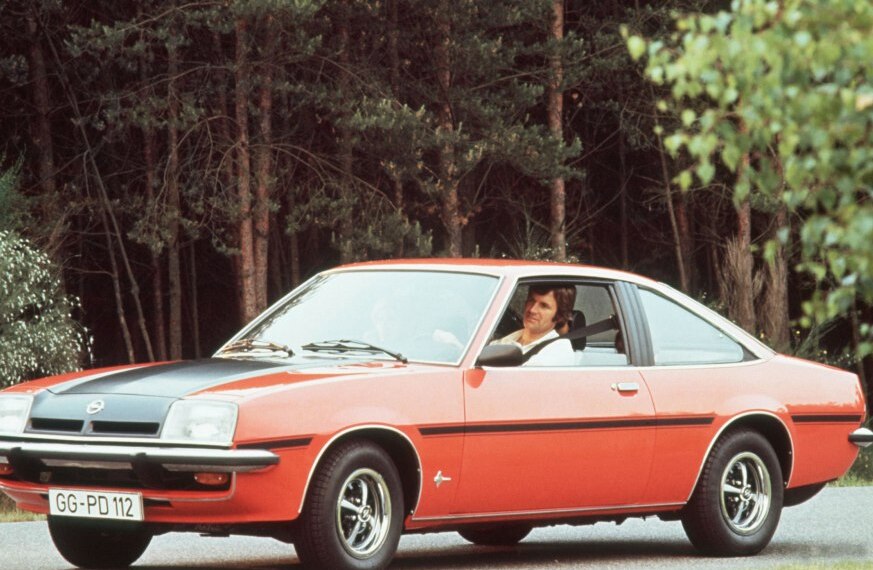
The Opel Manta B 1.8 S, produced between 1983 and 1988, represented a key variant within the popular Manta B range. Built upon the 1HX0/A3 platform, the Manta B aimed to modernize the original Manta’s formula, offering a more refined and contemporary coupe experience. The 1.8 S trim level, powered by a 90 horsepower engine, served as a sweet spot in the lineup, appealing to buyers seeking a balance between performance, fuel economy, and price. It was a common sight on European roads during the 1980s, embodying the spirit of affordable, sporty motoring.
Powertrain & Engine Architecture
The heart of the Manta B 1.8 S was the 18S engine, a 1796cc inline-four cylinder unit. This engine utilized a single overhead camshaft (SOHC) valvetrain with two valves per cylinder. Unlike later fuel-injected versions, the 1.8 S relied on a carburetor for fuel delivery, specifically a Solex or Pierburg unit. This carburetor setup, while simpler than fuel injection, contributed to the engine’s relatively straightforward maintenance requirements. The engine produced 90 horsepower at 5400 rpm and 143 Nm (105.47 lb-ft) of torque between 3000 and 3400 rpm. The engine was mounted longitudinally in the front of the vehicle, driving the rear wheels. The four-speed manual transmission was the standard offering for this variant, providing a direct and engaging driving experience. The transmission’s gear ratios were tuned for a balance of acceleration and cruising efficiency.
Driving Characteristics
The Manta B 1.8 S offered a distinctly analog driving experience. With 90 hp propelling a roughly 1000 kg (2204 lbs) vehicle, acceleration was respectable but not blistering. Zero to 60 mph took around 10.9 seconds, and the top speed was approximately 108.74 mph. Compared to the more powerful Manta B GTE models, the 1.8 S felt less urgent in its acceleration. However, the lower power output also meant less stress on the drivetrain, potentially contributing to greater long-term reliability. The four-speed manual transmission provided a good level of control, allowing drivers to keep the engine in its optimal power band. The rear-wheel-drive configuration offered a playful handling balance, although it required careful throttle control in slippery conditions. The steering was relatively direct, providing a decent level of feedback.
Equipment & Trim Levels
The 1.8 S trim level offered a reasonable level of standard equipment for its time. Interior appointments typically included cloth upholstery, a basic instrument cluster, and a steering wheel. While not luxurious, the interior was functional and durable. Optional extras included a sunroof, upgraded audio systems, and alloy wheels. The exterior featured body-colored bumpers and trim, distinguishing it from the more basic Manta models. The 1.8 S was generally positioned as a step up from the base Manta models, offering a more appealing combination of features and performance.
Chassis & Braking
The Manta B utilized a relatively simple but effective chassis design. The front suspension employed a double wishbone setup, providing a good balance of ride comfort and handling. The rear suspension featured a rigid axle with leaf springs. Braking duties were handled by disc brakes at the front and drum brakes at the rear. While the drum brakes at the rear were adequate for normal driving, they lacked the stopping power and fade resistance of disc brakes. The 185/70 R13 tires provided reasonable grip, although they were not particularly wide by modern standards. A stabilizer bar was fitted to the front suspension to reduce body roll during cornering.
Market Reception & Comparison
The Manta B 1.8 S was generally well-received by automotive critics as a practical and enjoyable coupe. It was praised for its affordability, decent performance, and relatively low running costs. Compared to the higher-performance Manta B GTE models, the 1.8 S offered a more economical option, appealing to buyers who prioritized fuel efficiency and ease of maintenance. The 1.8 S also offered a more refined driving experience than the base Manta models, thanks to its more powerful engine and improved trim levels. However, some critics noted that the carburetor-fed engine lacked the responsiveness and refinement of fuel-injected alternatives.
Legacy
The Opel Manta B 1.8 S has become a popular classic car among enthusiasts. The 18S engine, while not the most powerful in the Manta B range, is known for its reliability and relatively simple maintenance requirements. Parts availability remains reasonably good, making it a viable option for those looking to restore or maintain a classic coupe. Today, the Manta B 1.8 S represents a nostalgic reminder of 1980s automotive design and engineering, offering a unique and engaging driving experience that is increasingly rare in the modern automotive landscape. Well-maintained examples command a growing following in the classic car market, appreciated for their style, affordability, and enduring appeal.