Technical Specifications
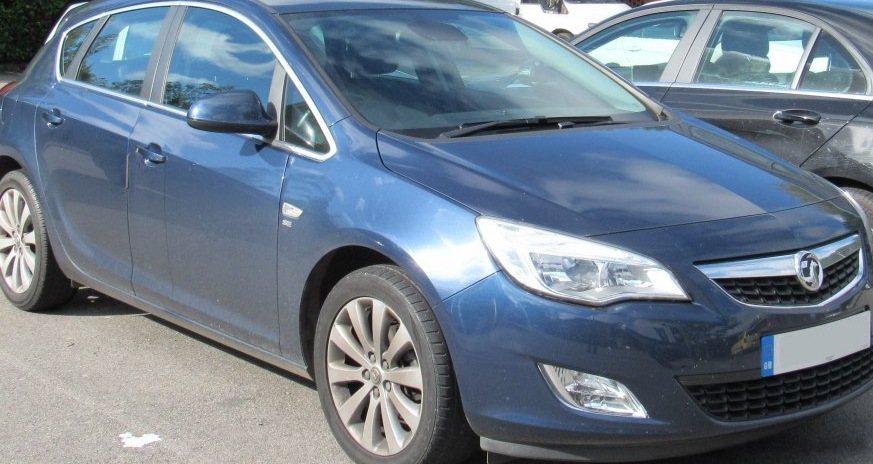
| Brand | Vauxhall |
| Model | Astra |
| Generation | Astra Mk VI CC |
| Type (Engine) | 1.7 CDTi (125 Hp) |
| Start of production | 2009 |
| End of production | 2015 |
| Powertrain Architecture | Internal Combustion engine |
| Body type | Hatchback |
| Seats | 5 |
| Doors | 5 |
| Fuel consumption (urban) | 5.7 l/100 km (41.3 US mpg, 49.6 UK mpg, 17.5 km/l) |
| Fuel consumption (extra urban) | 4.2 l/100 km (56 US mpg, 67.3 UK mpg, 23.8 km/l) |
| Fuel consumption (combined) | 4.7 l/100 km (50 US mpg, 60.1 UK mpg, 21.3 km/l) |
| CO2 emissions | 125 g/km |
| Fuel Type | Diesel |
| Acceleration 0 – 100 km/h | 11.5 sec |
| Acceleration 0 – 62 mph | 11.5 sec |
| Acceleration 0 – 60 mph | 10.9 sec |
| Maximum speed | 195 km/h (121.17 mph) |
| Emission standard | Euro 5 |
| Weight-to-power ratio | 11.2 kg/Hp, 89.1 Hp/tonne |
| Weight-to-torque ratio | 5.4 kg/Nm, 185.3 Nm/tonne |
| Power | 125 Hp @ 4000 rpm |
| Power per litre | 74.1 Hp/l |
| Torque | 260 Nm @ 1800 rpm (191.77 lb.-ft. @ 1800 rpm) |
| Engine layout | Front, Transverse |
| Engine Model/Code | A17DTR |
| Engine displacement | 1686 cm3 (102.89 cu. in.) |
| Number of cylinders | 4 |
| Engine configuration | Inline |
| Fuel injection system | Diesel Commonrail |
| Engine aspiration | Turbocharger, Intercooler |
| Engine oil capacity | 5.4 l (5.71 US qt | 4.75 UK qt) |
| Coolant capacity | 7.1 l (7.5 US qt | 6.25 UK qt) |
| Kerb Weight | 1403 kg (3093.09 lbs.) |
| Max. weight | 2020 kg (4453.34 lbs.) |
| Max load | 617 kg (1360.25 lbs.) |
| Trunk (boot) space – minimum | 370 l (13.07 cu. ft.) |
| Trunk (boot) space – maximum | 1235 l (43.61 cu. ft.) |
| Fuel tank capacity | 56 l (14.79 US gal | 12.32 UK gal) |
| Permitted trailer load with brakes (12%) | 1400 kg (3086.47 lbs.) |
| Permitted trailer load without brakes | 730 kg (1609.37 lbs.) |
| Length | 4419 mm (173.98 in.) |
| Width | 1814 mm (71.42 in.) |
| Width including mirrors | 2013 mm (79.25 in.) |
| Height | 1510 mm (59.45 in.) |
| Wheelbase | 2685 mm (105.71 in.) |
| Front track | 1542 mm (60.71 in.) |
| Rear (Back) track | 1557 mm (61.3 in.) |
| Ride height (ground clearance) | 150 mm (5.91 in.) |
| Drag coefficient (Cd) | 0.30 |
| Minimum turning circle (turning diameter) | 11.4 m (37.4 ft.) |
| Drivetrain Architecture | The Internal combustion engine (ICE) drives the front wheels of the vehicle. |
| Drive wheel | Front wheel drive |
| Number of gears and type of gearbox | 6 gears, manual transmission |
| Front brakes | Ventilated discs |
| Rear brakes | Disc |
| Assisting systems | ABS (Anti-lock braking system) |
| Steering type | Steering rack and pinion |
| Power steering | Electric Steering |
| Tires size | 215/60 R16 |
| Wheel rims size | 16 |
The Vauxhall Astra Mk VI CC 1.7 CDTi, launched in 2009, was a significant model in Vauxhall’s lineup, offering a blend of style, practicality, and fuel efficiency. Built on the GM Delta platform (internally known as the 1HX0/A3 platform), the Astra CC aimed to compete with rivals like the Ford Focus CC and Peugeot 308 CC. The 1.7 CDTi engine, a mainstay of Vauxhall and Opel diesel offerings, provided a balance between performance and economy, making this variant a popular choice for those seeking a cost-effective convertible.
Powertrain & Engine Architecture
The heart of this Astra CC is the A17DTR engine, a 1.7-liter four-cylinder diesel. This engine utilizes a common rail direct injection system, delivering fuel at extremely high pressure for improved combustion efficiency and reduced emissions. The engine also features a variable geometry turbocharger (VGT) and an intercooler, enhancing power output and responsiveness. The A17DTR produces 125 horsepower at 4000 rpm and 260 Nm (191.77 lb-ft) of torque at 1800 rpm. This torque figure, available from relatively low engine speeds, provides good in-gear acceleration. The engine is paired with a six-speed manual transmission, chosen for its efficiency and driver engagement. While an automatic transmission was available on other Astra models, it wasn’t typically offered with this specific 1.7 CDTi engine.
Driving Characteristics
The 1.7 CDTi engine, while not exceptionally powerful, provides adequate performance for everyday driving. Acceleration from 0-60 mph takes around 10.9 seconds, and the top speed is approximately 121 mph. The engine’s strength lies in its mid-range torque, making overtaking and hill climbing relatively effortless. The six-speed manual transmission allows drivers to keep the engine in its optimal power band. Compared to the more powerful petrol versions of the Astra CC, the 1.7 CDTi feels less eager to rev, but offers significantly better fuel economy. The manual gearbox provides a more engaging driving experience than an automatic would, but requires more driver input.
Equipment & Trim Levels
The Astra CC 1.7 CDTi typically came with a reasonable level of standard equipment. This included air conditioning, electric front windows, a CD/radio stereo, and alloy wheels. Higher trim levels, such as SE and SRi, added features like climate control, upgraded upholstery, parking sensors, and a more comprehensive infotainment system. The interior design was functional and modern, although material quality was generally average for its class. The convertible top was electrically operated and could be lowered or raised in around 10 seconds.
Chassis & Braking
The Astra CC utilizes a MacPherson strut front suspension and a torsion beam rear suspension. This setup provides a good balance between ride comfort and handling. The front brakes are ventilated discs, while the rear brakes are solid discs. Anti-lock Braking System (ABS) is standard. The steering is electrically assisted, providing a light and precise feel. The chassis was tuned to provide a comfortable ride, prioritizing smoothness over outright sportiness. The weight distribution is fairly balanced, contributing to predictable handling characteristics.
Market Reception & Comparison
The Astra CC 1.7 CDTi was generally well-received by automotive critics. It was praised for its fuel efficiency, comfortable ride, and stylish design. However, some reviewers noted that the engine could feel a little underpowered, especially with the top down and passengers on board. Compared to the petrol-powered Astra CC variants, the 1.7 CDTi offered significantly better fuel economy – around 50 mpg combined – but at the expense of performance. It was a strong competitor in the convertible market, offering a compelling alternative to rivals like the Ford Focus CC and Peugeot 308 CC.
Legacy
The A17DTR engine, while generally reliable, is known to require regular maintenance, particularly regarding the diesel particulate filter (DPF). Ensuring the DPF is regularly regenerated (often through highway driving) is crucial to prevent blockages and costly repairs. The Astra CC 1.7 CDTi remains a relatively affordable used car option today. Its fuel efficiency and stylish design continue to appeal to buyers looking for a practical and enjoyable convertible. However, potential buyers should be aware of the potential maintenance costs associated with diesel engines, particularly the DPF and turbocharger.