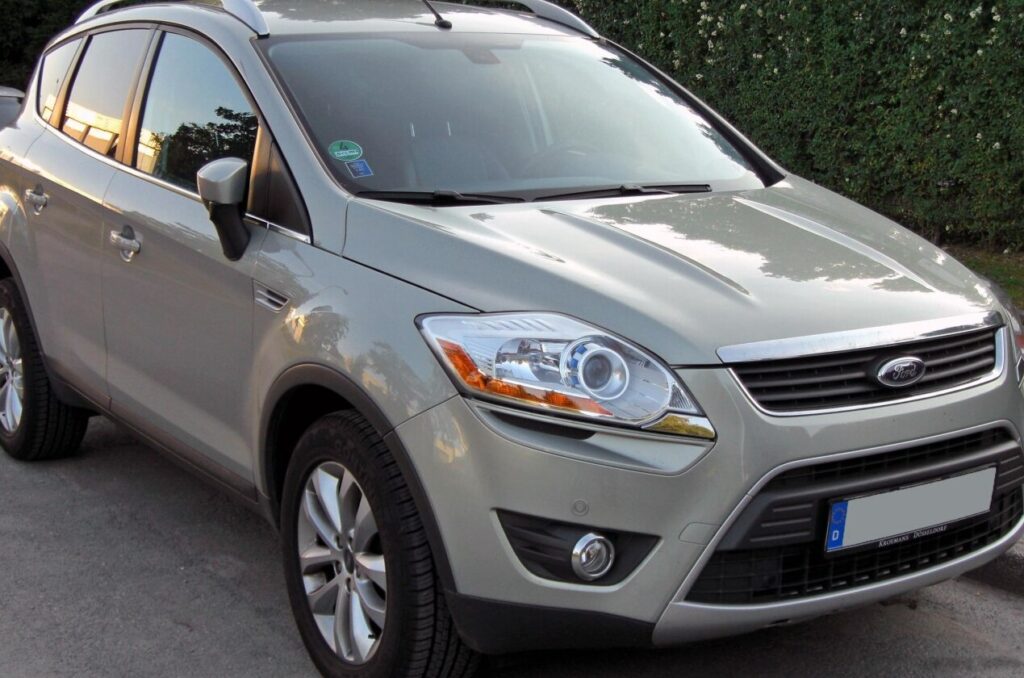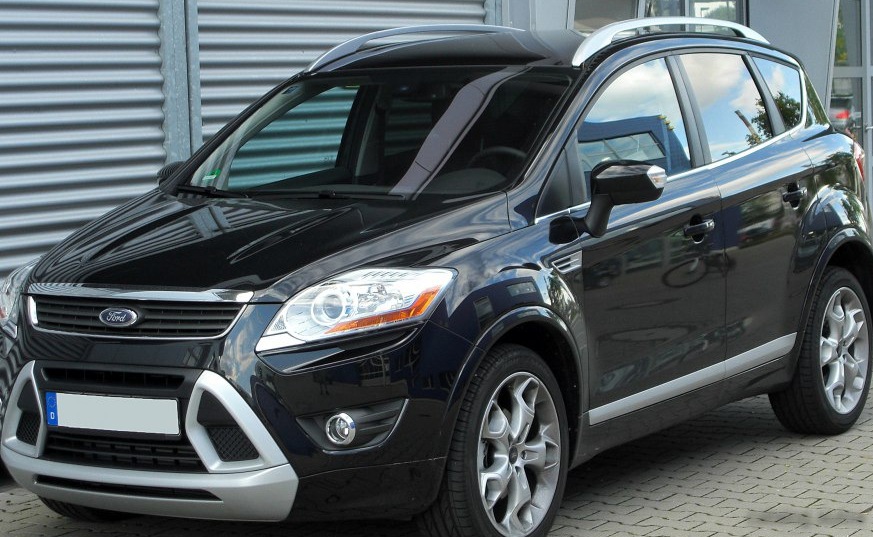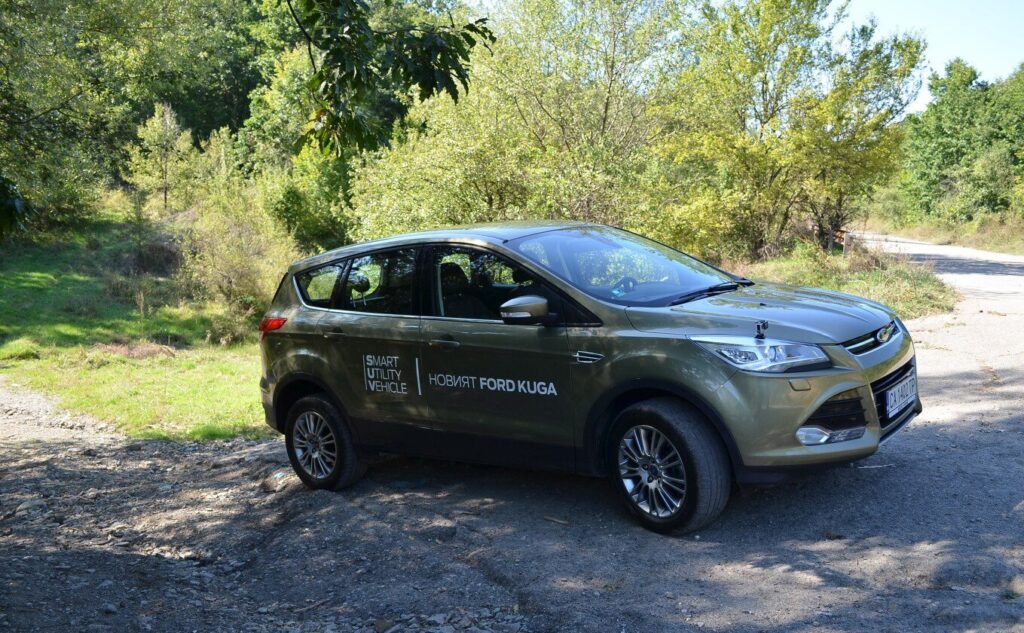
The Ford Kuga II 1.6 EcoBoost (150 hp) was a popular configuration of Ford’s compact SUV, produced between 2012 and 2014. Positioned as a mid-range offering within the Kuga II lineup, it aimed to balance fuel efficiency with respectable performance. This variant played a significant role in Ford’s European strategy to offer a downsized, turbocharged engine option in a growing SUV segment. The Kuga II itself represented Ford’s second-generation entry into the compact SUV market, building upon the success of the original Kuga and utilizing the global C-platform architecture shared with other Ford and Mazda vehicles.
Technical Specifications
| Brand | Ford |
| Model | Kuga |
| Generation | Kuga II |
| Type (Engine) | 1.6 EcoBoost (150 Hp) |
| Start of production | 2012 |
| End of production | 2014 |
| Powertrain Architecture | Internal Combustion engine |
| Body type | SUV |
| Seats | 5 |
| Doors | 5 |
| Fuel consumption (urban) | 8.3 l/100 km (28.3 US mpg) |
| Fuel consumption (extra urban) | 5.6 l/100 km (42 US mpg) |
| Fuel consumption (combined) | 6.6 l/100 km (35.6 US mpg) |
| CO2 emissions | 154 g/km |
| Fuel Type | Petrol (Gasoline) |
| Acceleration 0 – 100 km/h | 9.7 sec |
| Acceleration 0 – 62 mph | 9.7 sec |
| Acceleration 0 – 60 mph | 9.2 sec |
| Maximum speed | 195 km/h (121.17 mph) |
| Emission standard | Euro 5 |
| Weight-to-power ratio | 10.5 kg/Hp |
| Weight-to-torque ratio | 6.6 kg/Nm |
| Power | 150 Hp @ 5700 rpm |
| Torque | 240 Nm @ 1600-4000 rpm (177.01 lb.-ft.) |
| Engine layout | Front, Transverse |
| Engine Model/Code | JQMA, JQMB |
| Engine displacement | 1596 cm3 (97.39 cu. in.) |
| Number of cylinders | 4 |
| Engine configuration | Inline |
| Cylinder Bore | 79 mm (3.11 in.) |
| Piston Stroke | 81.4 mm (3.2 in.) |
| Compression ratio | 10.1:1 |
| Number of valves per cylinder | 4 |
| Fuel injection system | Direct injection |
| Engine aspiration | Turbocharger, Intercooler |
| Valvetrain | DOHC |
| Engine oil capacity | 3.8 l (4.02 US qt | 3.34 UK qt) |
| Coolant capacity | 6.3 l (6.66 US qt | 5.54 UK qt) |
| Kerb Weight | 1580 kg (3483.3 lbs.) |
| Max. weight | 2100 kg (4629.71 lbs.) |
| Max load | 520 kg (1146.4 lbs.) |
| Trunk (boot) space – minimum | 425 l (15.01 cu. ft.) |
| Trunk (boot) space – maximum | 1568 l (55.37 cu. ft.) |
| Fuel tank capacity | 60 l (15.85 US gal | 13.2 UK gal) |
| Length | 4524 mm (178.11 in.) |
| Width | 1838 mm (72.36 in.) |
| Height | 1702 mm (67.01 in.) |
| Wheelbase | 2690 mm (105.91 in.) |
| Front track | 1563 mm (61.54 in.) |
| Rear track | 1565 mm (61.61 in.) |
| Drivetrain Architecture | Front wheel drive |
| Number of gears | 6 |
| Gearbox type | Manual transmission |
| Tire size | 235/55 R17; 235/50 R18; 235/45 R19 |
Powertrain & Engine Architecture
The heart of the Kuga II 1.6 EcoBoost was the JQMA or JQMB engine, a 1.6-liter inline-four cylinder gasoline engine. This engine was part of Ford’s EcoBoost family, characterized by direct fuel injection and turbocharging. Direct injection allowed for more precise fuel delivery, improving efficiency and reducing emissions. The turbocharger, coupled with an intercooler, boosted power output despite the relatively small displacement. The engine utilized a dual overhead camshaft (DOHC) valvetrain with four valves per cylinder, optimizing airflow for enhanced performance. The 1.6 EcoBoost engine produced 150 horsepower at 5700 rpm and 240 Nm (177 lb-ft) of torque between 1600 and 4000 rpm. This engine was paired with a six-speed manual transmission, providing a balance between fuel economy and driver control. While an automatic transmission was offered on other Kuga II variants, the 150 hp engine was primarily sold with the manual gearbox.
Driving Characteristics
The 1.6 EcoBoost 150 hp Kuga II offered a reasonably engaging driving experience, particularly when compared to larger-engined SUVs. Acceleration from 0-60 mph took approximately 9.2 seconds, and top speed was around 121 mph. The turbocharger provided a noticeable boost in power during acceleration, making overtaking maneuvers relatively easy. However, the engine didn’t offer the same level of effortless power as the larger 2.0-liter EcoBoost variants. The six-speed manual transmission was well-matched to the engine’s characteristics, offering precise shifts and allowing drivers to keep the engine in its optimal power band. The front-wheel-drive configuration contributed to decent fuel economy, but it also meant that traction could be limited in slippery conditions. Compared to the diesel variants, the 1.6 EcoBoost offered a more responsive and refined driving experience, but at the cost of slightly higher fuel consumption.
Equipment & Trim Levels
The 1.6 EcoBoost 150 hp Kuga II typically came equipped with a respectable level of standard features. These included air conditioning, power windows, power mirrors, a basic audio system with USB connectivity, and alloy wheels. Higher trim levels, such as Titanium, added features like dual-zone climate control, a more advanced audio system, parking sensors, and leather upholstery. Optional extras included a panoramic sunroof, navigation system, and a rear-view camera. Interior upholstery was typically cloth on the base models, with leather options available on higher trims. The dashboard layout was functional and user-friendly, with a clear instrument cluster and logically placed controls.
Chassis & Braking
The Kuga II utilized an independent front suspension with MacPherson struts and a multi-link rear suspension. This setup provided a comfortable ride quality and good handling characteristics. The front brakes were typically ventilated discs, while the rear brakes were solid discs on most models, though some base models featured drum brakes. Anti-lock Braking System (ABS) was standard, enhancing safety during emergency braking situations. The steering was a rack-and-pinion system, providing precise and responsive steering feel. Stabilizer bars were fitted to both the front and rear axles to reduce body roll during cornering.
Market Reception & Comparison
The Ford Kuga II 1.6 EcoBoost 150 hp was generally well-received by automotive critics. It was praised for its fuel efficiency, responsive engine, and comfortable ride. However, some critics noted that the engine could feel strained when fully loaded or driving uphill. Compared to the 2.0-liter EcoBoost variants, the 1.6 EcoBoost offered a more affordable entry point into the Kuga II range, but with a slight compromise in performance. The diesel variants, such as the 2.0 TDCi, offered superior fuel economy but lacked the refinement and responsiveness of the EcoBoost engine. In terms of reliability, the 1.6 EcoBoost engine proved to be generally reliable, although some owners reported issues with the timing chain and carbon buildup on the intake valves.
Legacy
The Ford Kuga II 1.6 EcoBoost 150 hp remains a popular choice in the used car market. Its combination of fuel efficiency, practicality, and affordability makes it an attractive option for buyers seeking a compact SUV. While the 1.6 EcoBoost engine has had some reported issues, regular maintenance and preventative servicing can mitigate these risks. The Kuga II, in general, established Ford as a strong contender in the European compact SUV segment, paving the way for the continued success of the Kuga (now Puma) model line. The 1.6 EcoBoost engine itself represented a significant step forward in Ford’s efforts to develop more efficient and environmentally friendly powertrains.