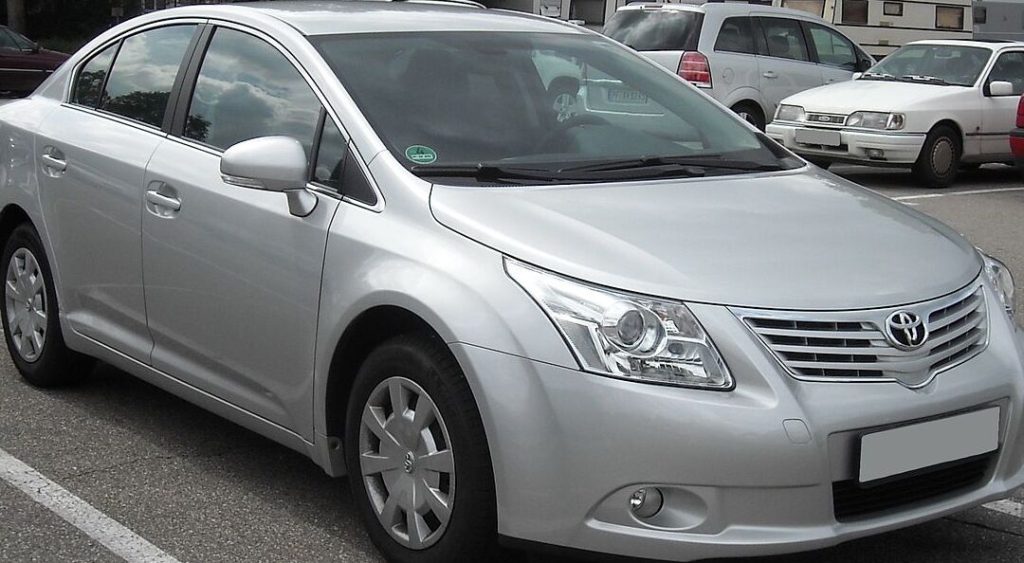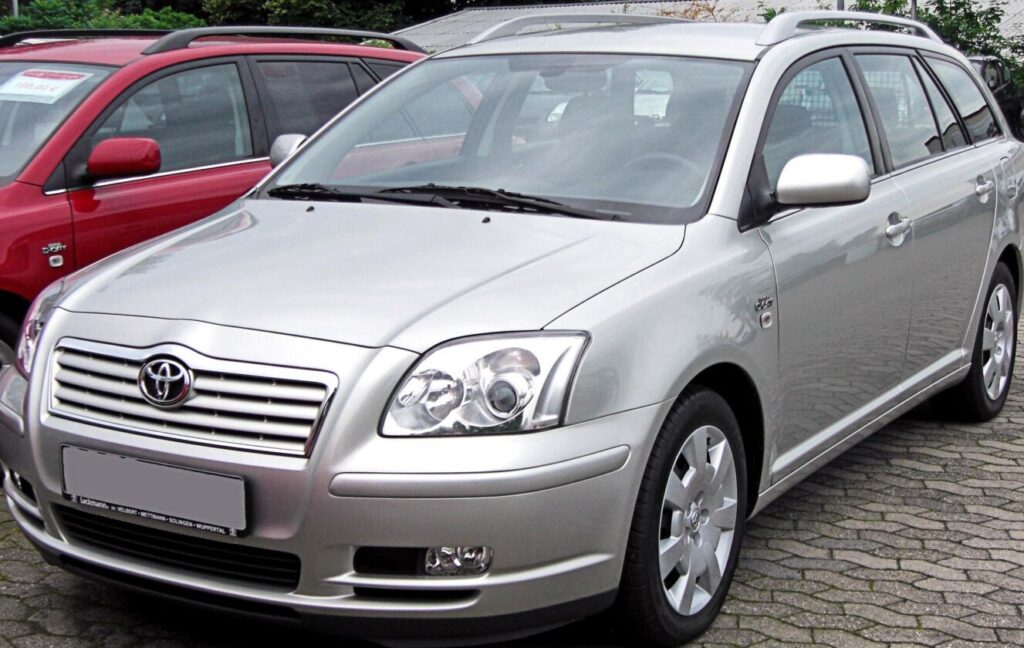
The Toyota Avensis II Wagon 2.2 D-4D (148 hp) was a popular estate car produced between 2005 and 2009. Positioned as a mid-range offering within the second-generation Avensis (T27) lineup, it catered to buyers seeking a practical, fuel-efficient, and reasonably powerful vehicle for family or business use. The Avensis II, launched in 2003, represented a significant step forward for Toyota in the European D-segment, aiming to challenge established rivals like the Ford Mondeo, Vauxhall/Opel Vectra, and Volkswagen Passat. The wagon body style, in particular, was favored in European markets where practicality and cargo space were highly valued. This specific variant, with its 2.2-liter diesel engine and 148 horsepower output, offered a balance between performance and economy, making it a common sight on both city streets and long-distance highways.
Technical Specifications
| Brand | Toyota |
| Model | Avensis |
| Generation | Avensis II Wagon |
| Type (Engine) | 2.2 D-4D (148 Hp) |
| Start of production | 2005 |
| End of production | 2009 |
| Powertrain Architecture | Internal Combustion engine |
| Body type | Station wagon (estate) |
| Seats | 5 |
| Doors | 5 |
| Fuel consumption (urban) | 6.5 l/100 km (36.2 US mpg, 43.5 UK mpg, 15.4 km/l) |
| Fuel consumption (extra urban) | 4.1 l/100 km (57.4 US mpg, 68.9 UK mpg, 24.4 km/l) |
| Fuel consumption (combined) | 5 l/100 km (47 US mpg, 56.5 UK mpg, 20 km/l) |
| Fuel Type | Diesel |
| Acceleration 0 – 100 km/h | 9.3 sec |
| Acceleration 0 – 62 mph | 9.3 sec |
| Acceleration 0 – 60 mph | 8.8 sec |
| Maximum speed | 210 km/h (130.49 mph) |
| Power | 148 Hp @ 3600 rpm |
| Power per litre | 66.3 Hp/l |
| Torque | 310 Nm @ 2000 rpm (228.64 lb.-ft. @ 2000 rpm) |
| Engine layout | Front, Transverse |
| Engine Model/Code | 2AD-FTV |
| Engine displacement | 2231 cm3 (136.14 cu. in.) |
| Number of cylinders | 4 |
| Engine configuration | Inline |
| Cylinder Bore | 86 mm (3.39 in.) |
| Piston Stroke | 96 mm (3.78 in.) |
| Compression ratio | 16.8:1 |
| Number of valves per cylinder | 4 |
| Fuel injection system | Diesel Commonrail |
| Engine aspiration | Turbocharger, Intercooler |
| Valvetrain | DOHC |
| Engine oil capacity | 5.9 l (6.23 US qt | 5.19 UK qt) |
| Coolant | 8 l (8.45 US qt | 7.04 UK qt) |
| Trunk (boot) space – minimum | 520 l (18.36 cu. ft.) |
| Trunk (boot) space – maximum | 1500 l (52.97 cu. ft.) |
| Fuel tank capacity | 60 l (15.85 US gal | 13.2 UK gal) |
| Length | 4700 mm (185.04 in.) |
| Width | 1760 mm (69.29 in.) |
| Height | 1525 mm (60.04 in.) |
| Wheelbase | 2700 mm (106.3 in.) |
| Front track | 1505 mm (59.25 in.) |
| Rear track | 1510 mm (59.45 in.) |
| Drivetrain Architecture | Front wheel drive |
| Number of gears | 6 gears, manual transmission |
| Front suspension | Coil spring |
| Rear suspension | Coil spring |
| Front brakes | Ventilated discs |
| Rear brakes | Disc |
| Assisting systems | ABS (Anti-lock braking system) |
| Steering type | Steering rack and pinion |
Powertrain & Engine Architecture
The heart of the Avensis II Wagon 2.2 D-4D was the 2AD-FTV engine, a 2.2-liter inline-four cylinder diesel. This engine was a key component of Toyota’s D-4D (Direct-injection 4-stroke Commonrail Diesel) technology, designed for improved fuel efficiency and reduced emissions. The 2AD-FTV featured a common rail direct injection system, delivering fuel at extremely high pressure for optimized combustion. A turbocharger with an intercooler further enhanced performance, boosting power output to 148 hp at 3600 rpm and generating 310 Nm (228.64 lb-ft) of torque at 2000 rpm. The engine utilized a double overhead camshaft (DOHC) valvetrain with four valves per cylinder, contributing to its smooth operation and power delivery. The engine was transversely mounted in the front of the vehicle, driving the front wheels. The six-speed manual transmission offered precise gear changes and helped maximize fuel economy.
Driving Characteristics
The 2.2 D-4D engine provided a good balance of performance and economy for the Avensis Wagon. While not a sports car, the 148 hp output and 310 Nm of torque provided sufficient power for comfortable cruising and overtaking maneuvers. Acceleration from 0 to 60 mph took around 8.8 seconds, and the car had a top speed of 130.49 mph. The six-speed manual transmission allowed drivers to keep the engine in its optimal power band, resulting in responsive acceleration. Compared to the lower-powered 1.8-liter petrol versions, the 2.2 D-4D offered significantly more torque, making it better suited for carrying passengers and luggage, or for towing. However, it wasn’t as refined or quick as the higher-spec 2.4-liter D-4D models. The gear ratios were well-chosen for both highway driving and urban commutes, providing a comfortable and efficient driving experience.
Equipment & Trim Levels
The Avensis II Wagon 2.2 D-4D typically came with a respectable level of standard equipment. Features included air conditioning, power windows, central locking, an audio system with CD player, and ABS brakes. Higher trim levels, such as the T3 or T Spirit, added features like alloy wheels, climate control, a multi-function steering wheel, and upgraded upholstery. Interior upholstery was typically cloth, with options for leather on higher-spec models. The dashboard layout was functional and user-friendly, with clear instrumentation. Optional extras included a sunroof, satellite navigation, and parking sensors.
Chassis & Braking
The Avensis II Wagon featured a MacPherson strut front suspension and a coil spring rear suspension. This setup provided a comfortable ride quality, absorbing bumps and imperfections in the road surface effectively. The chassis was designed to provide good stability and handling, although it wasn’t particularly sporty. The front brakes were ventilated discs, providing strong stopping power, while the rear brakes were solid discs. ABS (Anti-lock Braking System) was standard, enhancing safety by preventing wheel lockup during hard braking. Stabilizer bars were fitted to both the front and rear axles to reduce body roll during cornering.
Market Reception & Comparison
The Avensis II Wagon 2.2 D-4D was generally well-received by automotive critics. It was praised for its fuel efficiency, spacious interior, and comfortable ride. However, some critics noted that the interior design was somewhat bland and that the driving experience wasn’t as engaging as some of its rivals. Compared to the petrol-powered Avensis models, the 2.2 D-4D offered significantly better fuel economy, making it a popular choice for high-mileage drivers. It also provided more torque, making it better suited for towing and carrying heavy loads. In terms of reliability, the Avensis II Wagon generally had a good reputation, although some owners reported issues with the diesel particulate filter (DPF) on earlier models.
Legacy
The Toyota Avensis II Wagon 2.2 D-4D remains a practical and reliable used car option today. The 2AD-FTV engine, while not without its potential issues (such as DPF clogging and occasional injector problems), is generally considered to be a durable and long-lasting unit when properly maintained. Parts availability is good, and maintenance costs are relatively reasonable. The Avensis II Wagon’s spacious interior and comfortable ride continue to appeal to buyers seeking a versatile and dependable estate car. While it may not be the most exciting vehicle on the road, its practicality, fuel efficiency, and reliability have ensured its continued popularity in the used car market.