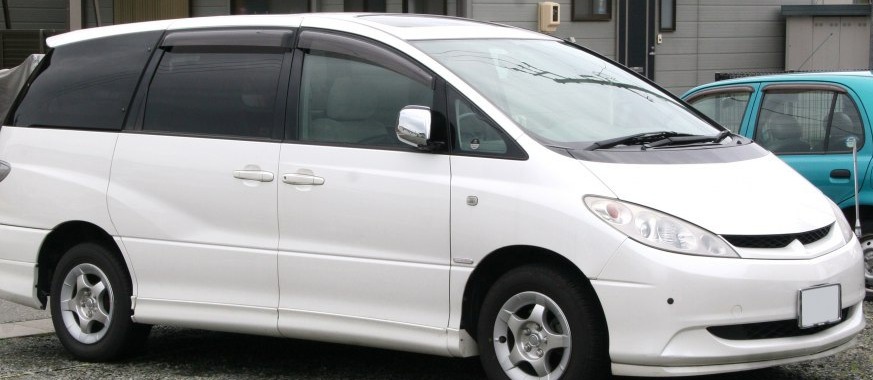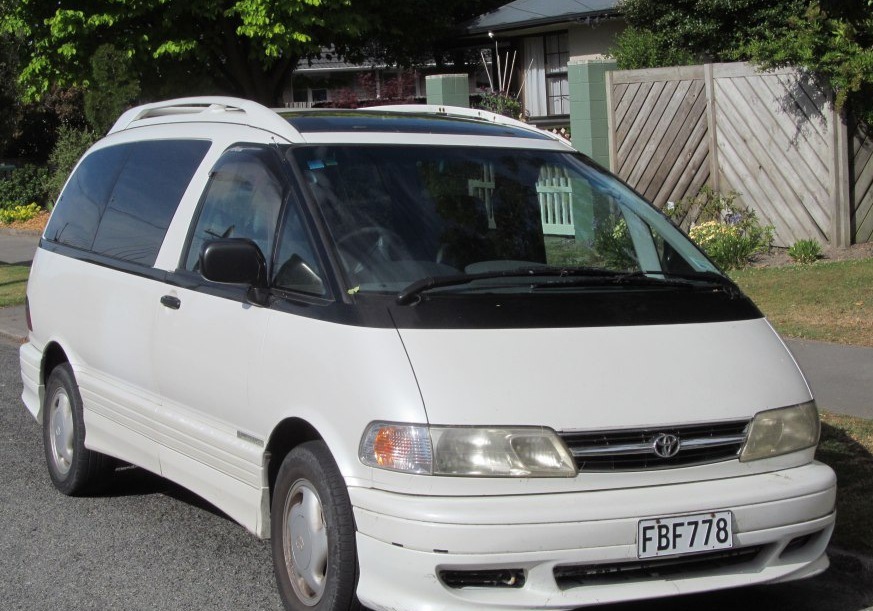
The Toyota Estima, known as the Previa in some markets, represented a significant departure for Toyota when it debuted in 1990. This first generation, spanning production until 1999, was a mid-size minivan designed to offer a more refined and technologically advanced experience than traditional North American vans. The 2.4 i variant, powered by the 2TZ-FE engine producing 132 horsepower, occupied a middle ground in the Estima lineup, offering a balance between performance and economy. It was primarily aimed at the Japanese domestic market (JDM) and select export markets, emphasizing practicality, comfort, and Toyota’s reputation for reliability. The Estima I’s most notable feature was its mid-engine, rear-wheel-drive layout – a configuration rarely seen in minivans – which contributed to its balanced handling and spacious interior.
Technical Specifications
| Brand | Toyota |
| Model | Estima |
| Generation | Estima I |
| Type (Engine) | 2.4 i (132 Hp) |
| Start of production | 1990 |
| End of production | 1999 |
| Powertrain Architecture | Internal Combustion engine |
| Body type | Minivan |
| Seats | 8 |
| Doors | 4 |
| Fuel consumption (urban) | 14.1 l/100 km (16.7 US mpg, 20 UK mpg) |
| Fuel consumption (extra urban) | 6.8 l/100 km (34.6 US mpg, 41.5 UK mpg) |
| Fuel Type | Petrol (Gasoline) |
| Weight-to-power ratio | 13.1 kg/Hp |
| Weight-to-torque ratio | 8.5 kg/Nm |
| Power | 132 Hp @ 5000 rpm |
| Power per litre | 54.1 Hp/l |
| Torque | 204 Nm @ 4000 rpm (150.46 lb.-ft. @ 4000 rpm) |
| Engine layout | Middle, Longitudinal |
| Engine Model/Code | 2TZ-FE |
| Engine displacement | 2438 cm3 (148.78 cu. in.) |
| Number of cylinders | 4 |
| Engine configuration | Inline |
| Cylinder Bore | 95 mm (3.74 in.) |
| Piston Stroke | 86 mm (3.39 in.) |
| Compression ratio | 9.3:1 |
| Number of valves per cylinder | 4 |
| Fuel injection system | Multi-port manifold injection |
| Engine aspiration | Naturally aspirated engine |
| Valvetrain | DOHC |
| Engine oil capacity | 5.8 l (6.13 US qt | 5.1 UK qt) |
| Coolant capacity | 11.6 l (12.26 US qt | 10.21 UK qt) |
| Kerb Weight | 1730 kg (3814 lbs.) |
| Length | 4750 mm (187.01 in.) |
| Width | 1800 mm (70.87 in.) |
| Height | 1780 mm (70.08 in.) |
| Wheelbase | 2860 mm (112.6 in.) |
| Front track | 1560 mm (61.42 in.) |
| Rear track | 1550 mm (61.02 in.) |
| Drivetrain | Front wheel drive |
| Front brakes | Ventilated discs |
| Rear brakes | Disc |
| Tires size | 215 / 65 R15 |
| Wheel rims size | 6.5JJ x 15 |
Powertrain & Engine Architecture
The heart of the Estima 2.4 i is the 2TZ-FE engine, a 2.4-liter inline-four cylinder gasoline engine. This engine utilizes a multi-port fuel injection system, delivering fuel directly to each intake port for improved combustion efficiency. The engine features a double overhead camshaft (DOHC) valvetrain, operating four valves per cylinder, which enhances breathing and contributes to the engine’s power output. The 2TZ-FE is a naturally aspirated engine, meaning it doesn’t rely on turbocharging or supercharging for increased power. The engine’s longitudinal, mid-engine placement was a key design element, contributing to a more balanced weight distribution. The transmission paired with the 2.4 i was a four-speed automatic, chosen for its ease of use and suitability for family transportation. This automatic transmission was electronically controlled, offering smoother shifts compared to older hydraulic systems.
Driving Characteristics
The 132 horsepower and 204 Nm (150.46 lb-ft) of torque produced by the 2.4 i engine provided adequate, but not exhilarating, performance. Acceleration was respectable for a minivan, but it wasn’t designed for sporty driving. The four-speed automatic transmission was tuned for comfort and fuel efficiency, with relatively conservative gear ratios. Compared to the more powerful 2.8-liter V6 option available in some markets, the 2.4 i felt noticeably slower, particularly when fully loaded with passengers and cargo. However, the mid-engine layout and front-wheel drive configuration provided surprisingly good handling for a vehicle of its size. The steering was light and precise, and the Estima felt stable and predictable in corners. The automatic transmission, while not offering manual control, provided smooth and reliable operation.
Equipment & Trim Levels
The Estima 2.4 i typically came equipped with a reasonable level of standard features, reflecting its positioning as a family-oriented vehicle. These included power windows, power locks, and air conditioning. Interior upholstery was typically cloth, with options for upgraded materials available. The dashboard layout was functional and straightforward, with easy-to-read gauges and controls. Optional extras could include a sunroof, upgraded audio system, and rear air conditioning. The Estima I prioritized practicality and comfort over luxury, but it still offered a pleasant and well-equipped interior for its time.
Chassis & Braking
The Estima I featured an independent suspension system at all four wheels, contributing to its comfortable ride quality. The front suspension utilized MacPherson struts, while the rear suspension employed a multi-link setup. The 2.4 i variant typically came equipped with ventilated disc brakes at the front and solid disc brakes at the rear. This braking system provided adequate stopping power for the vehicle’s weight and performance. The Estima’s chassis was designed to be rigid and durable, providing a stable platform for the mid-engine layout. Stabilizer bars were fitted to both the front and rear suspension to reduce body roll during cornering.
Market Reception & Comparison
The Toyota Estima 2.4 i was generally well-received by critics and consumers alike. It was praised for its spacious interior, comfortable ride, and Toyota’s renowned reliability. However, some critics noted that the 2.4-liter engine was somewhat underpowered, especially when compared to the larger V6 engine option. Fuel economy was considered good for a vehicle of its size and type. Compared to other minivans available at the time, the Estima stood out for its unique mid-engine layout and its more refined driving experience. The 2.4 i trim level was often seen as the sweet spot in the lineup, offering a good balance between price, performance, and features.
Legacy
The Toyota Estima I, particularly the 2.4 i variant, has proven to be a remarkably durable and reliable vehicle. Many examples are still on the road today, a testament to Toyota’s engineering and build quality. The 2TZ-FE engine is known for its longevity, and with proper maintenance, it can easily exceed 200,000 miles. In the used car market, the Estima I is often sought after by enthusiasts who appreciate its unique design and its reputation for reliability. While it may not offer the performance of some newer minivans, the Estima I remains a practical and comfortable choice for families who value dependability and spaciousness. Its mid-engine layout continues to be a talking point, setting it apart from the vast majority of other minivans on the road.