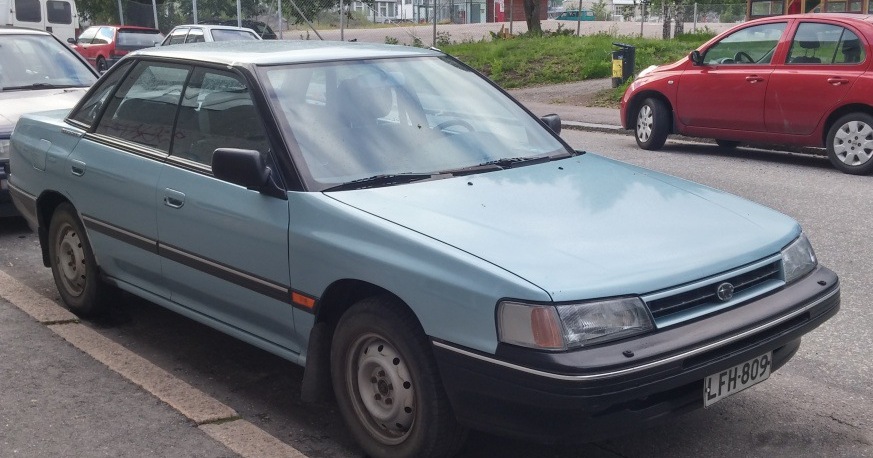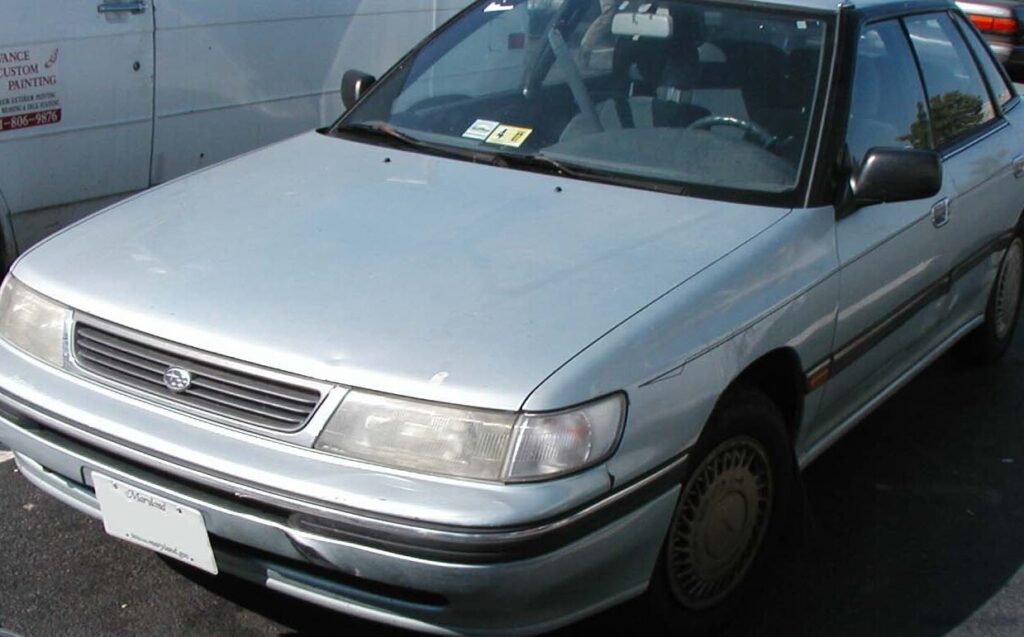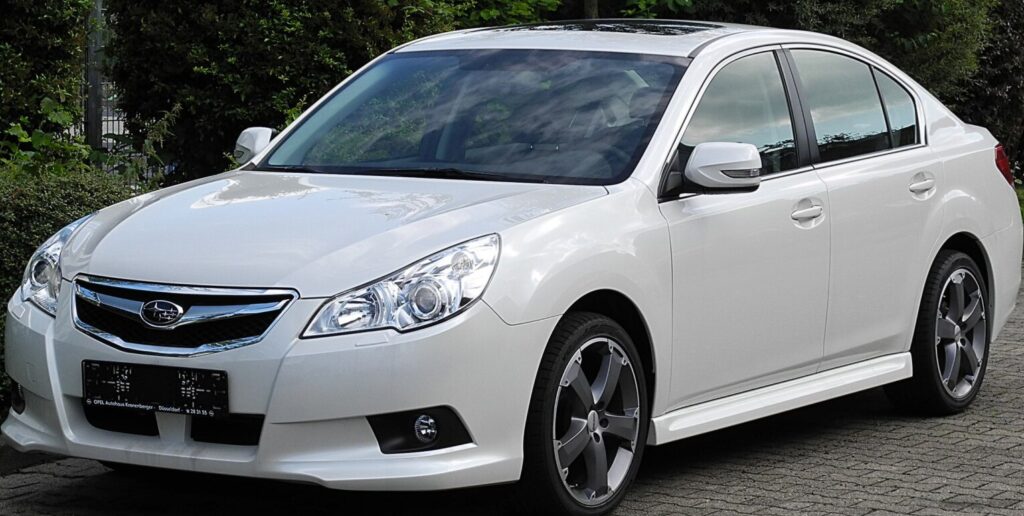
The Subaru Legacy 2.0i, produced between 2009 and 2012, represents the fifth generation of Subaru’s mid-size sedan, internally designated the GM/GP chassis code. This variant, equipped with a 2.0-liter naturally aspirated boxer engine producing 150 horsepower and paired with a six-speed manual transmission, occupied a key position in the Legacy lineup. It offered a balance between affordability, fuel efficiency, and Subaru’s signature symmetrical all-wheel drive, appealing to buyers seeking a practical, reliable, and capable family sedan, especially in areas where all-weather capability was highly valued. The Legacy V series was a significant update over its predecessor, boasting improved refinement, enhanced safety features, and a more contemporary interior.
Technical Specifications
| Brand | Subaru |
| Model | Legacy |
| Generation | Legacy V |
| Type (Engine) | 2.0i (150 Hp) AWD |
| Start of production | 2009 |
| End of production | 2012 |
| Powertrain Architecture | Internal Combustion engine |
| Body type | Sedan |
| Seats | 5 |
| Doors | 4 |
| Fuel consumption (urban) | 11.8 l/100 km (19.9 US mpg, 23.9 UK mpg, 8.5 km/l) |
| Fuel consumption (extra urban) | 6.7 l/100 km (35.1 US mpg, 42.2 UK mpg, 14.9 km/l) |
| Fuel consumption (combined) | 8.5 l/100 km (27.7 US mpg, 33.2 UK mpg, 11.8 km/l) |
| CO2 emissions | 198 g/km |
| Fuel Type | Petrol (Gasoline) |
| Acceleration 0 – 100 km/h | 9.5 sec |
| Acceleration 0 – 62 mph | 9.5 sec |
| Acceleration 0 – 60 mph | 9 sec |
| Maximum speed | 210 km/h (130.49 mph) |
| Emission standard | Euro 5 |
| Weight-to-power ratio | 10 kg/Hp, 100.3 Hp/tonne |
| Weight-to-torque ratio | 7.6 kg/Nm, 131.1 Nm/tonne |
| Power | 150 Hp @ 6000 rpm |
| Power per litre | 75.2 Hp/l |
| Torque | 196 Nm @ 3000 rpm (144.56 lb.-ft. @ 3000 rpm) |
| Engine layout | Front, Longitudinal |
| Engine Model/Code | EJ20 |
| Engine displacement | 1994 cm3 (121.68 cu. in.) |
| Number of cylinders | 4 |
| Engine configuration | Boxer |
| Number of valves per cylinder | 4 |
| Fuel injection system | Multi-port manifold injection |
| Engine aspiration | Naturally aspirated engine |
| Valvetrain | DOHC |
| Engine oil capacity | 4.2 l (4.44 US qt | 3.7 UK qt) |
| Coolant capacity | 6.5 l (6.87 US qt | 5.72 UK qt) |
| Kerb Weight | 1495 kg (3295.91 lbs.) |
| Max. weight | 2000 kg (4409.25 lbs.) |
| Max load | 505 kg (1113.33 lbs.) |
| Trunk (boot) space – minimum | 486 l (17.16 cu. ft.) |
| Fuel tank capacity | 65 l (17.17 US gal | 14.3 UK gal) |
| Max. roof load | 80 kg (176.37 lbs.) |
| Permitted trailer load with brakes (12%) | 1500 kg (3306.93 lbs.) |
| Permitted trailer load without brakes | 715 kg (1576.31 lbs.) |
| Length | 4735 mm (186.42 in.) |
| Width | 1780 mm (70.08 in.) |
| Width including mirrors | 1820 mm (71.65 in.) |
| Height | 1505 mm (59.25 in.) |
| Wheelbase | 2750 mm (108.27 in.) |
| Front track | 1565 mm (61.61 in.) |
| Rear (Back) track | 1570 mm (61.81 in.) |
| Ride height (ground clearance) | 150 mm (5.91 in.) |
| Minimum turning circle (turning diameter) | 11.4 m (37.4 ft.) |
| Drive wheel | All wheel drive (4×4) |
| Number of gears and type of gearbox | 6 gears, manual transmission |
| Front suspension | Independent type McPherson |
| Rear suspension | Double wishbone |
| Front brakes | Ventilated discs |
| Rear brakes | Disc |
| Assisting systems | ABS (Anti-lock braking system) |
| Steering type | Steering rack and pinion |
| Tires size | 205/60 R16H |
| Wheel rims size | 16 |
Powertrain & Engine Architecture
The 2.0i Legacy V’s powertrain centered around the EJ20 engine, a 1994cc naturally aspirated 2.0-liter boxer-four. Subaru’s horizontally opposed “boxer” design, with pistons moving horizontally, inherently balances the engine, minimizing vibrations and contributing to a smoother driving experience. The EJ20 featured a single overhead camshaft (SOHC) per cylinder bank, operating four valves per cylinder. Fuel delivery was managed by a multi-point fuel injection system. This engine was known for its reliability and relatively straightforward maintenance. The six-speed manual transmission provided precise shifts, allowing drivers to effectively utilize the engine’s powerband. The transmission’s gear ratios were optimized for a balance between acceleration and fuel economy, with a relatively tall sixth gear for efficient highway cruising.
Driving Characteristics
The 150-horsepower 2.0i Legacy V delivered adequate performance for everyday driving. Acceleration from 0-60 mph took approximately 9 seconds, competitive within its class but slower than the more potent 2.5i variants. The standard all-wheel-drive system provided exceptional traction in diverse weather conditions, enhancing stability and driver confidence. The manual transmission offered a more engaging driving experience compared to the optional automatic. While not a performance-oriented sedan, the Legacy V 2.0i handled predictably, with responsive steering and a comfortable ride. The boxer engine’s low center of gravity minimized body roll during cornering.
Equipment & Trim Levels
The 2.0i trim generally included standard features such as air conditioning, power windows and locks, a CD player with an auxiliary input, and basic cloth upholstery. Safety was a priority, with standard ABS brakes, front and side airbags, and a robust chassis structure. Optional extras included a sunroof, an upgraded audio system, and alloy wheels. Higher trim levels, like the Limited, added features such as leather upholstery, heated seats, and a premium sound system. The interior design was functional and user-friendly, prioritizing practicality over luxury.
Chassis & Braking
The Legacy V employed a McPherson strut front suspension and a double-wishbone rear suspension, delivering a comfortable and controlled ride. The all-wheel-drive system utilized a viscous coupling center differential, automatically distributing torque between the front and rear axles as needed. Braking was handled by ventilated discs at the front and solid discs at the rear. The ABS system prevented wheel lockup during hard braking, improving safety and control. The suspension was tuned for a balance of comfort and handling, making it suitable for both daily commutes and longer journeys.
Market Reception & Comparison
The Legacy V 2.0i was generally well-received by automotive critics as a practical and dependable family sedan. It was praised for its standard all-wheel drive, comfortable ride, and spacious interior. However, some reviewers noted that the 2.0-liter engine lacked the power of the available 2.5-liter option. Compared to the 2.5i models, the 2.0i offered improved fuel economy but at the cost of performance. It also represented a more affordable entry point into the Legacy lineup. Against competitors like the Toyota Camry and Honda Accord, the Legacy V 2.0i distinguished itself with its standard all-wheel drive and unique boxer engine.
Legacy
The EJ20 engine, in its various iterations, has earned a reputation for durability and longevity. While preventative maintenance, such as regular oil changes and timing belt replacements, is essential, these engines are known to achieve high mileage. The Legacy V 2.0i remains a popular choice in the used car market, particularly in regions with challenging winter weather. Its combination of affordability, reliability, and all-wheel-drive capability makes it an attractive option for buyers seeking a practical and dependable sedan. Parts availability is generally good, and the relatively simple mechanical design makes it accessible for do-it-yourself repairs.