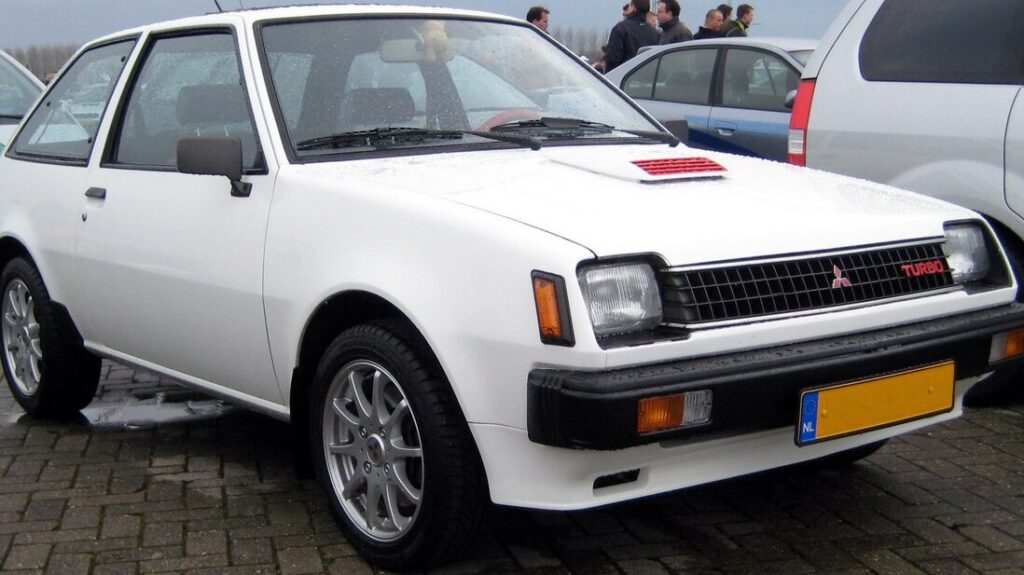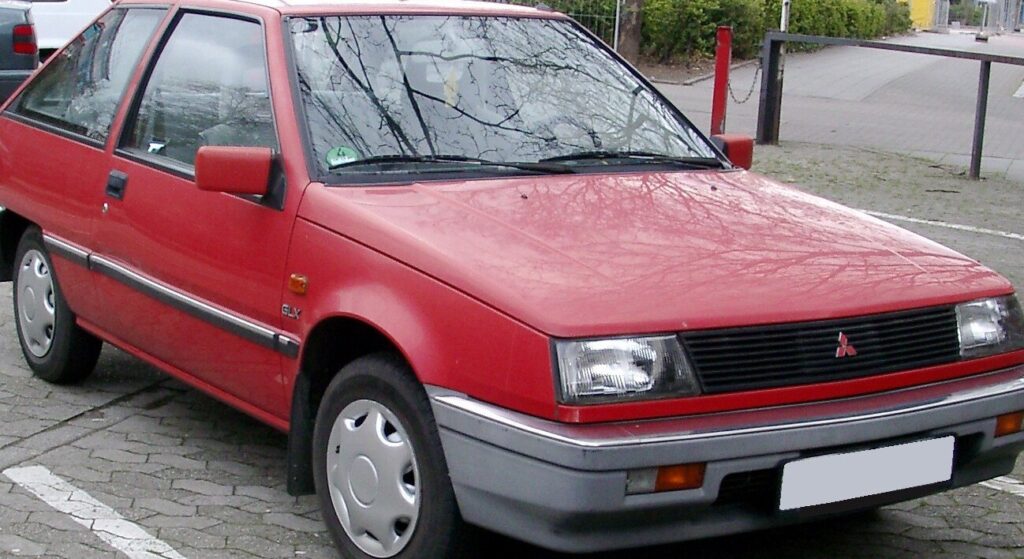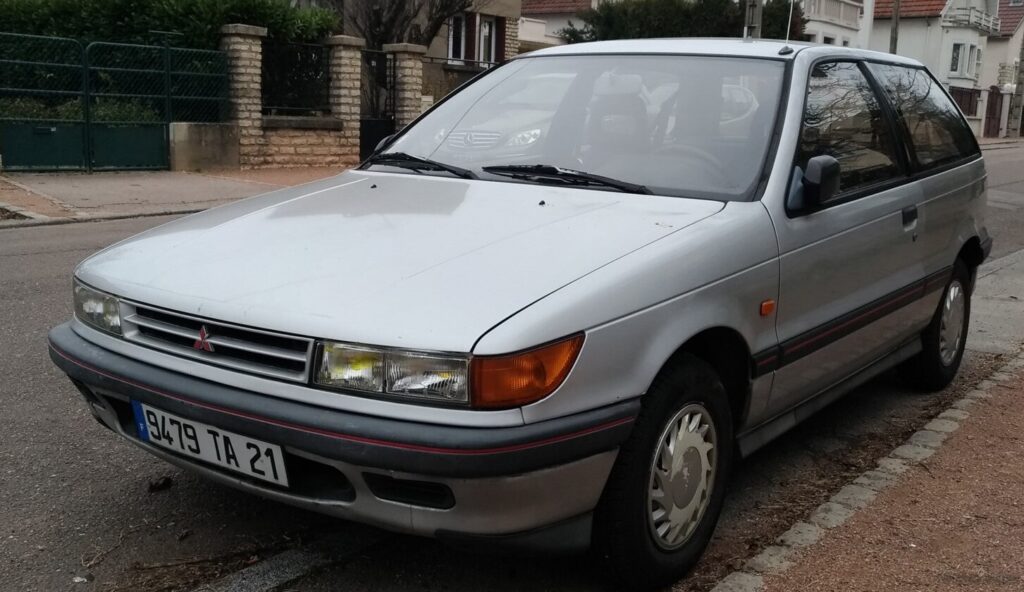
The Mitsubishi Colt III (C50) 1.3 12V, specifically the C51A chassis code, was a subcompact hatchback produced between 1990 and 1992. Positioned as an entry-level offering within the Colt III range, it represented a practical and economical choice for buyers in Europe and other international markets. This variant was designed to provide affordable transportation, prioritizing fuel efficiency and ease of use over outright performance. It played a significant role in Mitsubishi’s strategy to offer a diverse range of vehicles catering to different consumer needs.
| Brand | Mitsubishi |
| Model | Colt |
| Generation | Colt III (C50) |
| Type (Engine) | 1.3 12V (C51A) (75 Hp) |
| Start of production | 1990 |
| End of production | 1992 |
| Powertrain Architecture | Internal Combustion engine |
| Body type | Hatchback |
| Seats | 5 |
| Doors | 3 |
| Fuel Type | Petrol (Gasoline) |
| Acceleration 0 – 100 km/h | 12.3 sec |
| Acceleration 0 – 62 mph | 12.3 sec |
| Acceleration 0 – 60 mph | 11.7 sec |
| Maximum speed | 163 km/h (101.28 mph) |
| Weight-to-power ratio | 11.3 kg/Hp, 88.2 Hp/tonne |
| Weight-to-torque ratio | 8.3 kg/Nm, 120 Nm/tonne |
| Power | 75 Hp @ 6000 rpm |
| Power per litre | 57.7 Hp/l |
| Torque | 102 Nm @ 4000 rpm (75.23 lb.-ft. @ 4000 rpm) |
| Engine layout | Front, Transverse |
| Engine Model/Code | 4G13 |
| Engine displacement | 1299 cm3 (79.27 cu. in.) |
| Number of cylinders | 4 |
| Engine configuration | Inline |
| Cylinder Bore | 71 mm (2.8 in.) |
| Piston Stroke | 82 mm (3.23 in.) |
| Compression ratio | 9.5:1 |
| Number of valves per cylinder | 3 |
| Fuel injection system | Single-point injection |
| Engine aspiration | Naturally aspirated engine |
| Valvetrain | OHC |
| Engine oil capacity | 3.3 l (3.49 US qt | 2.9 UK qt) |
| Kerb Weight | 850 kg (1873.93 lbs.) |
| Max. weight | 1465 kg (3229.77 lbs.) |
| Max load | 615 kg (1355.84 lbs.) |
| Trunk (boot) space – minimum | 222 l (7.84 cu. ft.) |
| Trunk (boot) space – maximum | 1050 l (37.08 cu. ft.) |
| Fuel tank capacity | 50 l (13.21 US gal | 11 UK gal) |
| Length | 3950 mm (155.51 in.) |
| Width | 1670 mm (65.75 in.) |
| Height | 1380 mm (54.33 in.) |
| Wheelbase | 2385 mm (93.9 in.) |
| Front track | 1430 mm (56.3 in.) |
| Rear (Back) track | 1430 mm (56.3 in.) |
| Drivetrain Architecture | The Internal combustion engine (ICE) drives the front wheels of the vehicle. |
| Drive wheel | Front wheel drive |
| Number of gears and type of gearbox | 5 gears, manual transmission |
| Front suspension | Coil spring |
| Rear suspension | Coil spring |
| Front brakes | Disc |
| Rear brakes | Drum |
| Assisting systems | ABS (Anti-lock braking system) |
| Steering type | Steering rack and pinion |
| Tires size | 175/70 R13 |
Powertrain & Engine Architecture
The heart of the C51A Colt was the 4G13 engine, a 1.3-liter inline-four cylinder gasoline engine. This engine featured a single overhead camshaft (OHC) design and utilized a single-point fuel injection system. The 4G13 was a relatively simple and robust engine, designed for reliability and fuel economy rather than high performance. Its 12-valve configuration (three valves per cylinder) was typical for engines of this era and displacement. The engine produced 75 horsepower at 6000 rpm and 102 Nm (75.23 lb-ft) of torque at 4000 rpm. The engine’s relatively low compression ratio of 9.5:1 allowed it to run on lower octane fuel, further contributing to its affordability. The engine was transversely mounted in the front of the vehicle, driving the front wheels.
Driving Characteristics
The 1.3-liter engine paired with a five-speed manual transmission provided adequate, though not exhilarating, performance. Acceleration from 0 to 60 mph took approximately 11.7 seconds, and the top speed was around 101 mph. The car felt best suited for city driving and shorter trips, where its nimble handling and reasonable fuel economy were most appreciated. Compared to higher-spec Colt models equipped with larger engines (like the 1.6 or 1.8 liter variants), the 1.3 felt noticeably slower, particularly when fully loaded or climbing hills. The five-speed gearbox helped to keep the engine in its optimal power band, but the limited torque meant frequent downshifts were often necessary. The gear ratios were fairly standard for the time, prioritizing fuel efficiency over rapid acceleration.
Equipment & Trim Levels
The C51A 1.3 12V Colt was typically equipped with basic, but functional, features. Standard equipment generally included cloth upholstery, a basic instrument cluster, and manual windows and door locks. Power steering was not always standard, and air conditioning was often an optional extra. The interior design was simple and utilitarian, focusing on durability and ease of cleaning. Optional extras could include a radio/cassette player, upgraded seat fabrics, and sometimes even a sunroof. The trim level was generally considered the base model, aimed at budget-conscious buyers.
Chassis & Braking
The Colt III utilized a relatively simple chassis design. Front suspension consisted of coil springs and independent struts, while the rear suspension employed a coil spring and beam axle setup. This configuration provided a comfortable ride, although it wasn’t particularly sporty. Braking was handled by disc brakes on the front wheels and drum brakes on the rear. An Anti-lock Braking System (ABS) was available as an option, enhancing safety. The car’s relatively light weight (around 850 kg or 1874 lbs) helped to offset the modest engine power, contributing to reasonable handling characteristics. Stabilizer bars were typically smaller in diameter on the base model compared to higher-spec versions.
Market Reception & Comparison
The Mitsubishi Colt III 1.3 12V was generally well-received as an affordable and reliable subcompact car. Critics praised its fuel efficiency and ease of driving, but noted its lack of performance compared to competitors. Compared to other 1.3-liter engines of the time, the 4G13 offered a good balance of power and economy. However, rivals like the Peugeot 205 and Renault Clio often offered more refined interiors and slightly better handling. In terms of reliability, the Colt III was considered a solid performer, with relatively few major mechanical issues reported. Fuel economy was a strong point, typically achieving around 40-45 mpg in mixed driving conditions.
Legacy
The Mitsubishi Colt III 1.3 12V, while not a particularly groundbreaking vehicle, remains a fondly remembered car for many owners. The 4G13 engine is known for its durability and relatively simple maintenance requirements. Today, these cars are becoming increasingly rare, and well-maintained examples are sought after by enthusiasts and collectors. The powertrain, while dated by modern standards, is still capable of providing reliable transportation. Parts availability can be a challenge, but many components are still available through specialist suppliers. The C51A represents a snapshot of affordable motoring in the early 1990s, offering a practical and economical solution for everyday transportation.