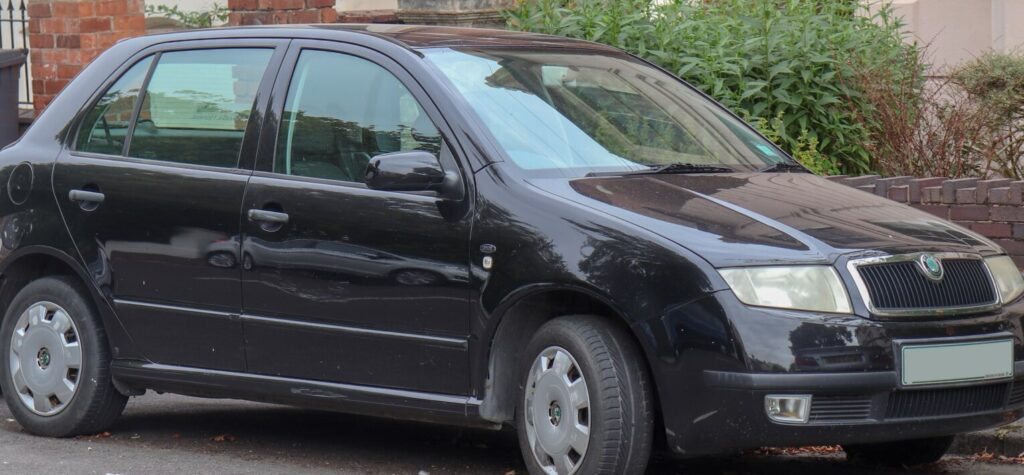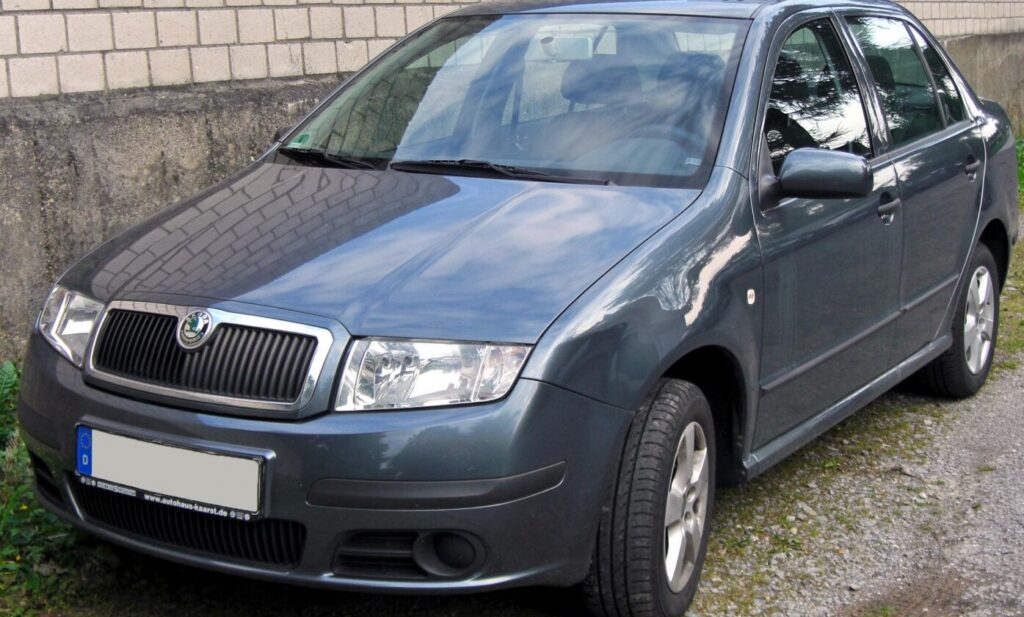
The Skoda Fabia Sedan I (6Y), particularly the facelifted version introduced in 2004, represented Skoda’s entry into the competitive small sedan market. Production of the 1.4 TDI variant, producing 80 horsepower, spanned from September 2005 to December 2007. This model occupied the lower-mid range of the Fabia Sedan lineup, positioned as an economical and practical choice for buyers prioritizing fuel efficiency over outright performance. It was built on the Volkswagen Group’s PQ24 platform, also known as the A3 platform, shared with models like the Volkswagen Polo and SEAT Ibiza. The Fabia Sedan aimed to offer a more affordable and spacious alternative to hatchback models, appealing to families and those needing a practical, budget-friendly vehicle.
Technical Specifications
| Brand | Skoda |
| Model | Fabia |
| Generation | Fabia Sedan I (6Y, facelift 2004) |
| Type (Engine) | 1.4 TDI (80 Hp) |
| Start of production | September, 2005 |
| End of production | December, 2007 |
| Powertrain Architecture | Internal Combustion engine |
| Body type | Sedan |
| Seats | 5 |
| Doors | 4 |
| Fuel consumption (urban) | 5.7 l/100 km (41.3 US mpg, 49.6 UK mpg, 17.5 km/l) |
| Fuel consumption (extra urban) | 4.1 l/100 km (57.4 US mpg, 68.9 UK mpg, 24.4 km/l) |
| Fuel consumption (combined) | 4.6 l/100 km (51.1 US mpg, 61.4 UK mpg, 21.7 km/l) |
| CO2 emissions | 120 g/km |
| Fuel Type | Diesel |
| Acceleration 0 – 100 km/h | 14 sec |
| Acceleration 0 – 62 mph | 14 sec |
| Acceleration 0 – 60 mph | 13.3 sec |
| Maximum speed | 172 km/h (106.88 mph) |
| Emission standard | Euro 4 |
| Weight-to-power ratio | 14.5 kg/Hp |
| Weight-to-torque ratio | 5.9 kg/Nm |
| Power | 80 Hp @ 4000 rpm |
| Torque | 195 Nm @ 2200 rpm (143.82 lb.-ft. @ 2200 rpm) |
| Engine layout | Front, Transverse |
| Engine Model/Code | BNV |
| Engine displacement | 1422 cm3 (86.78 cu. in.) |
| Number of cylinders | 3 |
| Engine configuration | Inline |
| Number of valves per cylinder | 2 |
| Fuel injection system | Pump-nozzle (Unit Injector) |
| Engine aspiration | Turbocharger, Intercooler |
| Engine oil capacity | 3.8 l (4.02 US qt | 3.34 UK qt) |
| Coolant capacity | 6.2 l (6.55 US qt | 5.46 UK qt) |
| Kerb Weight | 1160 kg (2557.36 lbs.) |
| Max. weight | 1675 kg (3692.74 lbs.) |
| Max load | 515 kg (1135.38 lbs.) |
| Fuel tank capacity | 45 l (11.89 US gal | 9.9 UK gal) |
| Permitted trailer load (8%) | 1200 kg (2645.55 lbs.) |
| Permitted trailer load (12%) | 1000 kg (2204.62 lbs.) |
| Permitted trailer load (unbraked) | 450 kg (992.08 lbs.) |
| Length | 4232 mm (166.61 in.) |
| Width | 1646 mm (64.8 in.) |
| Width (including mirrors) | 1893 mm (74.53 in.) |
| Height | 1449 mm (57.05 in.) |
| Wheelbase | 2462 mm (96.93 in.) |
| Front track | 1435 mm (56.5 in.) |
| Rear track | 1424 mm (56.06 in.) |
| Drivetrain | Front wheel drive |
| Number of gears | 5 |
| Gearbox type | Manual transmission |
Powertrain & Engine Architecture
The heart of the Fabia 1.4 TDI was the BNV engine code, a 1.4-liter inline three-cylinder diesel engine. This engine utilized a pump-nozzle (unit injector) fuel injection system, a technology known for its precision and efficiency in diesel engines. A turbocharger with an intercooler was employed to boost power output and improve torque delivery. The engine featured two valves per cylinder and a relatively high compression ratio typical of diesel engines. The five-speed manual transmission was the standard offering, designed to maximize fuel economy and provide adequate acceleration. The engine’s transverse mounting within the front-wheel-drive configuration contributed to a compact engine bay layout.
Driving Characteristics
The 80 horsepower and 195 Nm (144 lb-ft) of torque produced by the 1.4 TDI engine translated to modest but usable performance. Acceleration from 0-100 km/h (0-62 mph) took approximately 14 seconds, making it slower than higher-powered Fabia variants like the 1.6 MPI petrol engine. However, the engine’s torque characteristics provided decent in-gear acceleration, making it suitable for everyday driving and highway cruising. The five-speed manual transmission offered a reasonable spread of gear ratios, but the engine felt strained at higher speeds. Compared to the more powerful petrol engines, the 1.4 TDI prioritized fuel economy and low-end torque over outright speed.
Equipment & Trim Levels
The 1.4 TDI variant of the Fabia Sedan typically came with a basic level of equipment. Standard features generally included power steering, central locking, electric front windows, and a basic audio system. Interior upholstery was typically cloth, and the dashboard featured a functional but somewhat spartan design. Optional extras included air conditioning, alloy wheels, and an upgraded audio system. The trim level was generally considered entry-level, aimed at buyers seeking a practical and affordable vehicle. Higher trim levels, available with more powerful engines, offered more luxurious features and enhanced aesthetics.
Chassis & Braking
The Fabia Sedan’s chassis featured a MacPherson strut front suspension and a twist-beam rear suspension. The suspension setup was tuned for comfort and ride quality, rather than sporty handling. Front disc brakes and rear drum brakes were standard, providing adequate stopping power for the vehicle’s weight and performance. A transverse stabilizer bar was included at the front to reduce body roll during cornering. The steering system utilized a hydraulic power steering rack and pinion, offering a reasonable level of assistance and feedback.
Market Reception & Comparison
The Skoda Fabia 1.4 TDI was generally well-received as an economical and practical small sedan. Critics praised its fuel efficiency and low running costs, but noted its modest performance. Compared to other trims in the Fabia lineup, the 1.4 TDI offered the best fuel economy but the slowest acceleration. The 1.6 MPI petrol engine provided more power but at the expense of fuel efficiency. The 1.4 TDI appealed to buyers who prioritized economy and practicality over performance, making it a popular choice for fleet operators and budget-conscious consumers.
Legacy
The 1.4 TDI engine, particularly the BNV code, proved to be a relatively reliable powertrain when properly maintained. However, like all diesel engines, it was susceptible to issues related to the fuel injection system and turbocharger. In the used car market, the Fabia 1.4 TDI remains an affordable and economical option. Its simplicity and relatively low maintenance costs make it an attractive choice for first-time car buyers or those seeking a dependable and fuel-efficient vehicle. While not known for its performance, the Fabia 1.4 TDI Sedan represents a practical and sensible choice in the small car segment.