
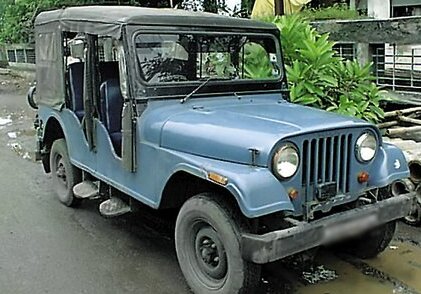
The Mahindra Commander 750 ST, powered by a 62 horsepower diesel engine and equipped with an automatic transmission, represents a significant iteration of Mahindra’s long-running Commander series. Produced from 1990 to 2013, this variant occupied a unique position within the lineup, offering a blend of affordability, rugged capability, and relative convenience with its automatic gearbox. The Commander, in general, was a mainstay of the Indian automotive market, designed to meet the demands of rural and semi-urban customers needing a robust, spacious vehicle capable of handling challenging terrain and carrying substantial loads. The 750 ST specifically aimed to provide a more accessible entry point into the Commander range, particularly for those prioritizing ease of use over outright performance.
Technical Specifications
| Brand | Mahindra |
| Model | Commander |
| Generation | Commander |
| Type (Engine) | 750 ST (62 Hp) |
| Start of production | 1990 year |
| End of production | 2013 year |
| Powertrain Architecture | Internal Combustion engine |
| Body type | Off-road vehicle |
| Seats | 8 |
| Doors | 5 |
| Fuel Type | Diesel |
| Maximum speed | 95 km/h (59.03 mph) |
| Weight-to-power ratio | 22.1 kg/Hp, 45.3 Hp/tonne |
| Weight-to-torque ratio | 11.3 kg/Nm, 88.3 Nm/tonne |
| Power | 62 Hp @ 4500 rpm |
| Power per litre | 29.4 Hp/l |
| Torque | 121 Nm @ 2000 rpm (89.25 lb.-ft. @ 2000 rpm) |
| Engine layout | Front, Longitudinal |
| Engine displacement | 2112 cm3 (128.88 cu. in.) |
| Number of cylinders | 4 |
| Engine configuration | Inline |
| Cylinder Bore | 90 mm (3.54 in.) |
| Piston Stroke | 83 mm (3.27 in.) |
| Compression ratio | 22.4:1 |
| Number of valves per cylinder | 2 |
| Fuel injection system | Precombustion chamber injection |
| Engine aspiration | Naturally aspirated engine |
| Kerb Weight | 1370 kg (3020.33 lbs.) |
| Max. weight | 2080 kg (4585.62 lbs.) |
| Max load | 710 kg (1565.28 lbs.) |
| Fuel tank capacity | 45 l (11.89 US gal | 9.9 UK gal) |
| Length | 4305 mm (169.49 in.) |
| Width | 1680 mm (66.14 in.) |
| Height | 1740 mm (68.5 in.) |
| Wheelbase | 2680 mm (105.51 in.) |
| Front track | 1346 mm (52.99 in.) |
| Rear (Back) track | 1346 mm (52.99 in.) |
| Drive wheel | All wheel drive (4×4) |
| Number of gears and type of gearbox | 4 gears, automatic transmission |
| Front suspension | Leaf spring |
| Rear suspension | Leaf spring |
| Front brakes | Drum |
| Rear brakes | Drum |
| Assisting systems | ABS (Anti-lock braking system) |
Powertrain & Engine Architecture
The heart of the Commander 750 ST is its 2.1-liter inline-four diesel engine. This engine, often identified by internal codes depending on the specific year of manufacture, utilizes a precombustion chamber injection system. This system, common in older diesel engines, involves injecting fuel into a small pre-chamber within the cylinder head, where it partially combusts before igniting the main charge. This design aids in cold starting and reduces engine noise compared to direct injection systems of the time. The engine produces 62 horsepower at 4500 rpm and 121 Nm (89.25 lb-ft) of torque at 2000 rpm. The four-speed automatic transmission was a relatively uncommon feature in this segment and market, offering a degree of convenience not typically found in comparable utility vehicles. The transmission is designed for durability and simplicity, prioritizing functionality over rapid shifting.
Driving Characteristics
The 750 ST’s driving experience is defined by its utilitarian nature. The 62 horsepower engine, coupled with the automatic transmission, delivers modest acceleration. The automatic transmission, while convenient, doesn’t offer the responsiveness of a manual gearbox, and the gear ratios are optimized for low-speed torque and hauling capacity rather than spirited driving. The vehicle’s weight (1370 kg / 3020 lbs) further contributes to its leisurely pace. However, the engine’s torque output provides sufficient power for navigating rough terrain and carrying a full load of passengers and cargo. Compared to the manual transmission versions or those equipped with more powerful engines, the 750 ST prioritizes ease of use and accessibility over performance.
Equipment & Trim Levels
The Commander 750 ST was generally equipped with basic, functional features. Standard equipment typically included vinyl or cloth upholstery, a simple dashboard layout, and basic instrumentation. Power steering was often an optional extra, as were features like a radio and upgraded seating. The interior was designed for durability and ease of cleaning, reflecting the vehicle’s intended use. Trim levels were relatively limited, with the 750 ST representing a mid-range offering. Higher-end Commanders featured more luxurious interiors and additional comfort features.
Chassis & Braking
The Commander 750 ST utilizes a body-on-frame construction, providing a robust and durable chassis. Suspension consists of leaf springs at both the front and rear, designed to handle heavy loads and absorb impacts from rough terrain. Braking is handled by drum brakes on all four wheels, which were standard for vehicles in this class during the production period. An Anti-lock Braking System (ABS) was included as a safety feature. The vehicle’s all-wheel-drive system provides enhanced traction in off-road conditions, making it suitable for navigating challenging environments.
Market Reception & Comparison
The Mahindra Commander 750 ST was generally well-received in its target market. Critics praised its ruggedness, spaciousness, and affordability. The automatic transmission was seen as a significant selling point for customers who preferred the convenience of not having to operate a clutch. However, the engine’s limited power and the automatic transmission’s lack of responsiveness were noted as drawbacks. Compared to other trims in the Commander lineup, the 750 ST offered a more accessible price point, making it attractive to budget-conscious buyers. Fuel economy was reasonable for a vehicle of its size and type, but not exceptional.
Legacy
The Mahindra Commander, and specifically the 750 ST variant, holds a significant place in the history of the Indian automotive industry. It established Mahindra as a leading manufacturer of rugged, reliable utility vehicles. While the Commander has been discontinued, its legacy lives on in Mahindra’s current lineup of SUVs and off-road vehicles. In the used car market, the 750 ST remains a popular choice for those seeking a durable, affordable, and capable vehicle. The simplicity of its mechanicals makes it relatively easy to maintain and repair, and parts availability remains reasonably good. However, potential buyers should be aware of the age-related issues common to older vehicles, such as corrosion and wear and tear on suspension components.
