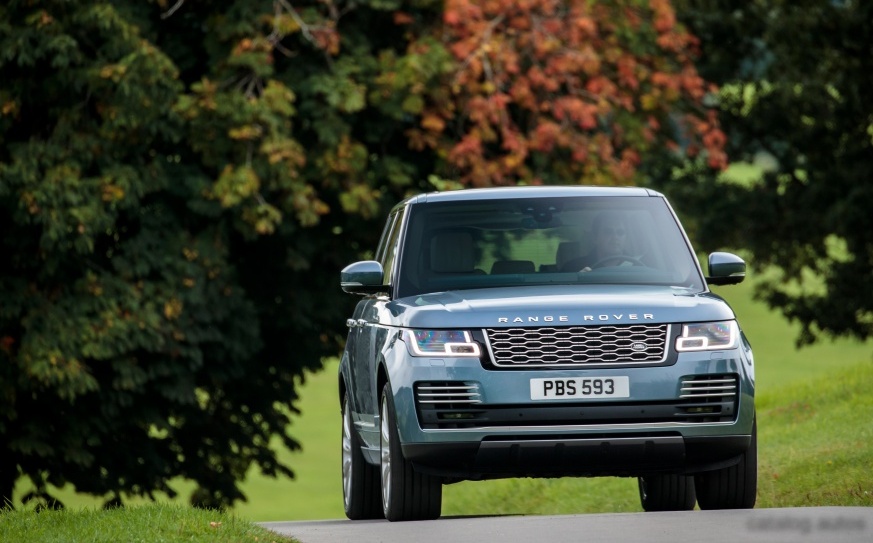
The Land Rover Range Rover IV (facelift, introduced in 2017) 3.0 P360 represents a compelling blend of luxury, performance, and efficiency within the fourth generation of Land Rover’s flagship SUV. Produced from 2019 through October 2021, this variant utilizes a 3.0-liter inline-six cylinder engine incorporating mild hybrid technology, paired exclusively with an eight-speed automatic transmission and all-wheel drive. Positioned as a mid-range offering in the Range Rover lineup, the P360 aimed to provide a balance between the entry-level trims and the higher-performance, more expensive models like the supercharged V6 or the diesel variants. It was a key model for buyers seeking a refined driving experience with respectable power and improved fuel economy compared to the larger displacement engines.
Technical Specifications
| Brand | Land Rover |
| Model | Range Rover |
| Generation | Range Rover IV (facelift 2017) |
| Type (Engine) | 3.0 P360 (360 Hp) Mild Hybrid AWD Automatic |
| Start of production | 2019 |
| End of production | October, 2021 |
| Powertrain Architecture | MHEV (Mild Hybrid Electric Vehicle) |
| Body type | SUV |
| Seats | 5 |
| Doors | 5 |
| Fuel consumption (urban) | 12.1 l/100 km (19.4 US mpg, 23.3 UK mpg, 8.3 km/l) |
| Fuel consumption (extra urban) | 7.6 l/100 km (30.9 US mpg, 37.2 UK mpg, 13.2 km/l) |
| Fuel consumption (combined) | 9.2 l/100 km (25.6 US mpg, 30.7 UK mpg, 10.9 km/l) |
| CO2 emissions | 215 g/km |
| Fuel Type | Petrol (Gasoline) |
| Acceleration 0 – 100 km/h | 6.9 sec |
| Acceleration 0 – 62 mph | 6.9 sec |
| Acceleration 0 – 60 mph | 6.6 sec |
| Maximum speed | 209 km/h (129.87 mph) |
| Emission standard | Euro 6d-TEMP-EVAP-ISC |
| Weight-to-power ratio | 6.3 kg/Hp |
| Weight-to-torque ratio | 4.6 kg/Nm |
| Power | 360 Hp @ 5500-6500 rpm |
| Torque | 495 Nm @ 2000-5000 rpm (365.09 lb.-ft. @ 2000-5000 rpm) |
| Engine layout | Front, Longitudinal |
| Engine Model/Code | PT306 |
| Engine displacement | 2996 cm3 (182.83 cu. in.) |
| Number of cylinders | 6 |
| Engine configuration | Inline |
| Cylinder Bore | 83 mm (3.27 in.) |
| Piston Stroke | 92.29 mm (3.63 in.) |
| Compression ratio | 10.5:1 |
| Number of valves per cylinder | 4 |
| Fuel injection system | Direct injection |
| Engine oil capacity | 8 l (8.45 US qt | 7.04 UK qt) |
| Coolant capacity | 8.05 l (8.51 US qt | 7.08 UK qt) |
| Kerb Weight | 2267 kg (4997.88 lbs.) |
| Max. weight | 3140 kg (6922.52 lbs.) |
| Max load | 873 kg (1924.64 lbs.) |
| Trunk (boot) space – minimum | 900 l (31.78 cu. ft.) |
| Trunk (boot) space – maximum | 2190 l (77.34 cu. ft.) |
| Fuel tank capacity | 104 l (27.47 US gal | 22.88 UK gal) |
| Max. roof load | 100 kg (220.46 lbs.) |
| Permitted trailer load (braked) | 3500 kg (7716.18 lbs.) |
| Permitted trailer load (unbraked) | 750 kg (1653.47 lbs.) |
| Permitted towbar download | 150 kg (330.69 lbs.) |
| Length | 5000 mm (196.85 in.) |
| Width (with mirrors folded) | 2073 mm (81.61 in.) |
| Width (including mirrors) | 2220 mm (87.4 in.) |
| Height | 1869 mm (73.58 in.) |
| Wheelbase | 2922 mm (115.04 in.) |
| Front track | 1693 mm (66.65 in.) |
| Rear track | 1685 mm (66.34 in.) |
| Ride height (ground clearance) | 220-297 mm (8.66 – 11.69 in.) |
| Minimum turning circle | 12.7 m (41.67 ft.) |
| Front brakes | Ventilated discs, 380 mm |
| Rear brakes | Ventilated discs, 365 mm |
| Number of gears | 8 |
| Gearbox type | Automatic transmission |
Powertrain & Engine Architecture
The heart of the Range Rover P360 is Land Rover’s Ingenium engine family, specifically the PT306 3.0-liter inline-six cylinder engine. This engine utilizes a combination of direct injection and a twin-scroll turbocharger to deliver a substantial 360 horsepower and 495 Nm (365 lb-ft) of torque. The “mild hybrid” aspect comes from a 48-volt electrical system that supports features like regenerative braking and a belt-integrated starter generator (BiSG). The BiSG allows for smoother start-stop operation, and provides a small boost to engine power during acceleration. The engine’s architecture is designed for efficiency and refinement, with features like split second fuel injection and variable valve timing. The eight-speed automatic transmission, sourced from ZF, is a crucial component, offering smooth and responsive gear changes. It’s programmed to prioritize comfort and efficiency, but also provides manual shift capability via paddle shifters.
Driving Characteristics
The P360 offers a comfortable and capable driving experience. While not as overtly sporty as some of its competitors, the engine provides ample power for everyday driving and confident overtaking. The eight-speed automatic transmission is well-matched to the engine’s torque curve, delivering smooth acceleration. Compared to the supercharged V6 models, the P360 feels slightly less urgent off the line, but the mild hybrid system helps to mitigate some of that difference. The all-wheel-drive system provides excellent traction in various conditions, making it a capable off-roader, as expected from a Range Rover. The gear ratios are tuned for a balance of performance and fuel economy, with higher gears prioritizing efficiency during highway cruising.
Equipment & Trim Levels
The Range Rover P360 typically came well-equipped as standard. Interior features included leather upholstery, heated front seats, a touchscreen infotainment system with navigation, and a premium sound system. Common options included adaptive cruise control, a panoramic sunroof, upgraded leather trim, and rear seat entertainment. Trim levels varied slightly by market, but generally offered increasing levels of luxury and technology. The P360 often served as a stepping stone to the higher-spec models, allowing buyers to add many of the desirable options without the significant price jump of the top-tier trims.
Chassis & Braking
The Range Rover IV utilizes a sophisticated chassis design featuring a lightweight aluminum monocoque construction. The P360 variant typically came equipped with air suspension, providing a comfortable ride and adjustable ride height for off-road capability. The braking system consists of ventilated discs on all four wheels, providing ample stopping power. ABS (Anti-lock Braking System) is standard, along with electronic stability control and traction control systems. The suspension is tuned to balance on-road comfort with off-road capability, offering a composed and stable ride even on uneven surfaces.
Market Reception & Comparison
The Range Rover P360 was generally well-received by automotive critics. It was praised for its comfortable ride, refined interior, and capable all-wheel-drive system. The mild hybrid technology was seen as a positive step towards improved fuel efficiency. Compared to the supercharged V6 models, the P360 offered a more economical option without sacrificing too much performance. However, some critics noted that the engine lacked the outright punch of the supercharged variants. Fuel economy figures were competitive for a vehicle of its size and weight, but still relatively high compared to smaller SUVs.
Legacy
The Land Rover Range Rover IV P360 represents a significant step in the evolution of the Range Rover lineage. The Ingenium engine proved to be a reliable and efficient powerplant, and the mild hybrid technology paved the way for more advanced hybrid and electric powertrains in later models. On the used car market, the P360 offers a compelling value proposition, providing a luxurious and capable SUV at a more accessible price point than newer models. Regular maintenance, particularly regarding the air suspension and electrical systems, is crucial for long-term reliability. Overall, the P360 remains a desirable and well-regarded vehicle for buyers seeking a blend of luxury, performance, and capability.