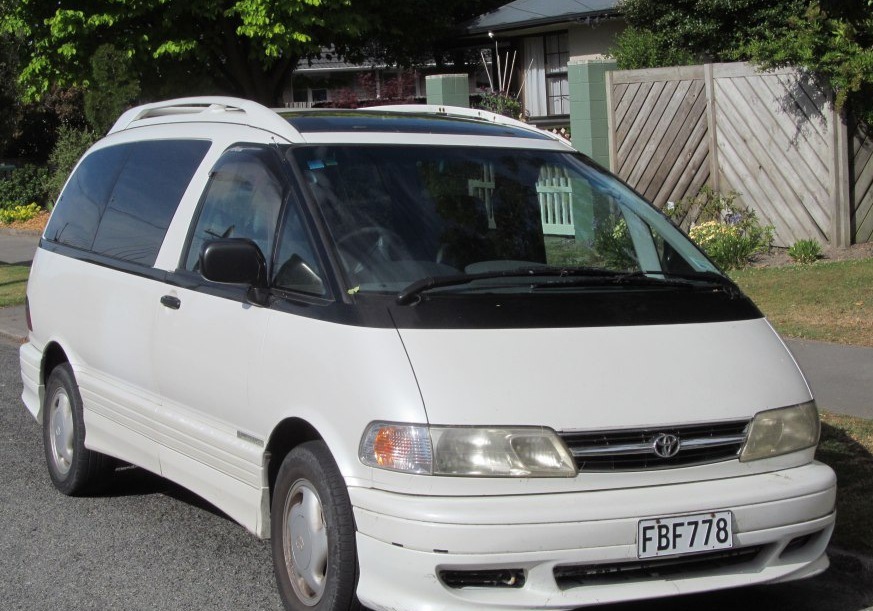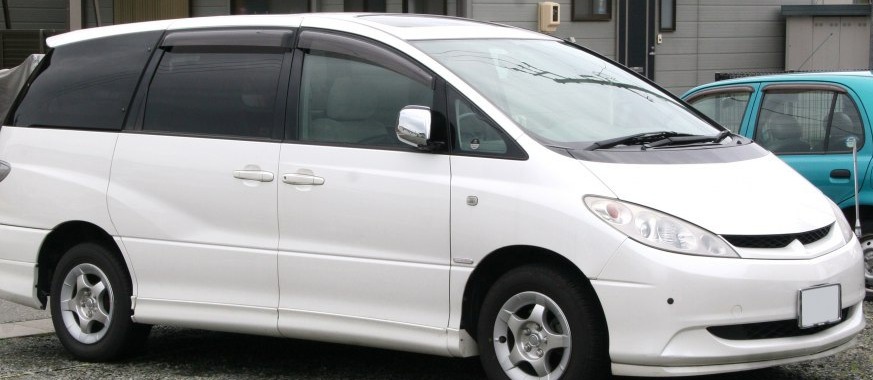
The Toyota Estima II, specifically the 2.4-liter hybrid variant with e-Four all-wheel drive and a continuously variable transmission (e-CVT), was produced from 2001 to 2003. This model represented a significant step forward in hybrid technology for Toyota, building upon the success of the first-generation Estima Hybrid. Positioned as a premium, family-oriented minivan, the Estima II 2.4 Hybrid aimed to deliver fuel efficiency and spaciousness without compromising on performance. It was primarily sold in the Japanese domestic market (JDM), where minivans are exceptionally popular, and limited exports to select markets occurred. This particular configuration, combining a gasoline engine with two electric motors and an advanced e-CVT, offered a unique driving experience focused on smooth acceleration and reduced emissions.
Technical Specifications
| Brand | Toyota |
| Model | Estima |
| Generation | Estima II |
| Type (Engine) | 2.4 (131+17+24 Hp) Hybrid e-Four e-CVT |
| Start of production | May, 2001 |
| End of production | 2003 |
| Powertrain Architecture | FHEV (Full Hybrid Electric Vehicle) |
| Body type | Minivan |
| Seats | 8 |
| Doors | 4 |
| Fuel consumption (combined) | 5.6 l/100 km (42 US mpg, 50.4 UK mpg, 17.9 km/l) |
| Fuel Type | Petrol (Gasoline) |
| Emission standard | U-LEV |
| Weight-to-power ratio | 14.1 kg/Hp, 70.8 Hp/tonne |
| Weight-to-torque ratio | 9.7 kg/Nm, 102.7 Nm/tonne |
| Battery technology | Nickel-metal hydride (NiMH) |
| Battery location | Behind the back wall of the passenger cabin |
| Electric motor 1 power | 18 Hp @ 1910-2500 rpm |
| Electric motor 1 torque | 110 Nm @ 0-1130 rpm (81.13 lb.-ft. @ 0-1130 rpm) |
| Electric motor 1 model/code | 1EM |
| Electric motor 1 location | Integrated into the transmission |
| Electric motor 1 type | Synchronous |
| Electric motor 2 power | 24 Hp @ 1910-2500 rpm |
| Electric motor 2 torque | 108 Nm @ 0-400 rpm (79.66 lb.-ft. @ 0-400 rpm) |
| Electric motor 2 model/code | 1FM |
| Electric motor 2 location | Rear axle, Transverse |
| Electric motor 2 type | Synchronous |
| Internal combustion engine power | 131 Hp @ 5600 rpm |
| Internal combustion engine torque | 190 Nm @ 4000 rpm (140.14 lb.-ft. @ 4000 rpm) |
| Engine layout | Front, Transverse |
| Engine Model/Code | 2AZ-FXE |
| Engine displacement | 2362 cm3 (144.14 cu. in.) |
| Number of cylinders | 4 |
| Engine configuration | Inline |
| Cylinder Bore | 88.5 mm (3.48 in.) |
| Piston Stroke | 96 mm (3.78 in.) |
| Compression ratio | 12.5:1 |
| Number of valves per cylinder | 4 |
| Fuel injection system | Multi-port manifold injection |
| Engine aspiration | Naturally aspirated engine |
| Valvetrain | DOHC |
| Engine oil capacity | 4.3 l (4.54 US qt | 3.78 UK qt) |
| Coolant capacity | 7.7 l (8.14 US qt | 6.78 UK qt) |
| Kerb Weight | 1850 kg (4078.55 lbs.) |
| Max. weight | 2290 kg (5048.59 lbs.) |
| Max load | 440 kg (970.03 lbs.) |
| Fuel tank capacity | 70 l (18.49 US gal | 15.4 UK gal) |
| Length | 4770 mm (187.8 in.) |
| Width | 1790 mm (70.47 in.) |
| Height | 1780 mm (70.08 in.) |
| Wheelbase | 2900 mm (114.17 in.) |
| Front track | 1545 mm (60.83 in.) |
| Rear track | 1530 mm (60.24 in.) |
| Ride height (ground clearance) | 150 mm (5.91 in.) |
| Drivetrain Architecture | The ICE permanently drives the rear wheels, the electric motor drives the front wheels, capable of running in full electric mode, only by the ICE or in mixed mode. |
| Drive wheel | All wheel drive (4×4) |
| Number of gears and type of gearbox | automatic transmission Super e-CVT |
| Front suspension | Independent, type McPherson with coil spring and anti-roll bar |
| Rear suspension | Transverse stabilizer, Coil spring, Torsion |
| Front brakes | Ventilated discs |
| Rear brakes | Disc |
| Steering type | Steering rack and pinion |
| Tires size | 205/65R15 94H |
| Wheel rims size | 6.5J x 15 |
Powertrain & Engine Architecture
The heart of the Estima II 2.4 Hybrid is the 2AZ-FXE 2.4-liter inline-four engine. This engine utilizes a multi-port fuel injection system and a double overhead camshaft (DOHC) valvetrain. A key feature is the Atkinson cycle, which prioritizes fuel efficiency over outright power. The engine is paired with Toyota’s Hybrid Synergy Drive (HSD) system. This system incorporates two electric motors – one (1EM) integrated with the front-wheel-drive transaxle and another (1FM) driving the rear wheels. The e-Four system allows for all-wheel drive capability, enhancing traction and stability. The e-CVT, or electronically controlled continuously variable transmission, seamlessly blends power from the engine and electric motors, providing smooth and efficient acceleration. The nickel-metal hydride (NiMH) battery pack, located under the rear seats, stores energy recovered through regenerative braking and powers the electric motors.
Driving Characteristics
The 2.4-liter hybrid Estima offers a distinctly different driving experience compared to its gasoline-only counterparts. While not a performance-oriented vehicle, the combined output of the engine and electric motors provides adequate power for everyday driving. The e-CVT contributes to a smooth, linear acceleration feel, lacking the distinct gear changes of a traditional automatic transmission. The e-Four system provides enhanced grip, particularly in inclement weather. Fuel economy is a major strength, with the Estima II 2.4 Hybrid achieving approximately 42 mpg in combined driving, a significant improvement over conventional minivans of the era. However, the added weight of the hybrid components does slightly impact handling compared to lighter Estima models.
Equipment & Trim Levels
The Estima II 2.4 Hybrid e-Four typically came well-equipped, reflecting its premium positioning. Standard features included power windows, power locks, air conditioning, and an upgraded audio system. Higher trim levels offered features such as leather upholstery, woodgrain interior trim, automatic climate control, and a navigation system. The spacious interior was a hallmark of the Estima, offering comfortable seating for up to eight passengers. The rear seats could be folded or removed to create additional cargo space. Optional extras included a sunroof, upgraded sound systems, and various exterior styling enhancements.
Chassis & Braking
The Estima II 2.4 Hybrid utilizes an independent McPherson strut suspension in the front and a torsion beam suspension with a transverse stabilizer in the rear. This setup provides a comfortable ride quality, absorbing bumps and irregularities in the road surface effectively. The braking system consists of ventilated discs in the front and solid discs in the rear. The regenerative braking system captures energy during deceleration, recharging the NiMH battery and further enhancing fuel efficiency. The steering is rack and pinion, providing precise and responsive handling.
Market Reception & Comparison
The Toyota Estima II 2.4 Hybrid e-Four was generally well-received by critics and consumers in Japan. It was praised for its fuel efficiency, spaciousness, and smooth driving experience. Compared to other Estima trims, the hybrid model offered superior fuel economy but came at a higher price point. The 2.4-liter engine provided a good balance between power and efficiency, making it a popular choice for families. Reliability was also a strong point, consistent with Toyota’s reputation for building durable vehicles.
Legacy
The Toyota Estima II 2.4 Hybrid e-Four played a crucial role in popularizing hybrid technology in the minivan segment. Its advanced powertrain and fuel-efficient design paved the way for future generations of hybrid vehicles. Today, these Estimas are sought after in the used car market, particularly for their reliability and fuel economy. While maintenance can be more complex due to the hybrid system, the long-term durability of the powertrain is generally excellent. The Estima II 2.4 Hybrid remains a testament to Toyota’s commitment to innovation and sustainable transportation.