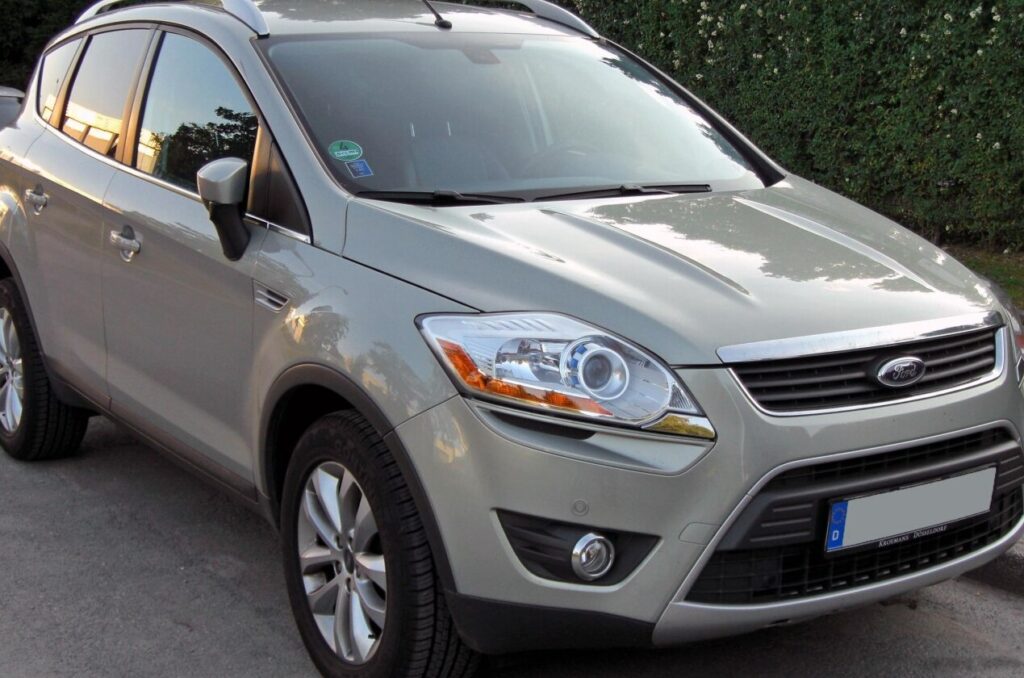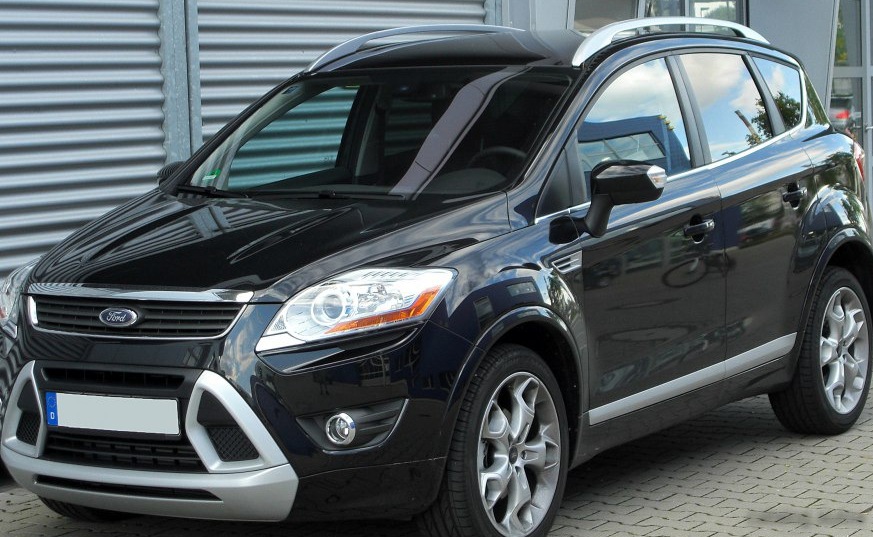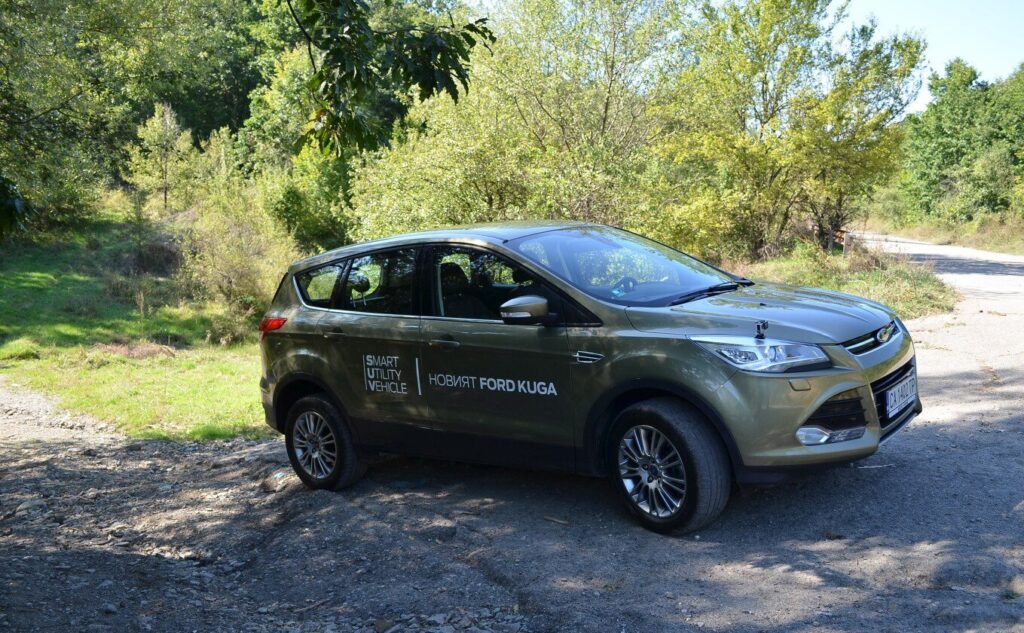
The Ford Kuga II 2.0 TDCi 4×4, produced from 2012 to 2014, was a key component of Ford’s European SUV offerings. Positioned as a mid-range trim within the second-generation Kuga (marketed as the Escape in North America), this variant combined a robust 2.0-liter turbodiesel engine with a six-speed manual transmission and Ford’s intelligent four-wheel-drive system. It aimed to deliver a balance of fuel efficiency, practicality, and all-weather capability for European drivers. Built on the C520 platform, the Kuga II was a crucial model for Ford, directly competing with vehicles like the Nissan Qashqai, Volkswagen Tiguan, and Hyundai ix35.
Technical Specifications
| Brand | Ford |
| Model | Kuga |
| Generation | Kuga II |
| Type (Engine) | 2.0 TDCi (140 Hp) 4×4 |
| Start of production | 2012 |
| End of production | 2014 |
| Powertrain Architecture | Internal Combustion engine |
| Body type | SUV |
| Seats | 5 |
| Doors | 5 |
| Fuel consumption (urban) | 7.2 l/100 km (32.7 US mpg) |
| Fuel consumption (extra urban) | 5.1 l/100 km (46.1 US mpg) |
| Fuel consumption (combined) | 5.9 l/100 km (39.9 US mpg) |
| CO2 emissions | 154 g/km |
| Fuel Type | Diesel |
| Acceleration 0 – 100 km/h | 10.7 sec |
| Acceleration 0 – 62 mph | 10.7 sec |
| Acceleration 0 – 60 mph | 10.2 sec |
| Maximum speed | 188 km/h (116.82 mph) |
| Emission standard | Euro 5 |
| Weight-to-power ratio | 12.1 kg/Hp |
| Weight-to-torque ratio | 5.3 kg/Nm |
| Power | 140 Hp @ 3750 rpm |
| Torque | 320 Nm @ 1750-2750 rpm (236.02 lb.-ft.) |
| Engine layout | Front, Transverse |
| Engine Model/Code | UFMA |
| Engine displacement | 1997 cm3 (121.86 cu. in.) |
| Number of cylinders | 4 |
| Engine configuration | Inline |
| Cylinder Bore | 85 mm (3.35 in.) |
| Piston Stroke | 88 mm (3.46 in.) |
| Compression ratio | 16:1 |
| Number of valves per cylinder | 4 |
| Fuel injection system | Diesel Commonrail |
| Engine aspiration | Turbocharger, Intercooler |
| Valvetrain | DOHC |
| Engine oil capacity | 5.7 l (6.02 US qt | 5.02 UK qt) |
| Coolant capacity | 8.5 l (8.98 US qt | 7.48 UK qt) |
| Kerb Weight | 1692 kg (3730.22 lbs.) |
| Max. weight | 2250 kg (4960.4 lbs.) |
| Max load | 558 kg (1230.18 lbs.) |
| Trunk (boot) space – minimum | 425 l (15.01 cu. ft.) |
| Trunk (boot) space – maximum | 1568 l (55.37 cu. ft.) |
| Fuel tank capacity | 60 l (15.85 US gal | 13.2 UK gal) |
| Length | 4524 mm (178.11 in.) |
| Width | 1838 mm (72.36 in.) |
| Height | 1701 mm (66.97 in.) |
| Wheelbase | 2690 mm (105.91 in.) |
| Front track | 1563 mm (61.54 in.) |
| Rear track | 1565 mm (61.61 in.) |
| Drive wheel | All wheel drive (4×4) |
| Number of gears | 6 |
| Gearbox type | Manual transmission |
| Assisting systems | ABS (Anti-lock braking system) |
| Steering type | Steering rack and pinion |
| Tires size | 235/55 R17; 235/50 R18; 235/45 R19 |
| Wheel rims size | 7.0J x 17; 7.5J x 17; 7.5J x 18; 8.0J x 19 |
Powertrain & Engine Architecture
The core of the Kuga II 2.0 TDCi 4×4 is the UFMA engine, a 2.0-liter inline-four cylinder diesel. This engine employs a common-rail direct injection system, delivering fuel at exceptionally high pressure for optimized combustion efficiency. A turbocharger, coupled with an intercooler, further boosts performance by forcing more air into the cylinders. The engine features a double overhead camshaft (DOHC) valvetrain with four valves per cylinder, contributing to efficient gas exchange. The engine produces 140 horsepower at 3750 rpm, while the substantial 320 Nm (236 lb-ft) of torque is available between 1750 and 2750 rpm, providing strong pulling power at lower engine speeds. The standard transmission for this trim was a six-speed manual, giving drivers full control over gear selection. The transmission’s gear ratios were carefully tuned to maximize fuel economy while still providing adequate acceleration.
Driving Characteristics
The 2.0 TDCi 4×4 delivered a well-rounded driving experience. While not designed for outright performance, the 140 hp engine and readily available torque provided sufficient power for everyday driving and overtaking. The six-speed manual transmission allowed for precise gear changes, and the 4×4 system enhanced traction in challenging conditions. Compared to the lower-powered 1.6 TDCi versions, the 2.0 TDCi offered a noticeable improvement in performance, particularly when the vehicle was fully loaded or climbing inclines. However, it didn’t quite match the sportiness of the petrol-powered 1.5 EcoBoost variants. The gear ratios were relatively long, prioritizing fuel economy over rapid acceleration. The all-wheel-drive system primarily operated in front-wheel drive, automatically engaging the rear wheels when wheel slip was detected, ensuring optimal traction and stability.
Equipment & Trim Levels
The Kuga II 2.0 TDCi 4×4 typically came with a solid set of standard features. These included air conditioning, power windows, power mirrors, a basic audio system with USB connectivity, and alloy wheels. Safety features such as ABS, electronic stability control, and multiple airbags were also standard. Higher trim levels, like the Titanium, added features such as dual-zone climate control, parking sensors, an upgraded audio system, and leather upholstery. Optional extras included a panoramic sunroof, a navigation system, and heated seats.
Chassis & Braking
The Kuga II utilized a MacPherson strut front suspension and a multi-link rear suspension, providing a comfortable ride and good handling. The 4×4 models generally featured slightly stiffer springs and dampers to handle the added weight and improved traction. Braking systems varied depending on the trim level, with lower trims often equipped with rear drum brakes and higher trims featuring rear disc brakes. All models included ABS and electronic brakeforce distribution (EBD). Stabilizer bars were fitted to both the front and rear axles to minimize body roll during cornering.
Market Reception & Comparison
The Ford Kuga II 2.0 TDCi 4×4 was generally well-received by automotive reviewers. It was praised for its spacious interior, comfortable ride, and fuel efficiency. The 2.0 TDCi engine was considered a good balance between performance and economy. Some critics did point out that the interior materials weren’t as luxurious as those found in some competitors. Compared to the 1.6 TDCi versions, the 2.0 TDCi offered better performance but with a slight increase in fuel consumption. The 4×4 system added to the cost but provided a significant advantage in all-weather capability. When compared to rivals like the Volkswagen Tiguan, the Kuga offered a more engaging driving experience, while the Nissan Qashqai was often seen as a more affordable alternative.
Legacy
The Ford Kuga II 2.0 TDCi 4×4 has proven to be a relatively reliable vehicle, with the UFMA engine generally considered durable. Common issues include problems with the diesel particulate filter (DPF), especially on vehicles used primarily for short trips. Regular servicing and the use of high-quality diesel fuel are essential for maintaining DPF health. The six-speed manual transmission is also generally reliable, but clutch wear should be inspected on used examples. Today, the Kuga II 2.0 TDCi 4×4 remains a popular choice in the used car market, offering a practical and capable SUV at an accessible price. Its combination of fuel efficiency, space, and all-wheel-drive capability continues to appeal to buyers looking for a versatile family vehicle.