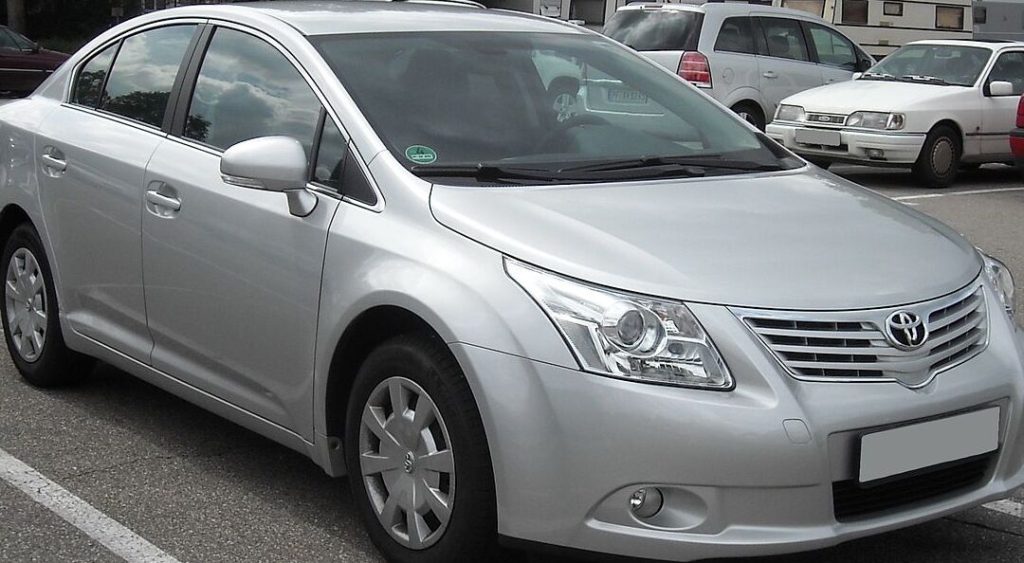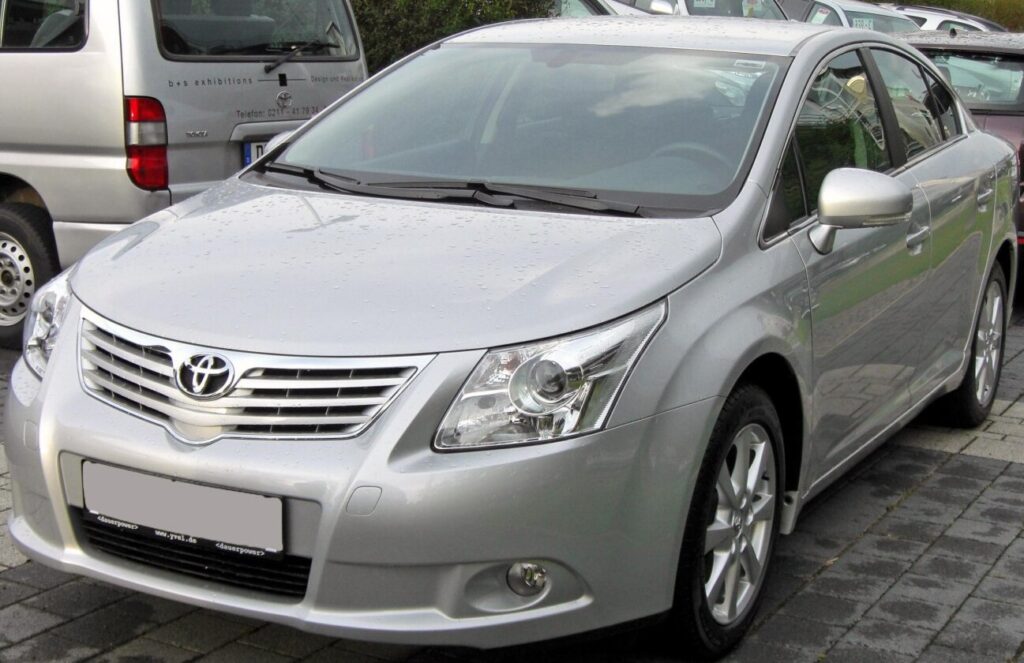
The Toyota Avensis III 1.8i (147 hp) was a mid-range offering within the third generation of Toyota’s D-segment family sedan and wagon, produced between 2009 and 2011. Positioned as a practical and reliable choice for European and Asian markets, it aimed to provide a balance between fuel efficiency and adequate performance. This variant occupied a space between the base models and the more powerful 2.0-liter and 2.2-liter diesel options. The Avensis III, built on the Toyota K platform, represented a significant step forward in terms of refinement and technology compared to its predecessors, and the 1.8i model was a key part of that evolution.
Technical Specifications
| Brand | Toyota |
| Model | Avensis |
| Generation | Avensis III |
| Type (Engine) | 1.8i (147 Hp) |
| Start of production | 2009 |
| End of production | 2011 |
| Powertrain Architecture | Internal Combustion engine |
| Body type | Sedan |
| Seats | 5 |
| Doors | 4 |
| Fuel consumption (urban) | 8.5 l/100 km (27.7 US mpg) |
| Fuel consumption (extra urban) | 5.4 l/100 km (43.6 US mpg) |
| Fuel consumption (combined) | 6.5 l/100 km (36.2 US mpg) |
| Fuel Type | Petrol (Gasoline) |
| Acceleration 0 – 100 km/h | 9.4 sec |
| Acceleration 0 – 62 mph | 9.4 sec |
| Acceleration 0 – 60 mph | 8.9 sec |
| Maximum speed | 200 km/h (124.27 mph) |
| Emission standard | Euro 5 |
| Weight-to-power ratio | 9.3 kg/Hp |
| Weight-to-torque ratio | 7.6 kg/Nm |
| Power | 147 Hp @ 6000 rpm |
| Torque | 180 Nm @ 4000 rpm (132.76 lb.-ft. @ 4000 rpm) |
| Engine layout | Front, Transverse |
| Engine Model/Code | 2ZR-FAE |
| Engine displacement | 1798 cm3 (109.72 cu. in.) |
| Number of cylinders | 4 |
| Engine configuration | Inline |
| Number of valves per cylinder | 4 |
| Fuel injection system | Multi-port manifold injection |
| Engine aspiration | Naturally aspirated engine |
| Valvetrain | DOHC |
| Engine oil capacity | 4.2 l (4.44 US qt | 3.7 UK qt) |
| Coolant capacity | 6.3 l (6.66 US qt | 5.54 UK qt) |
| Kerb Weight | 1370 kg (3020.33 lbs) |
| Max. weight | 2000 kg (4409.25 lbs) |
| Max load | 630 kg (1388.91 lbs) |
| Trunk (boot) space – minimum | 509 l (17.98 cu. ft) |
| Fuel tank capacity | 60 l (15.85 US gal | 13.2 UK gal) |
| Length | 4695 mm (184.84 in) |
| Width | 1810 mm (71.26 in) |
| Height | 1480 mm (58.27 in) |
| Wheelbase | 2700 mm (106.3 in) |
| Front track | 1550 mm (61.02 in) |
| Rear track | 1540 mm (60.63 in) |
| Minimum turning circle | 10.8 m (35.43 ft) |
| Drivetrain Architecture | Front wheel drive |
| Number of gears | 6 |
| Gearbox type | Manual transmission |
| Front suspension | Independent type McPherson |
| Rear suspension | Double wishbone |
| Front brakes | Ventilated discs |
| Rear brakes | Disc |
| Assisting systems | ABS (Anti-lock braking system), Electric Power Steering |
Powertrain & Engine Architecture
The heart of the Avensis III 1.8i was the 2ZR-FAE engine, a 1.8-liter (1798 cc) inline-four cylinder gasoline engine. This engine utilized a dual overhead camshaft (DOHC) valvetrain with four valves per cylinder, contributing to its relatively efficient breathing. Fuel delivery was handled by a multi-port fuel injection system, a common setup for engines of this era. The 2ZR-FAE was a naturally aspirated engine, meaning it did not employ forced induction like a turbocharger or supercharger. This resulted in a linear power delivery, but also limited overall peak power. The engine produced 147 horsepower at 6000 rpm and 180 Nm (132.76 lb-ft) of torque at 4000 rpm. The engine was paired with a six-speed manual transmission, offering a good balance between fuel economy and driver engagement. An automatic transmission was also available, but the manual was favored by those seeking a more connected driving experience.
Driving Characteristics
The 1.8i variant of the Avensis III offered a comfortable and predictable driving experience. Acceleration from 0-60 mph took approximately 8.9 seconds, which was adequate for everyday driving but didn’t provide particularly sporty performance. The six-speed manual transmission allowed drivers to keep the engine in its optimal power band, maximizing efficiency and responsiveness. Compared to the higher-output 2.0-liter engine, the 1.8i felt less eager to rev, but it also offered better fuel economy. The gear ratios were well-chosen for cruising on highways, and the engine remained relatively quiet at higher speeds. The automatic transmission, while convenient, did slightly diminish performance and fuel efficiency compared to the manual.
Equipment & Trim Levels
The Avensis III 1.8i typically came equipped with a respectable level of standard features. These included air conditioning, power windows, power mirrors, a CD player with auxiliary input, and ABS brakes. Higher trim levels, such as the ‘T2’ or ‘T3’ variants, added features like alloy wheels, a multi-function steering wheel, cruise control, and automatic climate control. Interior upholstery was typically cloth, with options for leather available on higher trims. Optional extras included a sunroof, navigation system, and upgraded audio systems.
Chassis & Braking
The Avensis III utilized an independent McPherson strut suspension in the front and a double wishbone suspension in the rear. This setup provided a comfortable ride quality and good handling characteristics. The front brakes were ventilated discs, offering good stopping power, while the rear brakes were solid discs. Electric power steering was standard, providing a light and easy steering feel. The chassis was designed to provide a good balance between rigidity and weight, contributing to the car’s overall stability.
Market Reception & Comparison
The Avensis III 1.8i was generally well-received by automotive critics as a practical and reliable family car. It was praised for its comfortable ride, spacious interior, and good fuel economy. However, some critics noted that the 1.8-liter engine lacked the punch of the larger engines in the lineup. Compared to the 2.0-liter variant, the 1.8i offered lower running costs but less performance. Against competitors like the Ford Mondeo, Volkswagen Passat, and Honda Accord, the Avensis III 1.8i held its own in terms of reliability and value for money. Its fuel economy was competitive, and its build quality was generally considered to be excellent.
Legacy
The Toyota Avensis III 1.8i has proven to be a durable and reliable vehicle in the used car market. The 2ZR-FAE engine is known for its longevity and relatively low maintenance costs. While not a particularly exciting car to drive, it offers a dependable and practical transportation solution. Common issues are relatively minor, often relating to wear and tear on suspension components or routine maintenance items. Today, the Avensis III 1.8i remains a popular choice for budget-conscious buyers seeking a reliable and fuel-efficient family car.