
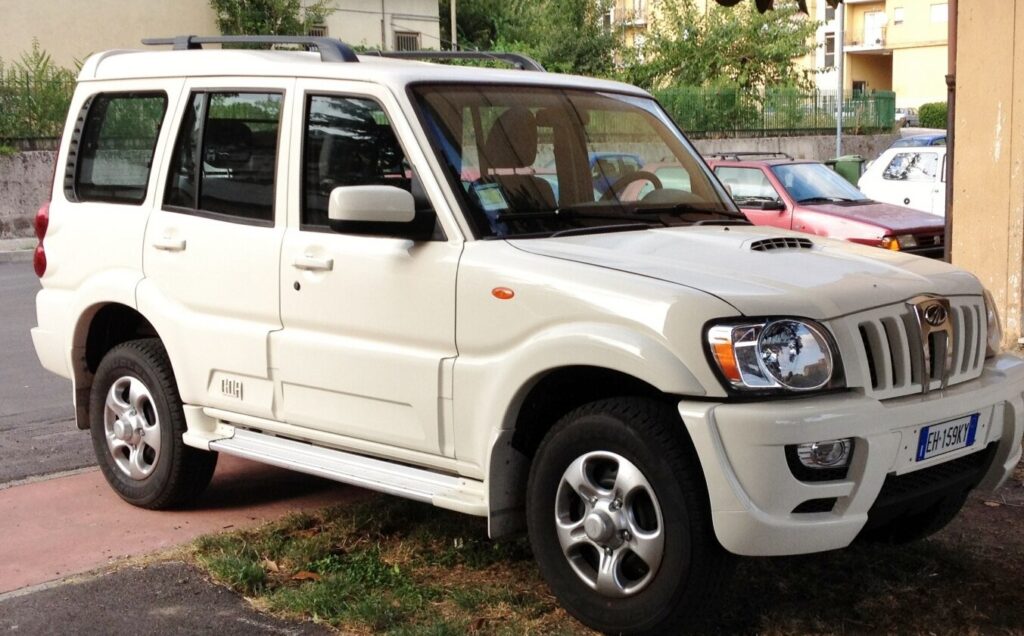
The Mahindra Goa 2.5 (106 hp) AWD, produced between 2008 and 2013, represents Mahindra’s foray into a more globally competitive SUV market. Based on the aging but robust platform originally derived from the first-generation Toyota Hilux, the Goa was primarily aimed at emerging markets, particularly in South America and parts of Asia. It served as a larger, more utilitarian alternative to Mahindra’s smaller offerings like the Scorpio, offering a combination of off-road capability, passenger space, and a relatively affordable price point. The 2.5-liter engine with all-wheel drive was a key variant, positioned as a mid-range option within the Goa lineup, offering a balance between performance, fuel economy, and capability. While not sold in North America, understanding the Goa provides insight into Mahindra’s global expansion strategy and its approach to building rugged, practical vehicles.
Technical Specifications
| Brand | Mahindra |
| Model | Goa |
| Generation | Goa |
| Type (Engine) | 2.5 (106 Hp) AWD |
| Start of production | 2008 |
| End of production | 2013 |
| Powertrain Architecture | Internal Combustion engine |
| Body type | SUV |
| Seats | 5-7 |
| Doors | 5 |
| Fuel Type | Diesel |
| Emission standard | Euro 4 |
| Weight-to-power ratio | 19.2 kg/Hp, 52 Hp/tonne |
| Weight-to-torque ratio | 8.3 kg/Nm, 121.1 Nm/tonne |
| Power | 106 Hp @ 3800 rpm |
| Power per litre | 42.6 Hp/l |
| Torque | 247 Nm @ 1800-2220 rpm (182.18 lb.-ft. @ 1800-2220 rpm) |
| Engine displacement | 2490 cm3 (151.95 cu. in.) |
| Fuel injection system | Diesel Commonrail |
| Engine aspiration | Turbocharger, Intercooler |
| Engine oil capacity | 6 l (6.34 US qt | 5.28 UK qt) |
| Coolant | 10 l (10.57 US qt | 8.8 UK qt) |
| Kerb Weight | 2040 kg (4497.43 lbs.) |
| Length | 4482 mm (176.46 in.) |
| Width | 1775 mm (69.88 in.) |
| Height | 1975 mm (77.76 in.) |
| Wheelbase | 2680 mm (105.51 in.) |
| Minimum turning circle | 11.4 m (37.4 ft.) |
| Drive wheel | All wheel drive (4×4) |
| Number of gears | 5 gears |
| Gearbox type | Manual transmission |
| Front suspension | Torsion |
| Rear suspension | Independent multi-link suspension |
| Front brakes | Disc |
| Rear brakes | Drum |
| Tires size | 235/70 R16 |
| Wheel rims size | 16 |
Powertrain & Engine Architecture
The heart of the Mahindra Goa 2.5 AWD is a 2.5-liter, four-cylinder diesel engine. This engine, while not a particularly sophisticated design by modern standards, was known for its durability and relatively simple maintenance requirements. It utilizes a diesel commonrail fuel injection system, which improved fuel efficiency and reduced emissions compared to older mechanical injection systems. A turbocharger with an intercooler further enhances performance, boosting power output to 106 horsepower at 3800 rpm and 247 Nm (182.18 lb-ft) of torque between 1800 and 2220 rpm. The engine’s architecture is relatively conventional, featuring a single overhead camshaft (SOHC) valvetrain. The five-speed manual transmission was the only gearbox option available with this engine, providing a direct connection to the drivetrain. The all-wheel-drive system is a part-time system, likely utilizing a transfer case to engage the front axle when needed, offering improved traction in off-road conditions.
Driving Characteristics
The driving experience in the Mahindra Goa 2.5 AWD is best described as utilitarian. The 106 horsepower engine, while adequate, doesn’t provide particularly brisk acceleration. The focus is on providing sufficient torque for hauling loads and navigating challenging terrain. The five-speed manual transmission allows for reasonable control over the engine’s powerband, but the gear ratios are geared towards low-end torque rather than high-speed cruising. Compared to potential higher-output versions (if offered in some markets), the 2.5-liter engine prioritizes fuel economy and longevity over outright performance. The all-wheel-drive system provides enhanced stability and traction on loose surfaces, making it a capable off-roader. However, the vehicle’s relatively high center of gravity and body-on-frame construction result in noticeable body roll during cornering.
Equipment & Trim Levels
The Mahindra Goa 2.5 AWD, being targeted towards value-conscious buyers, typically came with a fairly basic level of standard equipment. Expect features like manual air conditioning, power steering, and basic instrumentation. Interior upholstery was generally vinyl or a durable cloth material. Higher trim levels, if available, might have included features like power windows, central locking, and an upgraded audio system. Optional extras could include alloy wheels, a roof rack, and additional protective body cladding. The dashboard layout is functional and straightforward, prioritizing practicality over aesthetics. The vehicle was designed to be easily serviceable, with readily available parts and a relatively simple mechanical layout.
Chassis & Braking
The Mahindra Goa utilizes a traditional body-on-frame construction, providing a robust and durable chassis. Front suspension consists of a torsion bar setup, while the rear features an independent multi-link suspension. This combination aims to provide a reasonable balance between ride comfort and off-road capability. The front brakes are disc brakes, offering better stopping power than drum brakes, while the rear brakes are drum brakes, a cost-saving measure. The vehicle rides on 16-inch steel wheels, typically fitted with 235/70 R16 tires. Stabilizer bars (anti-roll bars) were likely included at both the front and rear to help reduce body roll during cornering, although their thickness may have varied depending on the specific trim level.
Market Reception & Comparison
The Mahindra Goa 2.5 AWD was generally well-received in the markets where it was sold, particularly for its ruggedness, affordability, and off-road capability. Critics often praised its durability and practicality, but noted its relatively basic interior and lack of refinement compared to more modern SUVs. Compared to other trims in the Goa lineup, the 2.5-liter AWD version offered a good balance between performance and fuel economy. It was a more practical choice for those who needed all-wheel drive capability than the lower-powered, two-wheel-drive models. Fuel economy was reasonable for a vehicle of its size and type, but not exceptional. Reliability was generally good, thanks to the engine’s simple design and robust construction.
Legacy
The Mahindra Goa, while no longer in production, remains a popular choice in the used car market in many of the regions where it was originally sold. The 2.5-liter diesel engine is known for its longevity and relatively low maintenance costs. Parts availability is generally good, and the vehicle’s simple mechanical layout makes it relatively easy to repair. The Goa’s legacy lies in its ability to provide a rugged, reliable, and affordable SUV option for those who needed a vehicle capable of handling tough conditions. It represents a significant step in Mahindra’s evolution as a global automotive manufacturer, demonstrating their ability to build vehicles that meet the needs of diverse markets.
