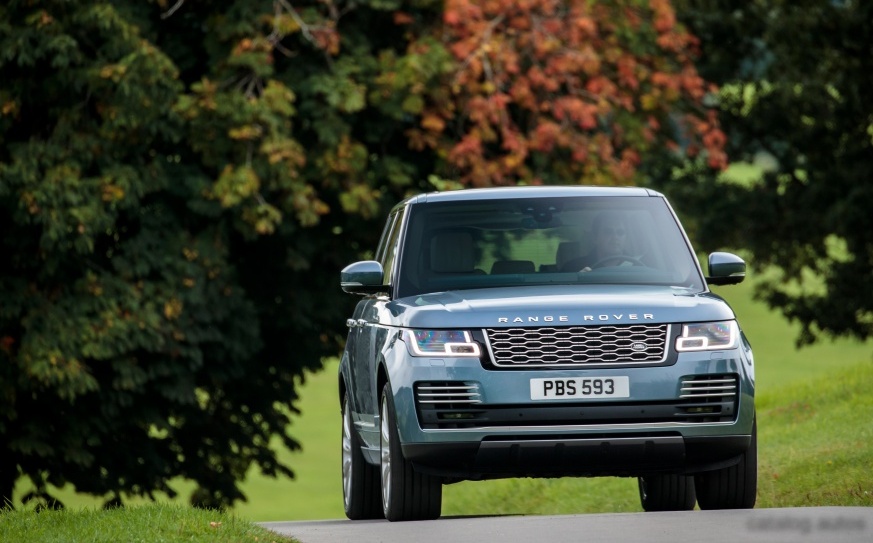
The Land Rover Range Rover IV (facelift, produced 2017-2018) equipped with the 3.0-liter V6 diesel engine producing 258 horsepower and paired with an eight-speed automatic transmission represents a significant iteration of Land Rover’s flagship SUV. Introduced as part of the mid-cycle refresh of the fourth-generation Range Rover (L405), this variant aimed to balance performance, refinement, and fuel efficiency within the broader Range Rover lineup. Positioned as a mid-range offering, it slotted between the entry-level TD6 models and the higher-performance SDV8 variants, appealing to buyers seeking a capable luxury SUV without the top-tier price tag or outright speed.
Technical Specifications
| Brand | Land Rover |
| Model | Range Rover |
| Generation | Range Rover IV (facelift 2017) |
| Type (Engine) | 3.0 V6 (258 Hp) AWD Automatic |
| Start of production | 2017 |
| End of production | 2018 |
| Powertrain Architecture | Internal Combustion engine |
| Body type | SUV |
| Seats | 5 |
| Doors | 5 |
| Fuel consumption (urban) | 7.8 l/100 km (30.2 US mpg, 36.2 UK mpg, 12.8 km/l) |
| Fuel consumption (extra urban) | 6.4 l/100 km (36.8 US mpg, 44.1 UK mpg, 15.6 km/l) |
| Fuel consumption (combined) | 6.9 l/100 km (34.1 US mpg, 40.9 UK mpg, 14.5 km/l) |
| CO2 emissions | 182 g/km |
| Fuel Type | Diesel |
| Acceleration 0 – 100 km/h | 8 sec |
| Acceleration 0 – 62 mph | 8 sec |
| Acceleration 0 – 60 mph | 7.6 sec |
| Maximum speed | 209 km/h (129.87 mph) |
| Emission standard | Euro 6 |
| Weight-to-power ratio | 8.7 kg/Hp, 114.7 Hp/tonne |
| Weight-to-torque ratio | 3.7 kg/Nm, 266.8 Nm/tonne |
| Power | 258 Hp |
| Power per litre | 86.2 Hp/l |
| Torque | 600 Nm (442.54 lb.-ft.) |
| Engine layout | Front, Longitudinal |
| Engine Model/Code | 306DT |
| Engine displacement | 2993 cm3 (182.64 cu. in.) |
| Number of cylinders | 6 |
| Engine configuration | V-engine |
| Cylinder Bore | 84 mm (3.31 in.) |
| Piston Stroke | 90 mm (3.54 in.) |
| Compression ratio | 16:1 |
| Number of valves per cylinder | 4 |
| Fuel injection system | Diesel Commonrail |
| Engine aspiration | BiTurbo, Intercooler |
| Engine oil capacity | 6 l (6.34 US qt | 5.28 UK qt) |
| Coolant | 8.93 l (9.44 US qt | 7.86 UK qt) |
| Kerb Weight | 2249 kg (4958.2 lbs.) |
| Trunk (boot) space – minimum | 900 l (31.78 cu. ft.) |
| Fuel tank capacity | 86 l (22.72 US gal | 18.92 UK gal) |
| Max. roof load | 100 kg (220.46 lbs.) |
| Permitted trailer load with brakes (12%) | 3500 kg (7716.18 lbs.) |
| Permitted trailer load without brakes | 750 kg (1653.47 lbs.) |
| Length | 5000 mm (196.85 in.) |
| Width with mirrors folded | 2073 mm (81.61 in.) |
| Width including mirrors | 2220 mm (87.4 in.) |
| Height | 1869 mm (73.58 in.) |
| Wheelbase | 2922 mm (115.04 in.) |
| Front track | 1693 mm (66.65 in.) |
| Rear (Back) track | 1685 mm (66.34 in.) |
| Front overhang | 883 mm (34.76 in.) |
| Rear overhang | 1195 mm (47.05 in.) |
| Ride height (ground clearance) | 220 mm (8.66 in.) |
| Drag coefficient (Cd) | 0.34 |
| Minimum turning circle (turning diameter) | 12.33 m (40.45 ft.) |
| Approach angle | 26° |
| Departure angle | 24.6° |
| Ramp-over (brakeover) angle | 20.1° |
| Wading depth | 900 mm (35.43 in.) |
| Drive wheel | All wheel drive (4×4) |
| Number of gears and type of gearbox | 8 gears, automatic transmission |
| Front suspension | Wishbone, Air suspension |
| Rear suspension | Independent multi-link suspension, Air suspension |
| Front brakes | Ventilated discs |
| Rear brakes | Ventilated discs |
| Assisting systems | ABS (Anti-lock braking system) |
| Steering type | Steering rack and pinion |
| Power steering | Electric Steering |
Powertrain & Engine Architecture
The heart of this Range Rover variant is the 306DT, a 3.0-liter V6 turbodiesel engine. This engine utilizes a sequential twin-turbocharger setup, enhancing both low-end torque and high-end power. The common-rail direct injection system, operating at extremely high pressures, ensures efficient fuel atomization and combustion. The engine boasts a relatively high compression ratio of 16:1, contributing to its thermal efficiency. The eight-speed automatic transmission, sourced from ZF, is a crucial component, offering smooth and rapid gear changes. This transmission is known for its efficiency and ability to adapt to various driving conditions. The transmission’s wide gear ratio spread helps optimize fuel economy and provides ample torque multiplication for off-road situations.
Driving Characteristics
The 258 hp and 442 lb-ft of torque delivered by this powertrain configuration provide a comfortable and capable driving experience. While not as overtly sporty as the higher-powered SDV8 models, the 3.0 V6 offers ample acceleration for everyday driving and highway cruising. The 0-60 mph time of around 7.6 seconds is respectable for a large, heavy SUV. The automatic transmission contributes to a relaxed driving style, particularly in urban environments. Compared to the manual transmission options available on other Range Rover variants, the automatic prioritizes ease of use over driver engagement. The torque converter smooths out gear changes, but can slightly diminish the feeling of direct connection to the engine. The air suspension provides a remarkably comfortable ride, absorbing bumps and imperfections in the road surface effectively.
Equipment & Trim Levels
The 3.0 V6 automatic typically came standard with a generous array of features, reflecting the Range Rover’s luxury positioning. Leather upholstery, heated front seats, a touchscreen infotainment system with navigation, and a premium sound system were common inclusions. Optional extras included features like adaptive cruise control, a panoramic sunroof, upgraded leather trim, and rear-seat entertainment systems. Trim levels varied by market, but generally offered increasing levels of luxury and technology. The HSE trim, for example, added more luxurious interior appointments and exterior styling cues.
Chassis & Braking
The Range Rover IV’s chassis is built around a lightweight aluminum monocoque construction, contributing to its strength and rigidity. The air suspension system, standard on this variant, provides adjustable ride height and damping, allowing drivers to tailor the vehicle’s handling to different conditions. The front suspension utilizes a double-wishbone design, while the rear features an independent multi-link setup. Braking duties are handled by ventilated discs on all four wheels, providing ample stopping power. The electronic stability control system and anti-lock braking system (ABS) enhance safety and control.
Market Reception & Comparison
The 3.0 V6 automatic Range Rover was generally well-received by automotive critics. It was praised for its blend of performance, refinement, and fuel efficiency. Compared to the more powerful SDV8 models, it offered a more economical option without sacrificing too much in terms of driving experience. Fuel economy figures of around 34 mpg combined were competitive for a vehicle of its size and capability. Reliability was generally good, although, like all complex vehicles, the Range Rover IV could be prone to occasional electronic glitches. Compared to the entry-level TD6 models, the 258 hp V6 provided a noticeable performance upgrade.
Legacy
The 3.0 V6 diesel engine proved to be a durable and reliable powertrain in the Range Rover IV. On the used car market, these models represent a good value proposition, offering a luxurious and capable SUV at a more accessible price point than the higher-spec variants. While diesel engines have faced increased scrutiny in recent years, the 306DT remains a popular choice for buyers seeking a long-distance cruiser with strong towing capabilities. Regular maintenance, including timely oil changes and filter replacements, is crucial to ensuring the longevity of this powertrain. The combination of the robust engine, smooth automatic transmission, and comfortable air suspension has cemented this variant’s reputation as a well-rounded and dependable luxury SUV.